
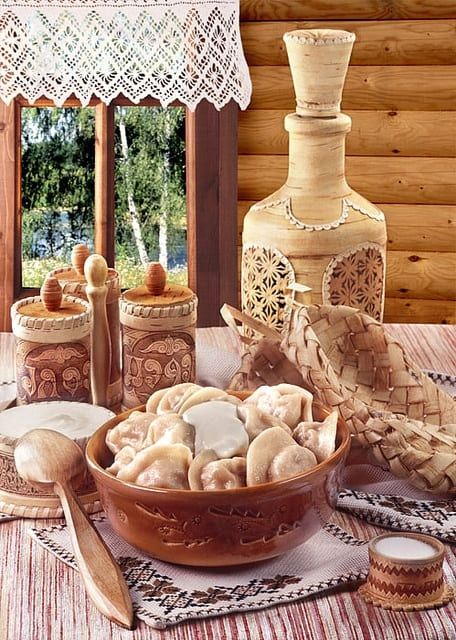
Russia is a huge country and that is why Russian cuisine is a rich collection of diverse cooking traditions. Russian food has its own peculiarities due to the country’s severe climate in winter and its forests rich in berries, mushrooms in summer. Traditional Russian dishes are often made of vegetables, different crops, dairy products, fresh-water fish, poultry and meat.
For breakfast Russian people usually have milk porridge, syrniki (cottage cheese pancakes) or an omelette. Lunch is more sufficient and it often consists of a salad, a plate of soup and a main course. For dinner the Russians love fish and meat dishes with garnish (rice, buckwheat, mashed potatoes and stewed cabbage). Traditional pelmeni (meat dumplings), holodetz (meat jelly with pieces of meat, carrot and garlic) or golubtsy (cabbage rolls with minced meat) are special masterpieces of the national culinary art. The Russians also have salads, meat pies, apple pies, vareniki (cottage cheese, cherries or potatoes dumplings) and pancakes for dinner.
The most traditional Russian salads are Olivier, “Herring under a furcoat” and vinegret. All of them are a nourishing mixture of various ingredients such as boiled eggs, boiled vegetables (potatoes, carrots, beetroot), sausage or meat, onions, green peas and cucumbers.
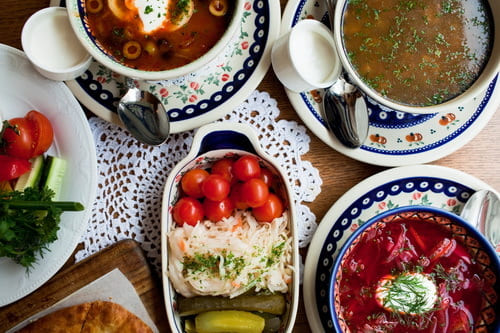
Russian cuisine is famous for the variety of soups: shchi (cabbage soup), borsch (red beetroot soup), ukha (fish soup), solyanka (thick soup made of pickled veggies, meat and sausage) and rassolnik (pickle soup). A plate of hot and spicy soup helps to stay warm during long cold winters. And one of the favourite soups during hot summers is okroshka (cold vegetable and sausage soup based on kvas). All kinds of soups are normally dressed with sour-cream. It is notable that Russian people eat bread with all dishes.
Traditional Russian drinks are hot black tea with jam or honey, compote (stewed fruit drink) and kvas (drink made from rye bread).
The Russians are good at preserving fruits, vegetables and mushrooms. Classic Russian appetizers: pickled cabbage, tomatoes, crispy cucumbers and even apples – are always on a festive table.
Russian people have always been known for their hospitality. They are happy to welcome guests with lavish dinners with abundance of food on the table.
Перевод
Россия – огромная страна, и поэтому русская кухня представляет собой богатую коллекцию разнообразных кулинарных традиций. Русская еда имеет ряд особенностей благодаря жесткому климату страны зимой и его лесам, богатым ягодами и грибами в летнее время. Традиционные русские блюда часто готовят из овощей, различных круп, молочных продуктов, речной рыбы, дичи и мяса.
На завтрак русский народ обычно ест молочную кашу, сырники (оладьи из творога) или омлет. Обед более сытный и нередко состоит из салата, тарелки супа и основного блюда. На ужин русские любят рыбные и мясные блюда с гарниром (рисом, гречкой, картофельным пюре и тушеной капустой). Традиционные пельмени (клецки с мясом), холодец (мясное желе с кусочками мяса, моркови и чеснока) или голубцы (капустные рулеты с мясным фаршем) являются особенными шедеврами национального кулинарного искусства. Русские также едят салаты, пироги с мясом или яблоками, вареники (клецки с творогом, вишней или картофелем) и блины на ужин.
Наиболее традиционными русскими салатами являются Оливье, Сельдь под шубой и винегрет. Все они представляют собой питательную смесь из различных ингредиентов, таких как вареные яйца, отварные овощи (картофель, морковь, свекла), колбаса или мясо, лук, зеленый горошек и огурцы.
Русская кухня известна разнообразием супов: щи (суп с капустой), борщ (красный суп со свеклой), уха (суп с рыбой), солянка (густой суп из маринованных овощей, мяса и колбасных изделий) и рассольник (суп с соленьями). Тарелка горячего пряного супа помогает оставаться в тепле в долгие холодные зимы. А одним из любимых супов в жаркое лето стала окрошка (холодный суп с овощами и колбасой, приготовленный на квасе). Все виды супов обычно заправляются сметаной. Интересно заметить, что русский народ ест хлеб со всеми блюдами.
Традиционными русскими напитками являются горячий черный чай с вареньем или медом, компот (напиток из тушеных фруктов) и квас (напиток, изготовленный из ржаного хлеба).
Русские прекрасно занимаются консервированием фруктов, овощей и грибов. Классические русские закуски: квашеная капуста, маринованные помидоры, хрустящие огурцы и даже яблоки – всегда лежат на праздничном столе.
Русские люди всегда славились своим гостеприимством. Они рады встречать гостей щедрым ужином с изобилием еды на столе.
Тема «Русская кухня» (Russian cuisine) — 4.6 out of
5
based on
54 votes
►Russian Culture ►Russian Cuisine
Russian cuisine often gets a bad press for being bland and stodgy but this reputation is undeserved. Russian cuisine has some delicious dishes which you should definitely try when visiting the country. Russian cuisine has absorbed European, eastern, southern and northern influences and it can vary from region to region, even in respect of the same dish. Russian food tends to be very heavy with lots of fat due to the use of oil, butter, sour cream and mayonnaise. This can be explained by the traditional need of calories during Russia’s harsh winters. Pickled foods also feature heavily, again due to the winter and the need to preserve fresh products. Traditionally Russian food was cooked in special ovens which even today are still found all over Russian villages. Below we provide you with a brief guide of some of the dishes you will see on a traditional Russian menu.
Zakuski / Hors d’oeuvre (Закуски)
A special feature of Russian cuisine is its wide array of hors d’oeuvre. These can be made out of vegetables, meat or fish and can be ordered as a started or just to have on the table throughout the dinner, as they are often eaten after a shot of vodka is drunk.
Caviar (Икра)
 Caviar is a popular item on Russian menus and it is usually the red variety (salmon roe) rather than the rarer and more expensive black variety (sturgeon caviar). However the Russian word for caviar (ikra) is also used for a vegetable dish which is made of aubergines or courgettes mashed into a paste which herbs and spices.
Kholodets (Холодец)
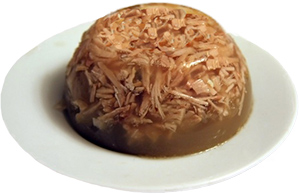 Kholodets is a favourite dish among Russians which does not often go down well with foreigners! It is an aspic type dish of pieces of meat (often including offal) set in transparent jelly and served cold, usually with horseradish or mustard. For Russians it is a favourite accompaniment to vodka.
Pies (Пирожки)
 Another favourite snack in Russia is various forms of pies which can often be bought from kiosks across the country. The fillings can be either sweet or savoury. Sweet verities include lemon curd and all sorts of berries. Savoury pies can be filled with chicken, ham, fish, potato, egg and rice or cabbage. Russian pies are often made with dough containing yeast, but another type of pies are called sloikas which are made out of puff pastry.
Julienne (Жюльен)
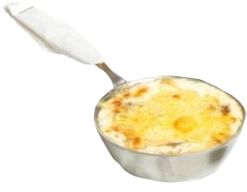 The dish known as julienne in Russian is basically strips of mushrooms which have been baked in cream and topped with cheese. It is normally served in the small metal dish in which it was cooked. Occasionally it can be a larger dish as a main meal; in this case it sometimes also contains chicken and potato.
Salads (Салаты)
Russians tend to prefer their salads heavy with lots of mayonnaise, although European style olive oil and vinegar-based salads, such as caesar salads and greek salads, can now be found alongside the tradition Russian salads on most menus across the country. Russian salads with fresh vegetables often use sunflower oil rather than olive oil.
Olivier (Оливье)
 The most popular salad in Russia is probably the olivier salad which has become the traditional favourite to eat on New Year’s Eve. The salad was first made by the Belgian chef Lucien Olivier who owned the Hermitage Restaurant in Moscow in the early 1860s. However Olivier took the exact recipe of his salad to the grave with him, although many other variants have been created since them using the basic ingredients he used. These are boiled eggs, boiled potatoes, onion, chicken breasts, and peas, which are all cut into small pies and mixed with lots of mayonnaise. You will find this salad on most menus, especially in the provinces.
Vinegret (Винегрет)
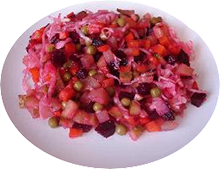 Another classic Russian salad is vinegret. This salad is made out of diced potatoes, carrots, gherkins, onions and beetroot which gives it its red colour. Most vinegret salads now are commonly covered with oil or mayonnaise, but originally it would have been a vinegrette from where the salad gets its name.
Herring In a Fur Coat (Селёдка под шубой)
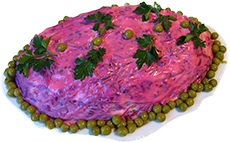 Another popular salad among Russians which enjoys less popularity among foreigners is the dish known as herring pod shuboy, which literally means ‘under a fur coat’. It is a layered salad starting with diced herring, then usually thin strips of potatoes, carrots, boiled eggs and finally beetroot. Mayonnaise is also put between each layer.
Korean Carrots (Морковь по-корейски)
 Korean carrots is a salad made of thinly sliced carrots in oil and spices. It is named Korean carrots as it was first made by Koryo-saram — ethnic Koreans who moved to Russia in the late 19th and remained during the Soviet Union. The dish was invented as a substitute to kimchi as the chinese cabbage needed for kimchi was not available in the Soviet Union.
Breakfast Dishes (Завтраки)
Russian breakfasts at restaurants and hotels can vary and sometimes dishes more resembling dinner such as sausages and pasta can be served. The dishes mentioned below though make a delicious start to the day.
Kasha (Каша)
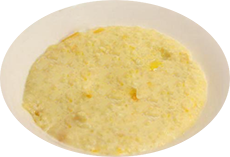 You cannot talk about Russian cuisine without mentioning kasha which is the Russian version of porridge and is a firm favourite and not just as a breakfast. Kasha can be made out of any grain for example millet (пшённая каша), semolina (манная каша), oatmeal (овсяная) and rice (рисовая), but the most popular is probably buckwheat (гречневая каша).
Blini (Блины)
 One of the most popular Russian dishes is pancakes or ‘blini’ as they are known in Russian. Blini is the plural and blin the singular. They are also often called blinchiki (singular: blinchik) which is just the diminutive form of blin. In the west the dish known as blinis involves tiny pancakes, whereas in Russian the blini are of a standard size. Of course blini are not just for breakfast, they can also be eaten as a snack, a main course or a desert. In most cities you will find lots of ‘blinnaya’ restaurants or stalls which just serve blini. They are usually stuffed with sweet or savoury fillings or just eaten with sour cream.
Syrniki (Сырники)
 Tvorog, which is a type of curd cheese, is popular in Russian cuisine and it is used to make the fat pancakes called syrniki. Tvorog is mixed with flour, eggs, sugar and sometimes also raisons and fried in a pan until the outside becomes crispy by the inside remains soft. They are usually served with sour cream or jam.
Oladi (Оладьи)
 Oladi are another type of fat pancake and come in many forms. Standard oladi are made out of flour, milk and eggs and fried in a pan resembling something like scotch pancakes. However it is possible to add to this basic mixture a whole range of grated vegetables such as onion, courgette, aubergine or carrots to make a more savour dish. Oladi which contain grated potatoes and onions are known as draniki (драники).
Soups (Супы)
Soup is an important dish in Russia and most Russian meals start with soup. In fact the common type of service where various courses (salad, soup, main, desert) are brought sequentially was originally known as Service à la russe (‘service in the Russian style) and previously in Europe all dishes were placed on the table at once.
Borsch (Борщ)
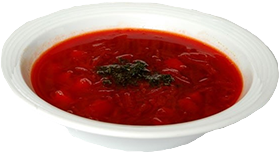 Borsch, or beetroot soup, is probably the most famous Russian soup, although it is found with slight variations throughout Ukraine, Belarus, Poland and other Slavic countries. The standard version of borsch is the red version which is made with beetroot, although there is a green version too which has herbs, especially sorrel, instead of beetroot. Borsch can be made with or without meat, though it usually contains beef unless stated otherwise. Vegetarian borsch is usually called postnoy (‘постной’) meaning it is suitable for Lent (‘пост’).
Schi (Щи)
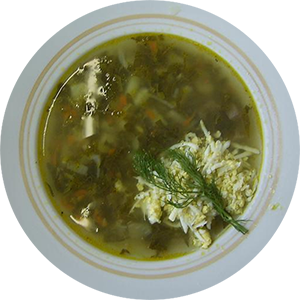 A counterpart to borsch in Russia is schi, which is a similar type of soup except that it is made with cabbage rather that beetroot. It can be served with meat or without.
Ukha (Уха)
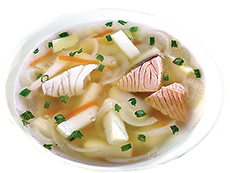 The main fish soup in Russia is known as ukha and it is especially popular on camping trips when cooked using freshly caught fish.
Okroshka (Окрошка)
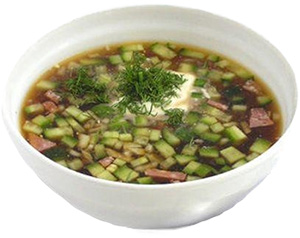 The most popular cold soup is called okroshka. The soup is usually made with boiled potatoes, boiled eggs, spring onions and ham with a liquid base which is usually kvas or kefir. Russians especially love this cooling soup on a hot day, but for foreigners it is normally quite an acquired taste at best!
Solyanka (Солянка)
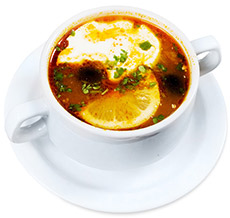 Another favourite soup in Russia is solyanka which is a sour, salty and slightly spicy soup. The soup can be made with either meat, fish or mushrooms but usually always contains gherkins, olives, lemon slices and herbs.
Rassolnik (Рассольник)
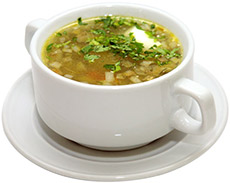 The soup called rassolnik is similar to solyanka as its main ingredient is gherkins and herbs and spices. It can be both vegetarian or with meat. Sometimes it also contains potatoes or grains.
Main courses (Основные блюда)
Most Russian main courses consist of meat and although the situation is improving, vegetarians still don’t always have a lot of choice when order food in restaurants. The most popular meats in Russia are pork, beef, chicken and lamb. However you can also sometimes find on the menu rabbit, duck, goose and in some specialist restaurants even wild boar, moose, venison and bear. In restaurants you normally need to choose a side dish separately to your main. Popular side dishes include fried potato, mashed potatoes, chips, rice, buckwheat or macaroni. Upon arriving in Russia it won’t take long for you to notice that dill is a popular herb in Russian cuisine.
Shashlyk (Шашлык)
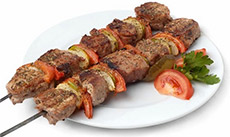 For meat lovers shashlyk is the dish you. Shashlyk is the Russian equivalent of a shish kebab although in fact the dish actually originates from the Caucasus. In Russia the meat of choice for shashlyk is pork, but in the Caucasus it is lamb. However most restaurants also offer chicken, beef, fish, offal and vegetable shashlyk too. The meat is marinated before being cooked on skewers over hot coals. It is common for Russians to go to the countryside in the summer to make their own shashlyk on a mangal — a makeshift barbeque. Shashlyk is often served with bread known as lavash (either thick or paper thin), a small salad and a spicy tomato sauce. Another variant of shashlyk is known as lyulya-kebab (люля-кебаб) which is made out of minced meat rather than pieces of meat.
Cutlets (Котлеты)
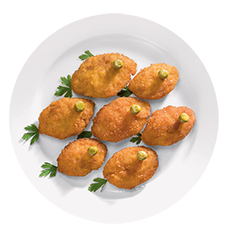 Meat cutlets often feature on Russian menus. Cutlets are made out of minced meat, chicken or fish, with the addition of breadcrumbs and pan fried. A tasty popular variant of this is the chicken kiev (котлета по-киевски) which is either a breaded tenderised chicken breast or a chicken cutlet stuffed with butter and herbs. Pozharsky cutlets (пожарские котлеты) are a chicken cutlet in breadcrumbs.
Escalopes (Эскалопы)
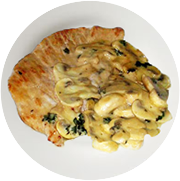 Escalops are just a slice of meat which has often been tenderised, known as otbivnaya (отбивная) and then fired, sometimes in breadcrumbs. Occasionally the escalope can be called ‘in the French style’ (по-французски) which means that the meat is coated with mayonnaise, tomatoes and cheese.
Beef Stroganov (Бефстроганов)
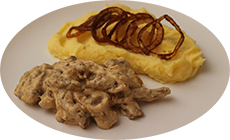 One of the most famous Russian dishes is beef stroganov, which is sautéed pieces of beef in a sour cream sauce. Sometimes it can also be main with pork or chicken even though it may still be called «beef» stroganov on the menu. The dish is named in honour of the Stroganov family who were a very successful and influential dynasty of merchants who became rich and financed the Russian annexation of Siberia, becoming even richer in the process.
Zharkoe (Жаркое)
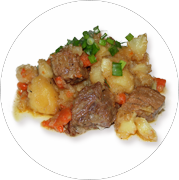 Also popular in Russia is a type of stew known as zharkoe which comes in a special clay pot. Such stews include meat, potatoes and root vegetables and are stewed in either stock or a herby tomato sauce and sometimes topped with cheese.
Pelmeni (Пельмени)
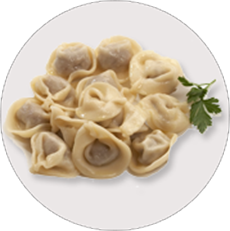 A favourite Russian dish, especially among students, is pelmeni. These are like fat ravioli stuffed with meat and boiled, although they can also be fried. They are normally served with sour cream and can even be served in the bouillon in which they were boiled. The dish originates from Siberia and the word pelmeni translates from the Komi language as ‘bread ear’.
Vareniki (Вареники)
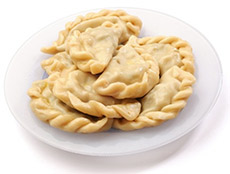 Vareniki are very similar in form to pelmeni and are also boiled like pelmeni. The main difference is that pelmeni are usually filled with meat but vareniki can have with different fillings. They can be savoury with potato, mushrooms or cabbage or sweet with berries or tvorog.
Manty (Манты)
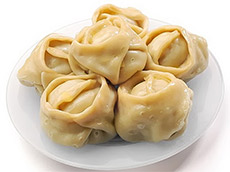 Manty are like big pelmeni but instead of being boiled they are steamed and during the process the juices from the meat and the onion remain inside the dough. Manty originated from Central Asia where they were often made out of lamb. Later these spread to Siberia where it was more traditional to use beef or pork or a mix of the two. Buryatia has its own variant of manty known as pozy (позы). Georgia has a similar looking dish called khinkali (хинкали), but these are boiled like pelmeni.
Golubtsy (Голубцы)
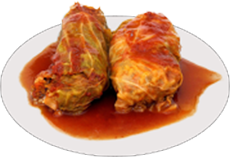 Golubtsy are stuffed cabbage rolls and are popular in Russian and Ukrainian cuisine. The cabbage leaves are stuffed with minced meat and rice and then cooked in a tomato-based sauce and served with sour cream and fresh herbs. You can also get lazy golubtsy (‘ленивые голубцы’) where the cabbage has been chopped up and mixed with the minced meat, but cooked in the same way.
Drinks (Напитки)
Although in Russian you can now get hold of most of the brands of soft drinks and alcohol you find in the West, there are some drinks that are specialities of Russia. The most popular non-alcoholic drink in Russia is probably tea and most gatherings will probably end with a cup of tea accompanied with something sweet.
Vodka (Водка)
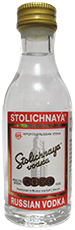 The most famous alcoholic drink in Russia is of course vodka. The word vodka is the diminutive form of the Russian word for water — voda (‘вода’). There is a wide range of brands of vodka in Russia and it is not unusual for a whole aisle in a supermarket to be dedicated just to vodka. In Russian the alcohol volume of vodka is always at least 40%. Russians generally drink vodka straight in shots after making a toast. After knocking it back they follow it with some zakuski. You can also buy flavoured vodka in Russia, and some of the flavours are uniquely Russian, for example horseradish vodka which is known as khrenovukha (хреновуха), garlic vodka and honey and chili vodka. Similar to vodka is the Ukrainian drink called gorilka (горилка) and the drink called nastoika (настойка) which is usually weaker than vodka and flavoured with fruit or herbs.
Mors (Морс)
 Mors is a traditional non-alcoholic Russian drink made by boiling berries, water and sugar in a pot. Various types of berries can be used, of which there are many in Russia, but the most popular for mors are cranberries (клюквенный морс), cowberries (брусничный морс) and blackcurrants (морс из черной смородины).
Kompot (Компот)
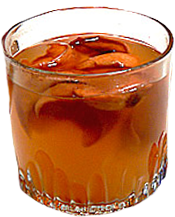 Kompot is similar to mors but whereas mors is made with berries, other fruit is boiled with sugar and water to make kompot. The most traditional flavours are apple, apricot, peach or just a mix of dried fruit. Normally it is served with pieces of the fruit still in the glass.
Kvas (Квас)
 Kvas is a popular drink across the country. It is made out of fermenting black bread and can be flavoured with berries, fruit or honey. The drink has a specific taste which is not always appreciated by foreigners and it is just slightly alcoholic, below 1%. Kvas is used as the base for one version of the cold Russian soup known as okroshka.
Medovukha (Медовуха)
 Medovukha or mead is a traditional alcoholic drink made by fermenting water and honey. It is especially associated with monks and monasteries and the ancient city of Suzdal has its own famous brand. Generally medovukha has an alcohol volume of around 5% but there is also a version which is more of a spirit and much stronger.
Sbiten (Сбитень)
 Sbiten is another traditional Russian drink which was first mentioned in chronicles in 1128. It is made out of water, honey and spices such as cinnamon, sage, mint and ginger. It is normally non-alcoholic and served hot, although a cold version is also drunk, especially in the banya.
Kefir (Кефир)
 If you don’t speak Russian you may accidently buy a carton of Kefir thinking it is milk or yoghurt and get a surprise as kefir is a fermented milk drink. It most likely originated in the Caucasus and is somewhat of an acquired taste. Ryanzhenka (ryazhenka) is similar to kefir but it is made out of fermented baked milk.
Kisel (Кисель)
 Kisel gets its name from the Russian word for sour ‘kisly’ and is a fruit drink normally made out of berries which also contains gelatine to make it rather thick and gloopy.
Baikal (Байкал)
 In 1973 the Soviets developed a fizzy drink as an alternative to Coca-Cola called Baikal after the famous lake in Siberia. The drink is still available today but is nowhere near as popular as Coca-Cola or Pepsi. It is the same colour as its American counterparts but has a much more medicinal taste thanks to the addition of herbal extracts.
►Russian Culture ►Russian Cuisine
Russian cuisine
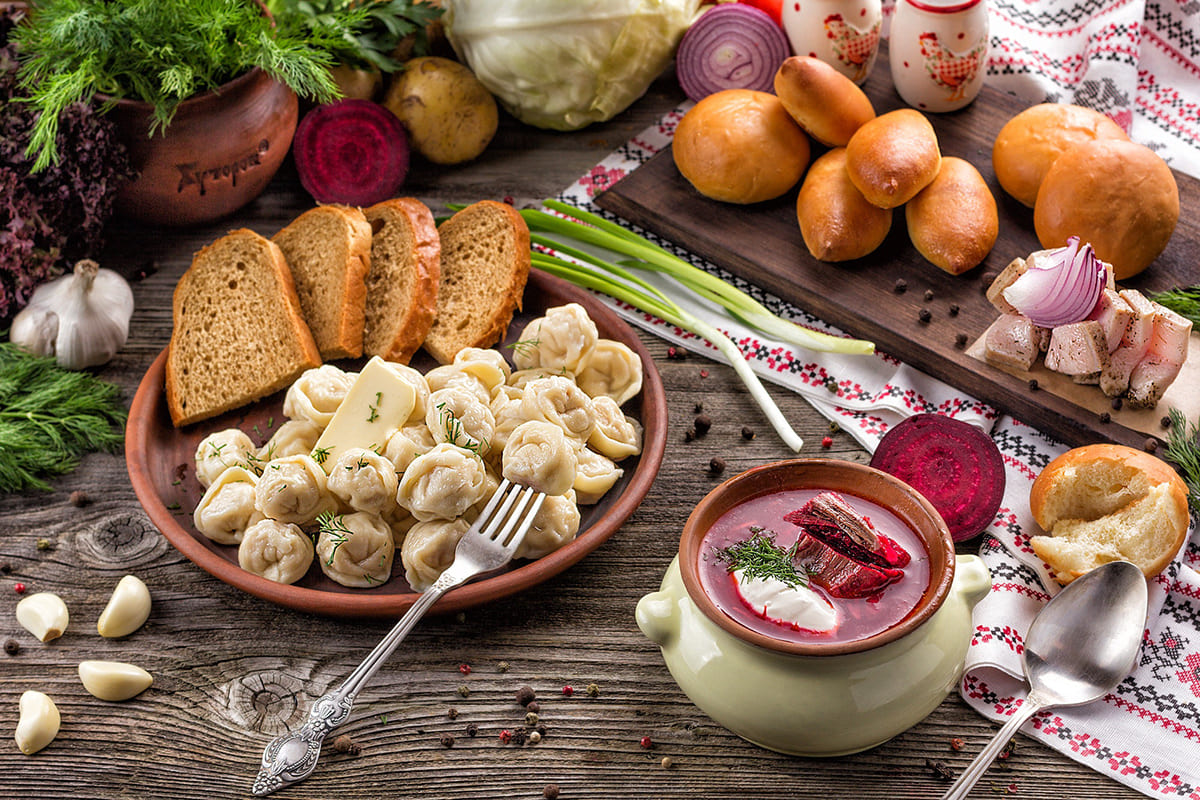
Each nation has its culinary traditions and dishes that people consider the most delicious in the world. Traditional Russian first hot dishes are “ukha” and “shchi”. “Ukha” or fish soup is one of the most ancient dishes that was prepared by the ancient Slavs since in those days there were lots of fish in rivers and lakes. “Shchi” (cabbage soup) appeared later. Scientists talk about the 9th century AD when peasants began to grow cabbage. Cabbage soup was first prepared in a clay pot, and over time, in a cast-iron one and certainly in a Russian stove.
Another dish that comes to mind is “bliny” (pancakes). The batter is poured into a pan and fried on both sides. Pancakes are eaten with sour cream or jam, and you can also cook different toppings for them. This dish is so loved by the Russian people that there is even a holiday, Maslenitsa, which lasts a whole week, during which pancakes are the main food. This is a pagan holiday of farewell to winter on the one hand, and on the other, preparation for Lent, when meat and dairy products cannot be eaten for the next 40 days.
Moms in many Russian families prepare pies, both fried and baked. The fillings can be any: minced meat, egg and green onions, cabbage, fruits, and jam. Pies, as a rule, are small dough products. But some craftswomen know how to cook kulebyaka. This is a traditional Russian pie, in which there are several types of stuffing, where each is separated by a thin pancake so as not to mix. My grandmother sometimes cooks kulebyaka on holidays, and this huge pie serves as a real table decoration.
Among the sweet dishes that are originally Russian can be called various “kiseli” (jelly). In modern times, it is cooked from various berries with the addition of starch and sugar. And in ancient Russia, oats, and cranberries were used.
But it’s better not to talk about dishes, you need to try them, so bon appetit (enjoy your meal).
Перевод
Каждый народ имеет свои кулинарные традиции и блюда, которые считает самыми вкусными в мире. Традиционными русскими первыми горячими блюдами считаются уха и щи. Уха или суп из рыбы — одно из самых древних блюд, которое готовили еще древние славяне, благо, в те времена водилось много рыбы в реках и озерах. Щи появились позже. Ученые говорят о 9 веке нашей эры, когда крестьяне начали выращивать капусту. Щи (капустный суп) готовили сначала в глиняном горшке, а со временем и в чугунном и непременно в русской печке.
Другое блюдо, которое приходит на ум, — это блины. Жидкое тесто разливают по сковородке и жарят с обеих сторон. Блины едят со сметаной или вареньем, а также можно готовить к ним разные начинки. Это блюдо настолько любимо русским народом, что даже есть праздник, Масленица, длящийся целую неделю, на протяжении которой блины – основная еда. Это языческий праздник прощания с зимой с одной стороны, а с другой, подготовка к Великому посту, когда ближайшие 40 дней нельзя есть мясные и молочные продукты.
Мамы во многих русских семьях готовят пироги, как жаренные, так и печеные. Начинки могут быть любыми: мясной фарш, яйцо и зеленых лук, капуста, фрукты и варенье. Пироги, как правило, — небольшие изделия из теста. Но есть мастерицы, которые умеют готовить кулебяку. Это традиционный русский пирог, в котором несколько видов начинки, где каждая отделена тонким блинчиком, чтобы не смешиваться. Моя бабушка иногда готовит кулебяку по праздникам, и этот огромным пирог служит настоящим украшением стола.
Среди сладких блюд, являющихся исконно русскими можно назвать различные кисели. В современное время его варят из различных ягод с добавлением крахмала и сахара. А в древней Руси использовали овес и клюкву.
Но о блюдах лучше не говорить, их нужно пробовать, так что приятного аппетита.