
О Древней Руси немало написано в школьных учебниках, однако часто мы видим лишь сухие факты из истории наших предков. Не стоит забывать, что древнерусское государство было родиной многих славянских народов, часть которых позднее растворилась в других племенах, дав жизнь новым народностям. У каждой группы племён были свои обычаи, уклад жизни, традиции. Именно этому я и хочу посвятить свой рассказ.
Не сомневаюсь, что вам не раз приходилось читать о воинственном нраве древлян, известных своей расправой над князем Игорем. Но давайте отвлечёмся от исторических фактов и дат, а обратимся к иному портрету этого народа. Древляне были обладателями древней культуры, а некоторые их обычаи вызывали настоящее недоумение у соседей-славян. Как же жили грозные покорители лесов?

Древляне – живущие среди деревьев
Несмотря на давность и совсем небольшое количество сведений, что дошли до нас в летописях и старинных документах, картина жизни древлян всё же кажется довольно чёткой, хотя есть в ней и пробелы. Уже одно только название этого народа говорит о его пристрастии к лесной жизни.
Историки считают, что сами древляне могли называть себя иначе, а привычное нам название мы получили от соседних племён. Крутой нрав и воинственный характер древлян позволяли им распространить свою власть на обширные земли – ныне это части Житомирской и Киевской областей, украинское Полесье.
Менее грозные племена вынуждены были внимательно изучать поведение своих непредсказуемых соседей. Слово «древляне» явно указывает на склонность народа создавать жильё в чаще лесов, где другие вряд ли смогли выжить. Непролазные леса, узкие тропки и обилие дичи стали для древлян настоящим раем, благодаря чему это племя сумело обрести невиданное могущество.
Жуткие “дикари”
В «Повести временных лет» автор весьма скверно отзывается о древлянах. Мне кажется, Нестора шокировали местные обычаи народа. Он отмечает, что древляне были подобны зверям. Они строили полуземлянки в лесах, «убивали друг друга, ели всё нечистое». А уж брачные традиции и вовсе повергали летописца в шок.
Согласно древлянским представлениям, мужчина должен был украсть свою невесту. Но не путайте это с кавказскими традициями. У древлян всё делалось без родительского согласия и, уж тем более, выкупа за будущую супругу. Для того, чтобы не допустить близкородственных браков, древляне нередко воровали девушек из соседних племён. Как говорится в «Повести временных лет», они «умыкали девиц у воды», то есть поджидали их у рек, куда те приходили с вёдрами и коромыслом.

А так ли страшны древляне?
Наверное, такое описание обычаев древлян может создать мрачную картину их быта, однако это не так. Народ, живущих в лесах, вовсе не был диким или излишне жестоким. Их воинственность была обусловлена требованиями того времени (более слабый народ просто не смог бы существовать в таких условиях), а некоторые традиции и вовсе кажутся весьма гуманными.
Пленный, ставший рабом, мог получить свободу после пяти лет труда. По своему желанию он мог остаться в древлянском поселении. Единственное, в чём ограничивали чужеземных освобождённых пленников – это количество жён. Если у древлян практиковалось многоженство, то экс-рабы могли жениться лишь на одной женщине.
Кража по взаимному согласию
Некоторые источники и вовсе говорят, что украсть девушку древлянин мог лишь с её согласия. Известен старинный обряд, так называемые смотрины. Древляне ежегодно, в начале мая, собирали на открытых полянах юношей и девушек соответствующего возраста. Видимо, именно во время этого майского празднества и создавались будущие супружеские пары.
Свадебной церемонии у древлян не было, что и указывает летописец Нестор. Но, чтобы считаться семьёй, достаточно было невесте переступить порог дома жениха. Как видите, всё просто, однако вполне цивилизованно.
Важную роль во время решения бытовых вопросов, важных моментов жизни играли старейшины племени. Часто именно в их присутствии родственники невесты оговаривали условия её содержания. Юноша же с момента вступления в брак считался совершенно взрослым мужчиной, а потому переходил на военную службу.
Интересно, что у древлян мужчина не мог подать на развод, а вот женщина при неподобающем обращении мужа с ней могла пожаловаться на него всему племени. Порой такого мужчину и вовсе изгоняли, а его бывшая жена могла выйти замуж во второй раз.

Преступление и наказание
У древлян очень строго карались люди, совершившие преступление. Страшное наказание ожидало того, кто осмелился прелюбодействовать, украсть ценную вещь или вовсе убить человека. В случае последнего убийцу привязывали лицом к своей жертве, а потом живьём закапывали вместе с тем, у кого он отнял жизнь. Древляне верили, что дух убитого человека будет вечно мучить душу преступника, не давая ему покоя в ином мире.
Высокого уровня развития достигла у древлян и медицина. Широко использовались всевозможные травы, из которых готовили мази и бальзамы, делали целебные настои. Впрочем, это искусство было известно многим славянским народам, а сегодня оно продолжает жить, пройдя проверку временем.
Я хочу отметить, что многие негативные упоминания о древлянах вышли из-под пера приверженцев христианской веры, а потому племена язычников априори считались для них дикарями и варварами. Но так ли это? Не стоит забывать, что именно древнеславянская (в том числе и древлянская) культура стала той основой, на которой сложился привычный нам мир.
Содержание
- 1 Традиция похищения невесты
- 2 Похищение невест в Библии
- 3 Как похищали невест у славян
- 4 Похищение невесты по-татарски
- 5 Похищение невесты как статья Уголовного кодекса
- 6 Воровство невесты – красивая свадебная традиция
- 6.1 Поделиться:
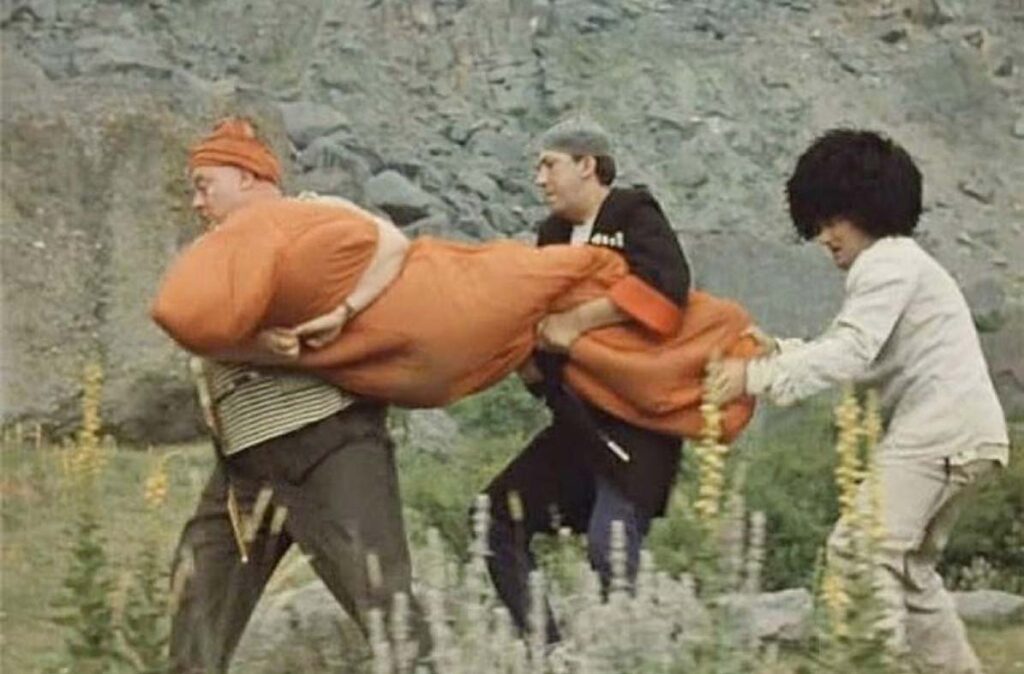
Похищение невесты – это основная идея знаменитой на все века комедии Гайдая «Кавказская пленница». Трус, Балбес и Бывалый по поручению товарища Саахова похитили героиню Натальи Варлей – красавицу Нину. В картине эта ситуация смешно обыгрывается: «А вы знали, что в соседнем районе похитили члена партии?». Однако немногие советские граждане знали, что в их родной стране девушек похищают на самом деле. И происходит это, как и в фильме, на Кавказе. Но обратимся к истории. Как и когда, а главное, почему появилась традиция воровства невест?
Традиция похищения невесты
Похищение невесты имеет второе название – брак умыканием. Такая практика распространена сегодня в некоторых странах и регионах мира, например, на Кавказе, в Казахстане, Киргизии, Эфиопии и т. д. Все это – мусульманские страны, где жених должен выплатить родителям невесты калым. После похищения родственники похитителя всеми cилами уговаривают девушку простить парня и выйти за него замуж.
Во многих случаях похищение происходит с согласия девушки и даже более того – с благословения ее родителей. Почему так происходит? Представим себе, что старшая сестра еще не вышла замуж, а младшей уже очень хочется. Младшую сестру как будто «похищают». Проходит немного времени и молодые люди приходят к отцу невесты «просить прощения». Отец их «ругает» и даже «прогоняет вон». «Прощение» наступает только после рождения первенца.
Рекомендуем к прочтению: Зеркало разбить — семь лет счастья не знать
Похищение невест в Библии
Это может показаться странным, но одним из первых источников, в котором упомянуто похищение невесты, является Библия. Израильтяне воевали с коленом Вениамина и почти уничтожили его «на корню». Евреи поклялись, что не будут отдавать своих дочерей за представителей поверженного племени. Однако затем сменили гнев на милость и разрешили венеаминцам похищать евреек во время одного из праздников.
Древние римляне похищали сабинянок, чтобы увеличить численность своего населения. В первые годы существования Вечного Города в нем жили практически одни мужчины.
Как похищали невест у славян

Традиция славянских племен древлян, радимичей и вятичей похищать (умыкать, уводить) невест нашла свое отражение во многих исторических источниках. В частности, о таких «игрищах между селами» упоминал в своей «Повести временных лет» Нестор Летописец.
«Уводы» невест случались во время празднований, которые устраивались в честь богини любви Лады. Эти праздники начинались по весне, на Красную Горку и заканчивались летом, на Ивана Купала. До 16-17 века такой обычай сохранялся и во многих европейских странах, в частности Польше и Украине.
Девушек часто похищали для того, чтобы обойти родительский запрет на брак. Родители хотели одного жениха, а дочка желала выйти замуж за другого. Парень и девушка договаривались и разыгрывали похищение.
Интересно, что в Сербии жених перед похищением невесты должен был одеваться «по-военному». А в Болгарии даже устраивали инсценировки с похищением. Люди верили, что, сделав это, они обеспечат своим полям богатый урожай.
Похищение невесты по-татарски
Татары воровали своих невест преимущественно для обхода родительского запрета на брак. У других мусульман основным мотивом является, как правило, нежелание платить калым родителям. Девушка и парень устраивали все как надо, а потом приходили к родителям невесты за благословением. И те были должны принять выбор своей дочери.
Похищение невесты как статья Уголовного кодекса
В современной России похищение невесты подпадает под 126 статью Уголовного кодекса. Фигуранту такого дела грозит до 4 лет лишения свободы. Похитителя не накажут, если он добровольно отпустит свою жертву.
Впрочем, даже угроза реальных тюремных сроков не останавливает похитителей женщин – горячих кавказских парней. До реальных посадок доводят меньше 10% всех открытых дел.
Воровство невесты – красивая свадебная традиция

Мы не призываем вас нарушать УК РФ, поэтому занимайтесь воровством невест только на свадьбах, с предварительного разрешения тамады и жениха. Невесту на свадьбе крадут «по приколу», чтобы повеселить себя и гостей, а также чтобы жених поборолся за свою любимую, показал, насколько ему дорога его невеста.
Важно чтобы похитители были более-менее трезвые и были адекватными – в этом деле очень важно не переборщить. Главное, побеспокойтесь о том, чтобы невесте было комфортно на кухне ресторана, в кладовке или в другом месте, где вы будете ее прятать.
Жених получает невесту назад после того, как ответит на каверзные вопросы и пройдет другие интересные задания. Слишком затягивать воровство невесты не стоит: помните, «что занадто, то не здраво»!
В интернете можно найти большое количество сценариев выкупа – выбирайте понравившийся и адаптируйте под свои условия. Ну, и конечно, не забывайте о других свадебных ритуалах и традициях!
Поделиться:


Bride kidnapping, also known as marriage by abduction or marriage by capture, is a practice in which a man abducts the woman he wishes to marry.[1]
Bride kidnapping (hence the portmanteau bridenapping[2]) has been practiced around the world and throughout prehistory and history, among peoples as diverse as the Hmong in Southeast Asia, African Tribes, the Tzeltal in Mexico, and the Romani in Europe. Bride kidnapping still occurs in various parts of the world, but it is most common in the Caucasus and Central Asia.[3]
In most nations, bride kidnapping is considered a sex crime because of the implied element of rape, rather than a valid form of marriage. Some types of it may also be seen as falling along the continuum between forced marriage and arranged marriage. The term is sometimes confused with elopements, in which a couple runs away together and seeks the consent of their parents later. In some cases, the woman cooperates with or accedes to the kidnapping, typically in an effort to save face for herself or her parents. In many jurisdictions, this used to be encouraged by so-called marry-your-rapist laws. Even in countries where the practice is against the law, if judicial enforcement is weak, customary law («traditional practices») may prevail.
Bride kidnapping is often (but not always) a form of child marriage.[4] It may be connected to the practice of bride price, wealth paid by the groom and his family to the bride’s parents, and the inability or unwillingness to pay it.[5]
Bride kidnapping is distinguished from raptio in that the former refers to the abduction of one woman by one man (and his friends and relatives), and is still a widespread practice, whereas the latter refers to the large scale abduction of women by groups of men, possibly in a time of war. Raptio was assumed to be a historical practice, hence the Latin term, but the 21st century has seen a resurgence of war rape, some of which has elements of bride kidnapping; for example, women and girls abducted by Boko Haram in Nigeria, the Lord’s Resistance Army in Uganda and ISIS in the Middle East have been taken as wives by their abductors.
Rituals indicating a symbolic bride kidnapping still exist in some cultures (such as Circassians[6]), as part of traditions surrounding a wedding. According to some sources, the honeymoon is a relic of marriage by capture, based on the practice of the husband going into hiding with his wife to avoid reprisals from her relatives, with the intention that the woman would be pregnant by the end of the month.[7]
Background and rationale[edit]
Though the motivations behind bride kidnapping vary by region, the cultures with traditions of marriage by abduction are generally patriarchal with a strong social stigma on sex or pregnancy outside marriage and illegitimate births.[8]
In some modern cases, the couple colluded to elope under the guise of a bride kidnapping, presenting their parents with a fait accompli. In most cases, however, the men who resort to capturing a wife are often of lower social status, because of poverty, disease, poor character or criminality.[9] They are sometimes deterred from legitimately seeking a wife because of the payment the woman’s family expects, the bride price (not to be confused with a dowry, paid by the woman’s family).[10]
In agricultural and patriarchal societies, where bride kidnapping is most common, children work for their families. A woman leaves her birth family, geographically and economically, when she marries, becoming instead a member of the groom’s family. (See patrilocality for an anthropological explanation.) Due to this loss of labour, the women’s families do not want their daughters to marry young, and demand economic compensation (the aforementioned bride price) when they do leave them. This conflicts with the interests of men, who want to marry early, as marriage means an increase in social status, and the interests of the groom’s family, who will gain another pair of hands for the family farm, business or home.[11] Depending on the legal system under which she lives, the consent of the woman may not be a factor in judging the validity of the marriage.
In addition to the issue of forced marriage, bride kidnapping may have other negative effects on young women and their society. For example, fear of kidnap is cited as a reason for the lower participation of girls in the education system.[12]
The mechanism of marriage by abduction varies by location. This article surveys the phenomenon by region, drawing on common cultural factors for patterns, but noting country-level distinctions.
Africa[edit]
Egypt[edit]
There have been cases of Coptic Christian women and girls abducted, forced to convert to Islam and then married to Muslim men.[13][14] The practice has increased with the rise of Salafist networks under president Abdel Fattah Saeed Hussein Khalil el-Sisi, who pay as much as $3000 for every Coptic Christian woman kidnapped, raped and married to a Muslim man.[15][16][17]
Ethiopia[edit]
Bride kidnapping is prevalent in many regions of Ethiopia. According to surveys conducted in 2003 by the National Committee on Traditional Practices in Ethiopia, the custom’s prevalence rate was estimated at 69 percent nationally, and highest in the Southern Nations, Nationalities and People’s Region at 92 percent.[18][19] A man working in co-ordination with his friends may kidnap a girl or woman, sometimes using a horse to ease the escape.[20] The abductor will then hide his intended bride or bring her to his family and rape her, sometimes in front of his family, until she becomes pregnant.[21] As the father of the woman’s child, the man can claim her as his wife.[22] Subsequently, the kidnapper may try to negotiate a bride price with the village elders to legitimize the marriage.[22] Girls as young as eleven years old are reported to have been kidnapped for the purpose of marriage.[23] Though Ethiopia criminalised such abductions and raised the marriageable age to 18 in 2004, the law has not been well implemented.[24] A 2016 UNICEF evidence review (based on data from 2010 and 2013) estimated that 10 to 13 percent of marriages in the highest risk areas involved abduction, with rates of 1.4 percent to 2.4 percent in lower risk areas of the country.[25]
The bride of the forced marriage may suffer from the psychological and physical consequences of forced sexual activity and early pregnancy and the early end to her education.[26] Women and girls who are kidnapped may also be exposed to sexually transmitted diseases such as HIV/AIDS.[26]
Kenya[edit]
Forced marriages continue to be a problem for young girls in Kenya. The United States Department of State reports that children and young teenaged girls (aged ten and up) are sometimes married to men two decades older.[27]
Marriage by abduction used to be, and to some extent still is, a customary practice for the Kisii ethnic group. In their practice, the abductor kidnaps the woman forcibly and rapes her in an attempt to impregnate her. The «bride» is then coerced through the stigma of pregnancy and rape to marry her abductor. Though most common in the late 19th century through the 1960s, such marriage abductions still occur occasionally.[28]
The Turkana tribe also practised marriage by abduction. In this culture, bridal kidnapping (akomari) occurred before any formal attempts to arrange a marriage with a bride’s family. According to one scholar, a successful bridal kidnapping raised the abductor’s reputation in his community, and allowed him to negotiate a lower bride price with his wife’s family. Should an attempted abductor fail to seize his bride, he was bound to pay a bride price to the woman’s family, provide additional gifts and payments to the family, and to have an arranged marriage (akota).[29]
Rwanda[edit]
Bride-kidnapping is prevalent in areas of Rwanda.[30] Often the abductor kidnaps the woman from her household or follows her outside and abducts her. He and his companions may then rape the woman to ensure that she submits to the marriage.[31] The family of the woman either then feels obliged to consent to the union,[32] or is forced to when the kidnapper impregnates her, as pregnant women are not seen as eligible for marriage. The marriage is confirmed with a ceremony that follows the abduction by several days. In such ceremonies, the abductor asks his bride’s parents to forgive him for abducting their daughter.[32] The man may offer a cow, money, or other goods as restitution to his bride’s family.[33]
Bride-kidnap marriages in Rwanda often lead to poor outcomes. Human rights workers report that one third of men who abduct their wives abandon them, leaving the wife without support and impaired in finding a future marriage.[32] Additionally, with the growing frequency of bride-kidnapping, some men choose not to solemnize their marriage at all, keeping their «bride» as a concubine.[32]
Bride kidnapping is not specifically outlawed in Rwanda, though violent abductions are punishable as rape. According to a criminal justice official, bride kidnappers are virtually never tried in court: «When we hear about abduction, we hunt down the kidnappers and arrest them and sometimes the husband, too. But we’re forced to let them all go several days later,» says an official at the criminal investigation department in Nyagatare, the capital of Umutara.[32] Women’s rights groups have attempted to reverse the tradition by conducting awareness raising campaigns and by promoting gender equity, but the progress has been limited so far.[32]
South Africa[edit]
The practice is known as ukuthwalwa or simply thwala in the Nguni-speaking tribes. (The Basotho call it tjhobediso.) Among Zulu people, thwala was once an acceptable way for two young people in love to get married when their families opposed the match, and so it was actually a form of elopement.[34] Thwala has been abused, however, «to victimize isolated rural women and enrich male relatives.»[34]
Central Asia[edit]
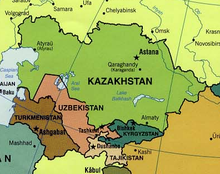
In Central Asia, bride kidnapping exists in Kyrgyzstan,[35] Kazakhstan,[36] Turkmenistan,[37] and Karakalpakstan, an autonomous region of Uzbekistan.[38] Though origin of the tradition in the region is disputed,[39] the rate of nonconsensual bride kidnappings appears to be increasing in several countries throughout Central Asia as the political and economic climate changes.[40]
Kyrgyzstan[edit]
Despite its illegality,[41] with the practice being subjected to stricter crackdowns in 2013, which punish it by a prison sentences of up to 10 years,[42] in many primarily rural areas,[43] bride kidnapping, known as ala kachuu (to take and flee), is an accepted and common way of taking a wife.[44] The matter is somewhat confused by the local use of the term «bride kidnap» to reflect practices along a continuum, from forcible abduction and rape (and then, almost unavoidably, marriage), to something akin to an elopement arranged between the two young people, to which both sets of parents have to consent after the act. Bride kidnappings that involve rape do so to psychologically force the would-be bride to accept her kidnapper and his family’s pressure to marry him, since if she then refuses she would never be considered marriageable again. Of 12,000 yearly bride kidnappings, approximately 2,000 women reported that she had been raped by the would-be groom.[45] However, the United Nations Development Programme disputes that bride kidnapping is part of the country’s culture or tradition, and considers it a human rights violation.[46]
Estimates of the prevalence of bride kidnapping vary, sometimes widely. A 2015 crime victimization survey included the kidnapping of young women for marriage. Fourteen percent of married women answered that they had been kidnapped; two-thirds of these cases had been consensual, in that the woman knew the man and had agreed with it up front. This means that about five percent of extant marriages are cases of Ala Kachuu.[47] A 2007 study published in the Central Asian Survey concluded that approximately half of all Kyrgyz marriages included bride kidnapping; of those kidnappings, two-thirds are non-consensual.[48] Research by non-governmental organizations give estimates from a low of 40%[49] to between 68 and 75 percent.[50]
Although the practice is illegal, bride kidnappers are rarely prosecuted. This reluctance to enforce the code is in part caused by the pluralistic legal system, where many villages are de facto ruled by councils of elders and aqsaqal courts following customary law, away from the eyes of the state legal system.[51] Aqsaqal courts, tasked with adjudicating family law, property and torts, often fail to take bride kidnapping seriously. In many cases, aqsaqal members are invited to the kidnapped bride’s wedding and encourage the family of the bride to accept the marriage.[52]
Kazakhstan[edit]
In Kazakhstan, bride kidnapping (alyp qashu) is divided into non-consensual and consensual abductions, kelisimsiz alyp qashu («to take and run without agreement») and kelissimmen alyp qashu («to take and run with agreement»), respectively.[53] Though some kidnappers are motivated by the wish to avoid a bride price or the expense of hosting wedding celebrations or a feast to celebrate the girl leaving home, other would-be husbands fear the woman’s refusal, or that the woman will be kidnapped by another suitor first.[54] Generally, in nonconsensual kidnappings, the abductor uses either deception (such as offering a ride home) or force (such as grabbing the woman, or using a sack to restrain her) to coerce the woman to come with him.[55] Once at the man’s house, one of his female relatives offers the woman a kerchief (oramal) that signals the bride’s consent to the marriage. Though in consensual kidnappings, the woman may agree with little hesitation to wear the kerchief, in non-consensual abductions, the woman may resist the kerchief for days.[56] Next, the abductor’s family generally asks the «bride» to write a letter to her family, explaining that she had been taken of her own free will. As with the kerchief, the woman may resist this step adamantly.[57] Subsequently, the «groom» and his family generally issues an official apology to the bride’s family, including a letter and a delegation from the groom’s household. At this time, the groom’s family may present a small sum to replace the bride-price. Though some apology delegations are met cordially, others are greeted with anger and violence.[58] Following the apology delegation, the bride’s family may send a delegation of «pursuers» (qughysnshy) either to retrieve the bride or to verify her condition and honour the marriage.[59]
A recent victimization survey in Kazakhstan (2018) included the crime of kidnapping of young women for marriage. 4% of married women answered that they were kidnapped at the time and that two-thirds of these cases were consensual, the woman knew the man and had agreed with it up front. This means that about 1-1.5% of current marriages in Kazakhstan are the result of non-consensual abductions.[60]
Uzbekistan[edit]
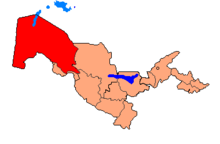
Map of Uzbekistan. Karakalpakstan in red.
In Karakalpakstan, an autonomous region in Uzbekistan, nearly one fifth of all marriages are conducted by bride kidnapping.[61] Activist groups in the region tie an increase in kidnappings to economic instability. Whereas weddings can be prohibitively expensive, kidnappings avoid both the cost of the ceremony and any bride price.[62] Other scholars report that less desirable males with lower education level or suffering from drug abuse or alcoholism are more likely to kidnap their brides.[63] Bride kidnapping sometimes originates out of a dating relationship and, at other times, happens as an abduction by multiple people.[64]
East and South Asia[edit]
Pakistan[edit]

Protest against forced conversion of Christian girls in Pakistan organised by NCJP
There are instances in which Hindu women and some Christian women and minor girls are forced to marry Muslim men. Many of these convert, either willingly or by force.[65]
Indonesia[edit]
In Bali tradition, Balinese men historically must abduct women for marrying.[66]
Hmong culture[edit]
Marriage by abduction also occurs in traditional Hmong culture, in which it is known as zij poj niam.[67] As in some other cultures, bride kidnapping is generally a joint effort between the would-be groom and his friends and family. Generally, the abductor takes the woman while she is alone. The abductor then sends a message to the kidnap victim’s family, informing them of the abduction and the abductor’s intent to marry their daughter.[68] If the victim’s family manage to find the woman and insist on her return, they might be able to free her from the obligation to marry the man. However, if they fail to find the woman, the kidnap victim is forced to marry the man. The abductor still has to pay a bride price for the woman, generally an increased amount because of the kidnapping. Because of this increased cost (and the general unpleasantness of abduction), kidnapping is usually only a practice reserved for a man with an otherwise blemished chance of securing a bride, because of criminal background, illness or poverty.[69]
Occasionally, members of the Hmong ethnic group have engaged in bride kidnapping in the United States.[70] In some cases, the defendant has been allowed to plead a cultural defense to justify his abduction.[71] This defense has sometimes been successful. In 1985, Kong Moua, a Hmong man, kidnapped and raped a woman from a Californian college. He later claimed that this was an act of zij poj niam and was allowed to plead to false imprisonment only, instead of kidnapping and rape. The judge in this case considered cultural testimony as an explanation of the man’s crime.[72]
China[edit]
Until the 1940s, marriage by abduction, known as qiangqin (Chinese: 搶親; pinyin: qiǎngqīn), occurred in rural areas of China.[73] Though illegal in imperial China, for rural areas it often became a local «institution». According to one scholar, marriage by abduction was sometimes a groom’s answer to avoid paying a bride price.[74] In other cases, the scholar argues, it was a collusive act between the bride’s parents and the groom to circumvent the bride’s consent.[75]
Chinese scholars theorise that this practice of marriage by abduction became the inspiration for a form of institutionalised public expression for women: the bridal lament.[76] In imperial China, a new bride performed a two- to three-day public song, including chanting and sobbing, that listed her woes and complaints. The bridal lament would be witnessed by members of her family and the local community.[77]
In recent years bride kidnapping has resurfaced in areas of China. In many cases, the women are kidnapped and sold to men in poorer regions of China, or as far abroad as Mongolia. Reports say that buying a kidnapped bride is nearly one tenth of the price of hosting a traditional wedding.[78] The United States Department of State tie this trend of abducting brides to China’s one-child policy, and the consequent gender imbalance as more male children are born than female children.[79]
Bride abduction also occurred in Tibetan history, sometimes involving ceremonial mock abductions or as a bargaining procedure.[80][81][82]
Japan[edit]
According to a study conducted by Kunio Yanagita, a scholar of Folklore in Japan, three patterns of bride kidnapping are known to have existed in Japan:[83]
- A man and his cooperators kidnap a woman without notifying her parents;
- Bride kidnapping that may occur after parents forbid marriage out of fear for their daughter’s social reputation;
- Bride kidnapping as an alternative path to marriage for couples unable to pay for a typical wedding.
In Buraku of Kochi, there was the custom of bride kidnapping named katagu (かたぐ).[84][85]
The Americas[edit]
The practice of kidnapping children, teenagers and women from neighbouring tribes and adopting them into the new tribe was common among Indigenous peoples of the Americas[citation needed]. The kidnappings were a way of introducing new blood into the group.[citation needed] Captured European women sometimes settled down as adopted members of the tribe[citation needed] and at least one woman, Mary Jemison, refused rescue when it was offered.[86]
Brazil[edit]
The trope of the captured Indigenous (great, great) grandmother is a standard origin myth for many white Brazilian families, captured in the widely use phrase «my (great, great) grandmother was an Indian caught in the rope» (the phrase Índia pega no laço). The phrase reflect «in part» the facts of centuries of female abductions by colonialists that continued even into the 20th century.[87] For example, in a paper discussing the phrase, Indigenous academic Mirna P Marinho da Silva Anaquiri reports a quote from a teacher in Goiânia interviewed as part of her fieldwork:
As a child I witnessed an Indian woman arriving at the farm where my father worked, tied to the tail of a horse. The guy riding on the horse, and her, tied with a rope to the horse’s tail; this — for me — is that image. And this «pega no laço» [caught in the lasso] is so generalized that it seems common, natural — nobody is shocked…. ..They… locked her in this wooden box.. ..This happened in 1961, I was four years old.
— A teacher in Goianápolis, reported in Anaquiri, 2018[88]
Helena Valero, a Brazilian woman kidnapped by Amazonian Indians in 1937, dictated her story to an Italian anthropologist, who published it in 1965.[89]
United States[edit]
Cases exist within some Mormon Fundamentalist communities around the Utah-Arizona border; however, accurate information is difficult to obtain from these closed communities. Most of these cases are usually referred to as forced marriages, although they are similar to other bride kidnappings around the world.[90]
Mexico[edit]

Among the Tzeltal community, a Mayan tribe in Chiapas, Mexico, bride kidnapping has been a recurring method of securing a wife.[91] The Tzeltal people are an indigenous, agricultural tribe that is organised patriarchally. Premarital contact between the sexes is discouraged; unmarried women are supposed to avoid speaking with men outside their families.[92] As with other societies, the grooms that engage in bride kidnapping have generally been the less socially desirable mates.[93]
In the Tzeltal tradition, a girl is kidnapped by the groom, possibly in concert with his friends. She is generally taken to the mountains and raped. The abductor and his future bride often then stay with a relative until the bride’s father’s anger is reported to have subsided. At that point, the abductor will return to the bride’s house to negotiate a bride-price, bringing with him the bride and traditional gifts such as rum.[94]
The largest Comanche raids into Mexico took place from 1840 to the mid-1850s, when they declined in size and intensity. The captured Mexican girls often became one of several wives of Comanche men.
Chile[edit]

The painting depicts a Chilean woman being kidnapped during a malón.
Among the Mapuche of Chile, the practice was known as casamiento por capto in Spanish, and ngapitun in Mapudungun.[95] Contemporary chronicler Alonso González de Nájera writes that during the Destruction of the Seven Cities in southern Chile Mapuches took over 500 Spanish women as captives.[96] In the case of the women it was, in the words of González de Nájera, «to exploit them». The capture of women initiated a tradition of abductions of Spanish women in the 17th century by Mapuches.[96]
The Caucasus[edit]
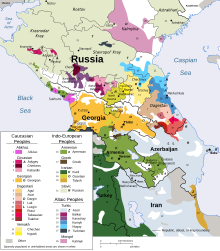
Bride kidnapping is an increasing trend in the countries and regions of the Caucasus, both in Georgia in the South[97] and in Dagestan, Chechnya and Ingushetia in the North.[citation needed] In the Caucasian versions of bride-kidnapping, the kidnap victim’s family may play a role in attempting to convince the woman to stay with her abductor after the kidnapping, because of the shame inherent in the presumed consummation of the marriage.[98]
Dagestan, Chechnya and Ingushetia[edit]
The Dagestan, Chechnya and Ingushetia regions in the Northern Caucasus (in Russia) have also witnessed an increase in bride kidnappings since the fall of the Soviet Union.[99] As in other countries, kidnappers sometimes seize acquaintances to be brides and other times abduct strangers.[100] The social stigma of spending a night in a male’s house can be a sufficient motivation to force a young woman to marry her captor.[101] Under Russian law, though a kidnapper who refuses to release his bride could be sentenced to eight to ten years, a kidnapper will not be prosecuted if he releases the victim or marries her with her consent.[102] Bride captors in Chechnya are liable, in theory, to receive also a fine of up to 1 million rubles.[101] As in the other regions, authorities often fail to respond to the kidnappings.[103] In Chechnya, the police failure to respond to bridal kidnappings is compounded by a prevalence of abductions in the region.[104] Several such kidnappings have been captured on video.[105]
Researchers and non-profit organisations describe a rise in bride kidnappings in the North Caucasus in the latter half of the 20th century.[101] In Chechnya, women’s rights organisations tie the increase in kidnappings to a deterioration of women’s rights under the rule of Chechen president Ramzan Kadyrov.[101]
Azerbaijan[edit]
In Azerbaijan, both marriage by capture (qız qaçırmaq) and elopement (qoşulub qaçmaq) are relatively common practices.[106] In the Azeri kidnap custom, a young woman is taken to the home of the abductor’s parents through either deceit or force. Regardless of whether rape occurs or not, the woman is generally regarded as impure by her relatives, and is therefore forced to marry her abductor.[107] Despite a 2005 Azeri law that criminalised bride kidnapping, the practice places women in extremely vulnerable social circumstances, in a country where spousal abuse is rampant and recourse to law enforcement for domestic matters is impossible.[108] In Azerbaijan, women abducted by bride kidnapping sometimes become slaves of the family who kidnap them.[109]
Georgia[edit]
In Georgia, bride kidnapping occurs in the south of the country mostly concentrated in and around the town of Akhalkalaki ethnic minority areas.[110] Although the extent of the problem is not known, non-governmental activists estimate that hundreds of women are kidnapped and forced to marry each year.[111] In a typical Georgian model of bride kidnapping, the abductor, often accompanied by friends, accosts the intended bride, and coerces her through deception or force to enter a car. Once in the car, the victim may be taken to a remote area or the captor’s home.[112] These kidnappings sometimes include rape, and may result in strong stigma to the female victim, who is assumed to have engaged in sexual relations with her captor.[113] Women who have been victims of bride kidnapping are often regarded with shame; the victim’s relatives may view it as a disgrace if the woman returns home after a kidnapping.[114] In other cases, the kidnapping is a consensual elopement.[115] Human Rights Watch reports that prosecutors often refuse to bring charges against the kidnappers, urging the kidnap victim to reconcile with her aggressor.[116] Enforcing the appropriate laws in this regard may also be a problem because the kidnapping cases often go unreported as a result of intimidation of victims and their families.[117]
Europe[edit]
Roma (Romani) communities[edit]
Bride kidnapping has been documented as a marital practice in some Romani community traditions. In the Romani culture, girls as young as twelve years old may be kidnapped for marriage to teenaged boys.[118] As the Roma population lives throughout Europe, this practice has been seen on multiple occasions in Ireland, England, the Czech Republic, the Netherlands, Bulgaria and Slovakia.[119] The kidnapping has been theorized as a way to avoid a bride price or as a method of ensuring exogamy.[120][121] The tradition’s normalization of kidnapping puts young women at higher risk of becoming victims of human trafficking.[122]
Mediterranean[edit]

Marriage by capture was practiced in ancient cultures throughout the Mediterranean area. It is represented in mythology and history by the tribe of Benjamin in the Bible;[123] by the Greek hero Paris stealing the beautiful Helen of Troy from her husband Menelaus, thus triggering the Trojan War;[124] and by the Rape of the Sabine Women by Romulus, the founder of Rome.[125]
In 326 A.D., the Emperor Constantine issued an edict prohibiting marriage by abduction. The law made kidnapping a public offence; even the kidnapped bride could be punished if she later consented to a marriage with her abductor.[126] Spurned suitors sometimes kidnapped their intended brides as a method of restoring honor. The suitor, in coordination with his friends, generally abducted his bride while she was out of her house in the course of her daily chores. The bride would then be secreted outside the town or village. Though the kidnapped woman was sometimes raped in the course of the abduction, the stain on her honor from a presumptive consummation of the marriage was sufficient to damage her marital prospects irreversibly.[127] Sometimes, the abduction masked an elopement.[128]
Italy[edit]
The custom of fuitina was widespread in Sicily and continental southern Italy. In 1965, this custom was brought to national attention by the case of Franca Viola, a 17-year-old abducted and raped by a local small-time criminal, with the assistance of a dozen of his friends. When she was returned to her family after a week, she refused to marry her abductor, contrary to local expectation. Her family backed her up, and suffered severe intimidation for their efforts; the kidnappers were arrested and the main perpetrator was sentenced to 11 years in prison.
The exposure of this «archaic and intransigent system of values and behavioural mores»[129] caused great national debate. In 1968, Franca married her childhood sweetheart, with whom she would later have three children. Conveying clear messages of solidarity, Giuseppe Saragat, then president of Italy, sent the couple a gift on their wedding day, and soon afterwards, Pope Paul VI granted them a private audience. A 1970 film, La moglie più bella (The Most Beautiful Wife) by Damiano Damiani and starring Ornella Muti, is based on the case. Viola never capitalised on her fame and status as a feminist icon, preferring to live a quiet life in Alcamo with her family.[129]
The law allowing «rehabilitating marriages» (also known as marry-your-rapist law) to protect rapists from criminal proceedings was abolished in 1981.[130][131]
Ireland[edit]
The 12th-century Norman invasion of Ireland was invited by an instance of wife-stealing: in 1167, the King of Leinster, Diarmait Mac Murchada, had his lands and kingship revoked by order of the High King of Ireland, Ruaidrí Ua Conchobair, as punishment for abducting the wife of another king in 1152. This led Diarmait to seek the assistance of King Henry II of England in order to reclaim his kingdom.
The abduction of heiresses was an occasional feature in Ireland until 1800,[132][133] as illustrated in the film The Abduction Club.
Malta[edit]
In 2015, Malta was criticized by Equality Now, for a law which, in certain circumstances, can extinguish the punishment for a man who abducts a woman if, following the abduction, the man and woman get married.[134] (Article 199 and Article 200 of the Criminal Code of Malta)[135] The article was ultimately abolished by Act XIII of 2018, Article 24.
Slavic tribes[edit]

St. Olga of Kyiv attacking a would-be kidnapper’s stronghold
East Slavic tribes, predecessor tribes to the Rus state, practiced bride kidnapping in the eleventh century. The traditions were documented by Rus’ monk Nestor. According to his Chronicles, the Drevlian tribe captured wives non-consensually, whereas the Radimich, Viatich, and Severian tribes «captured» their wives after having come to an agreement about marriage with them.[136] The clergy’s increase in influence may have helped the custom to abate.[137]
Marriage by capture occurred among the South Slavs until the beginning of the 1800s. Common in Serbia, Montenegro, Croatia and Bosnia-Herzegovina, the custom was known as otmitza.[138] The practice was mentioned in a statute in the Politza, the 1605 Croatian legal code.[139] According to Serbian folk-chronicler Vuk Karadzic, a man would dress for «battle» before capturing a woman. Physical force was a frequent element of these kidnappings.[140]
Bride kidnapping was also a custom in Bulgaria. With the consent of his parents and the aid of his friends, the abductor would accost his bride and take her to a barn away from the home, as superstition held that pre-marital intercourse might bring bad luck to the house. Whether or not the man raped his bride, the abduction would shame the girl and force her to stay with her kidnapper to keep her reputation. As in other cultures, sometimes couples would elope by staging false kidnappings to secure the parents’ consent.[141]
In religion[edit]
Catholic law[edit]
In Catholic canon law, the impediment of raptus specifically prohibits marriage between a woman abducted with the intent to force her to marry, and her abductor, as long as the woman remains in the abductor’s power.[142] According to the second provision of the law, should the woman decide to accept the abductor as a husband after she is safe, she will be allowed to marry him.[143] The canon defines raptus as a «violent» abduction, accompanied by physical violence or threats, or fraud or deceit. The Council of Trent insisted that the abduction in raptus must be for the purpose of marriage to count as an impediment to marriage.[143]
In film[edit]
Features[edit]
Bride capture has been reflected in feature films from many cultures, sometimes humorously, sometimes as social commentary.
Bride kidnapping is depicted as an American frontier solution in the 1954 Hollywood musical Seven Brides for Seven Brothers. Stephen Vincent Benét wrote a short story called «The Sobbin’ Women» that parodied the legend of the rape of the Sabine women. The short story, and then the film, focus on seven gauche but sincere backwoodsmen, one of whom gets married and encourages the others to seek partners. After a social where they meet girls they are attracted to, they are denied the chance to pursue their courtship by the latter’s menfolk. Following the Roman example, they abduct the girls. As in the original tale, the women are at first indignant but are eventually won over.
The 1960 Hong Kong film Qiangpin (The Bride Hunter) portrays the custom in the format of an all-female Yue opera comedy, in which Xia Meng plays a gender-bending role as a man masquerading as a woman. Bride kidnapping is displayed somewhat humorously in Pedro Almodóvar’s 1990 Spanish hit ¡Átame! (Tie Me Up! Tie Me Down!), starring Antonio Banderas and Victoria Abril. It is the underlying theme behind the 2005 Korean movie The Bow. In the 2006 comedy Borat: Cultural Learnings of America for Make Benefit Glorious Nation of Kazakhstan, the eponymous fictional reporter Borat, played by British comedian/satirist Sacha Baron Cohen, attempts to kidnap Canadian actress Pamela Anderson in order to take her as his wife.[144] He brings a «wedding sack» which he has made for the occasion, suggesting that such kidnappings are a tradition in his parody of Kazakhstan.[145]
On a more serious note, a 1970 Italian film, La moglie più bella (The Most Beautiful Wife) by Damiano Damiani and starring Ornella Muti, is based on the story of Franca Viola, described above. However, before the national debate caused by the Viola case, a 1964 satire directed by Pietro Germi, Seduced and Abandoned (Sedotta e abbandonata), treated the Sicilian custom as a dark comedy. The 2009 film Baarìa — la porta del vento shows a consensual fuitina in 20th-century Sicily (atypically having the couple enclosed in the girl’s house) as the only way the lovers can avoid the girl’s arranged marriage to a richer man.
Some Russian films and literature depict bride kidnapping in the Caucasus. There is a Soviet comedy entitled Kidnapping, Caucasian Style (Кавказская пленница, или Новые приключения Шурика, literally translated as The Girl Prisoner of the Caucasus), where a bride kidnapping occurs in an unidentified Caucasian country.[146] The 2007 Kyrgyz film Pure Coolness also revolves around the bride kidnapping custom, mistaken identity, and the clash between modern urban expectations and the more traditional countryside.
Documentaries[edit]
In 2005, a documentary film entitled Bride Kidnapping in Kyrgyzstan made by Petr Lom was presented at the United Nations Association Film Festival,[147] and subsequently on PBS and Investigation Discovery (ID) in the United States.[148] The film met controversy in Kyrgyzstan because of ethical concerns about the filming of real kidnappings.[149]
In 2012, the website Vice.com did a full documentary film about bride kidnapping in Kyrgyzstan.
In literature[edit]
The millennia-old Srimad Bhavata Purana refers to «riksasa», the ritual kidnapping of the bride: Young Rukmini, «beautiful-eyed» and «with an exquisite waist», did not want the marriage arranged for her to Sisupala, the king of the Cedis, so she arranged to be abducted by Krishna. After he carried her away Krishna married Rukmini «according to the appropriate rights» amid the great joy of the citizens of Dvaraka. [144]
In Frances Burney’s novel, Camilla (1796), the heroine’s sister, Eugenia, is kidnapped by an adventurer called Alphonso Bellamy. Eugenia decides to stay with her husband on the grounds that she believes her word is a solemn oath. Eugenia is fifteen years old, and so underage, and is coerced into the marriage—both were grounds for treating the marriage as illegal.
A Sherlock Holmes story features bride kidnapping. In «The Adventure of the Solitary Cyclist» (1903), a woman is employed as a governess by a man who knows that she will soon inherit a fortune, with the intent of a confederate marrying her. The ceremony does eventually occur, but is void.
The manga Otoyomegatari A Bride’s Story takes place in central Asia. The heroine is married to a boy in an outside clan, but regrets regarding this decision occur when her original clan has problems bearing heirs. Her birth family comes to retrieve her with the intention of marrying her to someone else, but without success. Her new family tells the invaders that the girl has been impregnated, which would be the last seal on the marriage. They doubt this has occurred as the groom is very young and, desperate, they resort to a kidnap attempt, but again fail.
The fantasy novel A Storm of Swords features marriage by capture (or «stealing a woman») as the traditional form of marriage north of the Wall. The Free Folk consider it a test for a man to «steal» a wife and outwit her attempts on his life long enough for her to respect his strength and come to love him. More often, though, marriages by capture are conducted between a couple already in love, an elopement without the extra element of attempted murder. Jon Snow and Ygritte have such a marriage by capture, although at the time Jon was ignorant of the custom and thought he was merely taking her prisoner. The Ironborn are also known to practice this custom, taking secondary wives while reaving the mainland, which they refer to as «salt wives».
The Tamora Pierce fantasy novel The Will of the Empress includes bride kidnapping as a major plot point and has extensive discussions of the morality of bride kidnapping. Multiple characters are kidnapped for the purpose of marriage during the novel, which is used as a warning against it (in keeping with the women’s rights focus of her series), particularly in the case of poor women or those without social support systems.
In television[edit]
In the BBC radio and television comedy series The League of Gentlemen, the character Papa Lazarou comes to the fictional town of Royston Vasey under the guise of a peg-seller. He seeks to kidnap women by entering their homes, talking gibberish to them (Gippog) and persuading them to hand over their wedding rings. He ‘names’ them all ‘Dave’, and, after obtaining their rings, proclaims; «you’re my wife now».[150]
In Criminal Minds, season 4, episode 13 titled «Bloodline» depicts bride kidnapping.
See also[edit]
- Bride price
- Bride burning
- Charivari
- Exchange of women
- Groom kidnapping
- History of rape
- Honour killing
- Shotgun wedding, a sudden wedding, often because the bride is pregnant
- Stockholm syndrome, when a captive grows to identify with their captor
Bibliography[edit]
Books[edit]
- Adekunle, Julius. Culture and Customs of Rwanda, Greenwood Publishing Group (2007).
- Kovalesky, Maxime. Modern Customs and Ancient Laws of Russia, London: David, Nutt & Strand (1891).
- Pamporov, Alexey. Romani everyday life in Bulgaria Sofia: IMIR (2006). (in Bulgarian)
Journal articles[edit]
- Ayres, Barbara «Bride Theft and Raiding for Wives in Cross-Cultural Perspective», Anthropological Quarterly, Vol. 47, No. 3, Kidnapping and Elopement as Alternative Systems of Marriage (Special Issue) (July 1974), p. 245
- Barnes, R. H. «Marriage by Capture.» The Journal of the Royal Anthropological Institute, Vol. 5, No. 1. (March 1999), pp. 57–73.
- Bates, Daniel G. «Normative and Alternative Systems of Marriage among the Yörük of Southeastern Turkey.» Anthropological Quarterly, 47:3 (Jul. 1974), pp. 270–287.
- Evans-Grubbs, Judith. «Abduction Marriage in Antiquity: A Law of Constantine (CTh IX. 24. I) and Its Social Context» The Journal of Roman Studies, Vol. 79, 1989, pp. 59–83.
- Handrahan, Lori. 2004. «Hunting for Women: Bride-Kidnapping in Kyrgyzstan.» International Feminist Journal of Politics, 6:2 (June), 207–233.
- Herzfeld, Michael «Gender Pragmatics: Agency, Speech, and Bride Theft in a Cretan Mountain Village.» Anthropology 1985, Vol. IX: 25–44.
- Kleinbach, Russ and Salimjanova, Lilly (2007). «Kyz ala kachuu and adat: non-consensual bride kidnapping and tradition in Kyrgyzstan», Central Asian Survey, 26:2, 217–233.
- Kleinbach, Russell. «Frequency of non-consensual bride kidnapping in the Kyrgyz Republic.» International Journal of Central Asian Studies. Vol 8, No 1, 2003, pp. 108–128.
- Kleinbach, Russell, Mehrigiul Ablezova and Medina Aitieva. «Kidnapping for marriage (ala kachuu) in a Kyrgyz village.» Central Asian Survey. (June 2005) 24(2), 191–202. available in [1].
- Kowalewsky, M. «Marriage among the Early Slavs», Folklore, Vol. 1, No. 4 (Dec. 1890), pp. 463–480.
- Light, Nathan and Damira Imanalieva. «Performing Ala Kachuu: Marriage Strategies in the Kyrgyz Republic».
- McLaren, Anne E., «Marriage by Abduction in Twentieth Century China», Modern Asian Studies 35(4) (Oct. 2001), pp. 953–984.
- Pamporov, Alexey «Sold like a donkey? Bride-price among the Bulgarian Roma» Journal of the Royal Anthropological Institute (N.S.) 13, 471–476 (2007)
- Rimonte, Nilda «A Question of Culture: Cultural Approval of Violence against Women in the Pacific-Asian Community and the Cultural Defense'», Stanford Law Review, Vol. 43, No. 6 (Jul. 1991), pp. 1311–1326.
- Stross, Brian. «Tzeltal Marriage by Capture.» Anthropological Quarterly. 47:3 (July 1974), pp. 328–346.
- Werner, Cynthia, «Women, marriage, and the nation-state: the rise of nonconsensual bride kidnapping in post-Soviet Kazakhstan», in The Transformation of Central Asia. Pauline Jones Luong, ed. Ithaca, New York: Cornell University Press, 2004, pp. 59–89.
- Yang, Jennifer Ann. «Marriage By Capture in the Hmong Culture: The Legal Issue of Cultural Rights Versus Women’s Rights», Law and Society Review at UCSB, Vol. 3, pp. 38–49 (2004).
Human rights reports[edit]
- Amnesty International, Georgia—Thousands Suffering in Silence: Violence Against Women in the Family Archived 4 January 2015 at the Wayback Machine, AI Index: EUR 56/009/2006, September 2006 (last accessed 18 August 2011).
- Georgian Young Lawyers’ Association & OMCT, Violence Against Women in Georgia: Report submitted on the occasion of the 36th session of the UN Committee on the Elimination of Discrimination Against Women, August 2006 (last accessed 18 August 2011).
- Human Rights Watch, Reconciled to Violence: State Failure to Stop Domestic Abuse and Abduction of Women in Kyrgyzstan, Vol. 8, No. 9, September 2006 (last accessed 28 January 2009).
- Ireland: Refugee Documentation Centre, «Georgia: Bride-kidnapping in Georgia», 8 June 2009 (last accessed 18 August 2011).
- Pusurmankulova, Burulai, «Bride Kidnapping. Benign Custom Or Savage Tradition?», Freedom House, 14 June 2004 (last accessed 18 August 2011).
- U.S. Department of State, Rwanda: Country Reports on Human Rights Practices – 2007, 11 March 2008 (last accessed 28 January 2009).
- OSCE, Building the Capacity of Roma Communities to Prevent Trafficking in Human Beings, 12 June 2007, (last accessed 9 March 2012).
News articles and radio reports[edit]
- Aminova, Alena «Uzbekistan: No Love Lost in Karakalpak Bride Thefts», Institute of War and Peace Reporting, 14 June 2004
- Armstrong, Jane, «Rage or Romance?» Archived 12 January 2016 at the Wayback Machine, Globe and Mail (Canada), 26 April 2008
- BBC, «Ethiopia: Revenge of the Abducted Bride», 18 June 1999
- Brooks, Courtney & Amina Umarova, «Despite Official Measures, Bride Kidnapping Endemic in Chechnya», Radio Free Europe, 21 October 2010
- Kokhodze, Gulo & Tamuna Uchidze, «Bride Theft Rampant in Southern Georgia», Institute of War and Peace Reporting, 15 June 2006
- Najibullah, Farangis, «Bride Kidnapping: A Tradition or a Crime?», Radio Free Europe, 21 May 2011
- Isayev, Ruslan, «In Chechnya, Attempts to Eradicate Bride Abduction», Prague Watchdog, 16 November 2007
- Kiryashova, Sabina, «Azeri Bride Kidnappers Risk Heavy Sentences», Institute of War and Peace Reporting, 17 November 2005
- McDonald, Henry, «Gardai Hunt Gang Accused of Seizing Roma Child Bride», The Guardian, UK, 3 September 2007
- NPR Weekend Edition Sunday, «Kidnapping Custom Makes a Comeback in Georgia», 14 May 2006
- Rakhimdinova, Aijan, «Kyrgyz Bride Price Controversy», Institute of War and Peace Reporting, 22 December 2005
- Rodriguez, Alex, «Kidnapping a Bride Practice Embraced in Kyrgyzstan», Augusta Chronicle, 24 July 2005
- Ruremesha, Jean, «RIGHTS-RWANDA: Marriage by Abduction Worries Women’s Groups», Inter Press Service, 7 October 2003
- Smith, Craig S., «Abduction, Often Violent, a Kyrgyz Wedding Rite», NY Times, 30 April 2005
Dissertations and academic papers[edit]
- Moua, Teng, «The Hmong Culture: Kinship, Marriage & Family Systems», University of Wisconsin–Stout (May 2003)
- Pamporov, Alexey, Roma/Gypsy Population in Bulgaria as a Challenge to Policy Relevance (2006)
References[edit]
- ^ «Captured Hearts». www.nationalgeographic.org. Retrieved 25 July 2019.
- ^ «‘Bridenapping’: a growing hidden crime». The Independent. 9 October 2011. Retrieved 25 July 2019.
- ^ «Police swoop on fake ‘bride kidnapping’«. 2 September 2016. Retrieved 25 July 2019.
- ^ «One in five girls and women kidnapped for marriage in Kyrgyzstan:…» Reuters. 1 August 2017. Retrieved 25 July 2019.
- ^ Smith, Craig S. (30 April 2005). «Abduction, Often Violent, a Kyrgyz Wedding Rite». The New York Times. ISSN 0362-4331.
- ^ Gilad, Moshe (5 July 2012). «A Slightly Rarefied Circassian Day Trip». Haaretz.
“We have an ancient and strong tradition, and we preserve it carefully. Kidnapping the bride before marriage is part of this tradition, and today it is a symbolic ceremony that allows women to marry whom they wish even if the family is against the match.”—Zuhair Thawcho, director of the Circassian Heritage Center in Kfar Kama, Israel
- ^ See, e.g., William Shepard Walsh, Curiosities of Popular Customs and of Rites, Ceremonies, Observances, and Miscellaneous Antiquities, (J.B. Lippincott Co., 1897), p. 654; John Lubbock, The Origin of Civilisation and the Primitive Condition of Man: Mental and Social Condition of Savages, (Appleton, 1882), p. 122. Curtis Pesmen & Setiawan Djody, Your First Year of Marriage (Simon and Schuster, 1995) p. 37. Compare with Edward Westermarck, The History of Human Marriage (Allerton Book Co., 1922), p. 277 (refuting the link between honeymoon and marriage by capture).
- ^ See Brian Stross, «Tzeltal Marriage by Capture», Anthropological Quarterly, Vol. 47, No. 3, Kidnapping and Elopement as Alternative Systems of Marriage (Special Issue) (Jul. 1974), pp. 328–346 (describing Tzeltal culture as patriarchal with a few opportunities for «pre-marital cross-sex interaction»)[hereinafter Stross, Tzeltal Marriage by Capture]; Sabina Kiryashova, «Azeri Bride Kidnappers Risk Heavy Sentences», Institute of War and Peace Reporting, 17 November 2005 (discussing the shame brought on Azeri kidnap victims who spend a night outside of the house); Gulo Kokhodze & Tamuna Uchidze, «Bride Theft Rampant in Southern Georgia», (discussing the Georgian case, where «great social stigma attaches to the suspicion of lost virginity.»). Compare with Ayres, Barbara (1974). «Bride Theft and Raiding for Wives in Cross-Cultural Perspective». Anthropological Quarterly. 47 (3): 238–252. doi:10.2307/3316978. JSTOR 3316978.
There is no relationship between bride theft and status distinctions, bride price, or attitudes toward premarital virginity. The absence of strong associations in these areas suggests the need for a new hypothesis.
- ^ See Stross, Tzeltal Marriage by Capture (Tzeltal culture); Scott, George (1986). The Migrants Without Mountains: The Sociocultural Adjustment Among the Lao Hmong Refugees in San Diego (PhD). University of California, San Diego. pp. 82–85. OCLC 34162755. (Hmong culture); Alex Rodriguez, Kidnapping a Bride Practice Embraced in Kyrgyzstan, Augusta Chronicle, 24 July 2005 (Kyrgyz culture);
- ^ See Stross, Tzeltal Marriage by Capture, pp. 342–343; Smith, Craig S. (30 April 2005). «Abduction, Often Violent, a Kyrgyz Wedding Rite». The New York Times.
- ^ Human Rights Watch, Reconciled to Violence: State Failure to Stop Domestic Abuse and Abduction of Women in Kazakhstan, Vol. 8, No. 9, September 2006, p. 117 («Families in Kyrgyzstan generally exploit the labor of new brides as a way of adding to the resources and productivity of the household with little cost to the family.Families in Kyrgyzstan generally exploit the labor of new brides as a way of adding to the resources and productivity of the household with little cost to the family.»); Sabina Kiryashova, «Azeri Bride Kidnappers Risk Heavy Sentences», Institute of War and Peace Reporting, 17 November 2005, («Even more sinister are reports of kidnapped brides being taken abroad or used as slaves at home. «There have been cases when girls were abducted and used as housekeepers», said Saida Gojamanli from the Human Rights and Legislation Protection Bureau.»)
- ^ Save the Children, Learning from Children, Families and Communities to Increase Girls’ Participation in Primary School Archived 17 December 2008 at the Wayback Machine
- ^ Abrams, Joseph (21 April 2010). «House Members Press White House to Confront Egypt on Forced Marriages». foxnews.com. Archived from the original on 23 November 2010. Retrieved 8 November 2010.
- ^ «Christian minority under pressure in Egypt». BBC News. 17 December 2010. Archived from the original on 22 March 2017. Retrieved 1 January 2011.
- ^ «Egypt: ex-kidnapper admits ‘they get paid for every Coptic Christian girl they bring in’«. World Watch Monitor. 14 September 2017.
- ^ «Egypt’s disappearing Coptic women and girls». World Watch Monitor. 1 May 2018.
- ^ Gilbert, Lela. «Egypt’s Silent Epidemic of Kidnapped Christian Girls — by Lela Gilbert». www.hudson.org. Retrieved 22 May 2020.
- ^ «UNICEF supports fight to end marriage by abduction in Ethiopia». reliefweb.int. 9 November 2004. Retrieved 29 August 2013.
- ^ «ETHIOPIA: Surviving forced marriage». IRIN. 23 February 2007.
- ^ BBC, «Ethiopia: Revenge of the Abducted Bride», 18 June 1999.
- ^ «Kidnapped. Raped. Married. The extraordinary rebellion of Ethiopia’s». The Independent. 17 March 2010. Retrieved 22 May 2020.
- ^ a b BBC, «Ethiopia: Revenge of the Abducted Bride»
- ^ UN Office for the Coordination of Humanitarian Affairs, ETHIOPIA: Surviving forced marriage
- ^ UN Office for the Coordination of Humanitarian Affairs, ETHIOPIA: Surviving forced marriage; State Department Human Rights Report – Ethiopia
- ^ «Child marriage in Ethiopia» (PDF). UNICEF.org. March 2016. Archived from the original (PDF) on 7 November 2017. Retrieved 6 November 2017.
- ^ a b UN Office for the Coordination of Humanitarian Affairs, ETHIOPIA: Surviving forced marriage
- ^ United States State Department, Kenya: Country Reports on Human Rights Practices – 2007, 11 March 2008
- ^ Immigration and Refugee Board of Canada, «Kenya: Information on Kisii marriage customs and whether women are, at times, abducted and coerced into marriage»,
- ^ Emley, E. D. (1927). «The Turkana of Kolosia District». Journal of the Royal Anthropological Institute of Great Britain and Ireland. 57: 157–201. doi:10.2307/2843681. JSTOR 2843681.
- ^ Julius Adekunle, Culture and Customs of Rwanda, Published by Greenwood Publishing Group, 2007, p. 106
- ^ Tom Streissguth, Rwanda in Pictures, p. 39; Jean Ruremesha,
RIGHTS-RWANDA: Marriage by Abduction Worries Women’s Groups Archived 25 May 2011 at the Wayback Machine, Inter Press Service, 7 October 2003. - ^ a b c d e f Ruremesha,
RIGHTS-RWANDA: Marriage by Abduction Worries Women’s Groups. - ^ Streissguth, p. 39.
- ^ a b Dixon, Robyn (12 July 2012). «Bride Abductions ‘a distortion’ of South Africa’s Culture». Los Angeles Times. Northwest of Howick.
- ^ Human Rights Watch, Reconciled to Violence
- ^ Werner, Cynthia, «Women, marriage, and the nation-state: the rise of nonconsensual bride kidnapping in post-Soviet Kazakhstan Archived 6 March 2016 at the Wayback Machine», in The Transformation of Central Asia. Pauline Jones Luong, ed. Ithaca, New York: Cornell University Press, 2004, pp. 59–89
- ^ United Nations Population Fund, «Bride Kidnapping Fact Sheet»
- ^ «Uzbekistan: No love lost in Karakalpak bride thefts» Archived 14 January 2009 at the Wayback Machine,
- ^ See Kleinbach, Russ; Salimjanova, Lilly (2007). «Kyz ala kachuu and adat: Non-consensual bride kidnapping and tradition in Kyrgyzstan». Central Asian Survey. 26 (2): 217–233. doi:10.1080/02634930701517466. S2CID 144912640; Handrahan, Lori (2004). «Hunting for Women». International Feminist Journal of Politics. 6 (2): 207–233. doi:10.1080/1461674042000211308. S2CID 145703935.
- ^ See Handrahan, p. 208 (Kyrgyzstan); Kleinbach & Salimjanova, p. 218 (Kyrgyzstan); Werner, pp. 82–84.
- ^ Bride kidnapping is criminalized in Article 155 of the Criminal code. See Kleinbach, Russ; Salimjanova, Lilly (2007). «Kyz ala kachuu and adat: Non-consensual bride kidnapping and tradition in Kyrgyzstan». Central Asian Survey. 26 (2): 217–233. doi:10.1080/02634930701517466. S2CID 144912640.
- ^ «Kyrgyzstan Women Fight to End Bride Kidnapping | Voice of America — English». www.voanews.com. Retrieved 22 May 2020.
- ^ https://www.nationalgeographic.org/projects/out-of-eden-walk/articles/2017-06-captured-hearts/
- ^ United States State Department, Kyrgyz Republic: Country Reports on Human Rights Practices – 2007, 11 March 2008
- ^ «Footage of ‘bride kidnappings’ makes for truly disturbing viewing». News.com.au — Australia’s Leading News Site. 17 November 2017. Retrieved 25 July 2019.
- ^ «UN statement on bride kidnapping, child, and early marriage». UNDP in the Kyrgyz Republic. Archived from the original on 12 March 2021. Retrieved 22 May 2020.
- ^ «Information and data from Kyrgyzstan – International Crime Victims Survey (ICVS)». Retrieved 25 July 2019.
- ^ Kleinbach, Russ; Salimjanova, Lilly (2007). «Kyz ala kachuu and adat: Non-consensual bride kidnapping and tradition in Kyrgyzstan». Central Asian Survey. 26 (2): 217–233. doi:10.1080/02634930701517466. S2CID 144912640.
- ^ Noriko Hayashi/Panos (12 November 2013). «Grab and Run: Kyrgyzstan’s Bride Kidnappings». Newsweek.
- ^ Farangis Najibullah, Bride Kidnapping: A Tradition or a Crime?, Radio Free Europe (21 May 2011)
- ^ See Beyer, Judith (2006). «Kyrgyz Aksakal Courts: Pluralistic Accounts of History». Journal of Legal Pluralism and Unofficial Law. 38 (53–54): 141–176. CiteSeerX 10.1.1.526.170. doi:10.1080/07329113.2006.10756601. S2CID 56345112; Handrahan, pp. 212–213.
- ^ Human Rights Watch, Reconciled to Violence, p. 106
- ^ Werner, Cynthia (2004). «The Rise of Nonconsensual Bride Kidnapping in Post-Soviet Kazakhstan». In Luong, Pauline Jones (ed.). The Transformation of Central Asia: States and Societies from Soviet Rule to Independence. Cornell University Press. p. 70. ISBN 978-0-8014-4151-6.
- ^ Werner, pp. 71–72.
- ^ Werner, pp. 72–73.
- ^ Werner, pp. 73–74.
- ^ Werner, pp. 74–75.
- ^ Werner, pp. 75–76.
- ^ Werner, p. 76.
- ^ Van Dijk, J.J.M., Van Kesteren, J.N., Trochev, A. & Slade, G. (2018 final draft) Criminal Victimization in Kazakhstan in an international perspective; new findings from the International Crime Victims Survey. NI-CO, Astana, Belfast. https://sites.google.com/view/icvs-crime/homepage/recentadditions/kazakhstan[permanent dead link]
- ^ Alena Aminova, «Uzbekistan: No Love Lost in Karakalpak Bride Thefts» Archived 7 April 2016 at the Wayback Machine, Institute of War and Peace Reporting, 14 June 2004
- ^ See Aminova; Jamila Sujud and Rashid Musayev, «Bride Kidnapping Returns in Central Asia, Central Asia Online, 18 January 2010
- ^ Jamila Sujud and Rashid Musayev, «Bride Kidnapping Returns in Central Asia», Central Asia Online, 18 January 2010
- ^ Alena Aminova, «Only a Few Are Aware That Bride Kidnapping is A Criminal Offense» Archived 6 March 2009 at the Wayback Machine, CaucAsia: Traditions and Gender (international coalition of gender journalists), vol. 5 (2005)
- ^ KATHY GANNON (28 December 2020). «Each year, 1,000 Pakistani girls forcibly converted to Islam». abc news. Archived from the original on 4 November 2021. Retrieved 4 May 2022.
- ^ «Ngerangkat, Mencuri Istri». IKADS. 6 May 2013. Archived from the original on 25 July 2019. Retrieved 25 July 2019.
- ^ United Nations Population Fund, «Bride Kidnapping Fact Sheet»; Nilda Rimonte, «A Question of Culture: Cultural Approval of Violence against Women in the Pacific-Asian Community and the Cultural Defense», Stanford Law Review, Vol. 43, No. 6 (July 1991), pp. 1311–1326 [hereinafter Rimonte, A Question of Culture].
- ^ Teng Moua, The Hmong Culture: Kinship, Marriage & Family Systems (2003)
- ^ Scott, George (1986). The Migrants Without Mountains: The Sociocultural Adjustment Among the Lao Hmong Refugees in San Diego (PhD). University of California, San Diego. pp. 82–85. OCLC 34162755.
- ^ There is significant dissent in the Hmong-American community about the acceptability of bride capture. See Sunder, Madhavi (2003). «Piercing the Veil». Yale Law Journal. 112 (6): 1399–1472, at 1470. doi:10.2307/3657449. JSTOR 3657449.
- ^ Jennifer Ann Yang, «Marriage By Capture in the Hmong Culture: The Legal Issue of Cultural Rights Versus Women’s Rights», Law and Society Review at UCSB, Vol. 3, pp. 38–49 (2004); Rimonte, A Question of Culture, p. 1311; Pat Schneider, «Police to Meet with Asians on Cultural Issues», Capital Times (Madison, Wisconsin), 13 April 2000.
- ^ Rimonte, A Question of Culture, p. 1311.
- ^ See generally Anne E. McLaren, «Marriage by Abduction in Twentieth Century China», Modern Asian Studies, vol. 4, pp. 953–984.
- ^ Hill Gates, China’s Motor: A Thousand Years of Capitalism, p. 131, cited in Anne E. McLaren, «Marriage by Abduction in Twentieth Century China», Modern Asian Studies, vol. 4, p. 955.
- ^ McLaren, p. 955.
- ^ Anne McLaren & Chen Qinjian, «The Oral and Ritual Culture of Chinese Women: Bridal Lamentations of Nanhui», Asian Folklore Studies, Vol. 59, No. 2 (2000), pp. 205–238, at 208.
- ^ McLaren & Qinjian, p. 208
- ^ Insight News TV, «China, Mongolia: Kidnapped Wives» Archived 6 December 2008 at the Wayback Machine
- ^ United States State Department, Country Reports on Human Rights Practices – 2007 (China)
- ^ Petr Jandáček, Martin Hanker, Aleš Rýznar, Zbyněk Mucha (2019). Chapters from life of Tibetans. Charles University in Prague, Karolinum Press. p. 44. ISBN 9788024644684.
{{cite book}}: CS1 maint: multiple names: authors list (link) - ^ Rolf Alfred Stein (2017). Tibetan Civilization. Stanford University Press. p. 107. ISBN 9780804709019.
- ^ Matthew Tom Kapstein, Brandon Dotson (2007). Contributions to the Cultural History of Early Tibet. BRILL. p. 44. ISBN 9789004160644.
- ^ 柳田國男、石井正己編『柳田国男の故郷七十年』PHP研究所、2014年9月5日 ISBN 978-4-569-82106-1、pp. 70-71.
- ^ 森田益子『自力自闘の解放運動の軌跡』(解放出版社、2012年)36ページ。
- ^ 『大豊町史 近代現代編』第十三章 p.1110
- ^ Captured By Indians: Mary Jemison Becomes an Indian History Matters
- ^ Cavignac, Julie A. (2012). «Caboclas brabas e tapuias amansados: uma história mal contada». Perigo Iminente (in Portuguese). 2: 57–63. Retrieved 17 October 2022.
- ^ Anaquiri, Mirna P Marinho da Silva. «Minha Avó foi pega a laço : a questão da mulher indigena a partir de um olhar feminista» (PDF). Anais do Seminário Internacional de Pesquisa em Arte e Cultura Visual. Federal University of Goiás. 2018. Retrieved 9 October 2021.
- ^ Shapiro, Judith (December 1971). «Yanoáma: The Narrative of a White Girl Kidnapped by Amazonian Indians – Reviewed by JUDITH SHAPIRO, University of Chicago». American Anthropologist. 73 (6): 1331–1333. doi:10.1525/aa.1971.73.6.02a00270.
- ^ Carolyn Jessop; Laura Palmer (2007). Escape. ISBN 978-0767927567.
- ^ See generally Stross, Tzeltal Marriage by Capture, pp. 328–346.
- ^ Stross, pp. 334–335.
- ^ Stross, pp. 340–341 (describing the grooms in marriage by capture as «poor . . . ugly . . . interested in girls who did not reciprocate their interest»).
- ^ Stross, p. 340.
- ^ Course, Magnus (2011). Becoming Mapuche: Person and Ritual in Indigenous Chile. University of Illinois Press. pp. 76, 173. ISBN 9780252036477.
- ^ a b Guzmán, Carmen Luz (2013). «Las cautivas de las Siete Ciudades: El cautiverio de mujeres hispanocriollas durante la Guerra de Arauco, en la perspectiva de cuatro cronistas (s. XVII)» [The captives of the Seven Cities: The captivity of hispanic-creole women during the Arauco’s War, from the insight of four chroniclers (17th century)]. Intus-Legere Historia (in Spanish). 7 (1): 77–97. doi:10.15691/07176864.2014.094 (inactive 31 December 2022).
{{cite journal}}: CS1 maint: DOI inactive as of December 2022 (link) - ^ NPR Weekend Edition Sunday, «Kidnapping Custom Makes a Comeback in Georgia», 14 May 2006,
- ^ See Sabina Kiryashova, «Azeri Bride Kidnappers Risk Heavy Sentences», p; Gulo Kokhodze & Tamuna Uchidze, «Bride Theft Rampant in Southern Georgia»
- ^ «Dagestan Reports Sudden Surge in Bride-Snatching» Archived 26 October 2007 at the Wayback Machine; Courtney Brooks, Amina Umarova, «Despite Official Measures, Bride Kidnapping Endemic in Chechnya», Radio Free Europe, 21 October 2010
- ^ See Courtney Brooks, Amina Umarova, «Despite Official Measures, Bride Kidnapping Endemic in Chechnya», Radio Free Europe, 21 October 2010; (Estonian Review: 2–8 August 2006, «Estonian National Kidnapped In Russia’s Dagestan» Archived 10 November 2017 at the Wayback Machine, 7 August 2006, (noting the bride kidnapping of a 19-year-old Estonian woman in Dagestan).
- ^ a b c d Courtney Brooks, Amina Umarova, «Despite Official Measures, Bride Kidnapping Endemic in Chechnya», Radio Free Europe, 21 October 2010
- ^ Ruslan Isayev, «In Chechnya, Attempts to Eradicate Bride Abduction», Prague Watchdog, 16 November 2007.
- ^ Jane Armstrong, «Rage or Romance?» Archived 12 January 2016 at the Wayback Machine, Globe and Mail (Canada), 26 April 2008,
- ^ U.S. State Department, Russia: Country Reports on Human Rights Practices – 2006, 6 March 2007
- ^ «AOL.com Video – You’ve Got Suzanne Somers». Uk.truveo.com. Retrieved 29 January 2012.[permanent dead link]
- ^ Farideh Heyat, Azeri Women in Transition: Women in Soviet and Post-Soviet Azerbaijan (Routledge 2002), p. 63.
- ^ Azeri Bride Kidnappers Risk Heavy Sentences
- ^ U.S. State Department, Country Reports on Human Rights Practices – 2006, Azerbaijan
- ^ Sabina Kiryashova, «Azeri Bride Kidnappers Risk Heavy Sentences» Archived 19 October 2014 at the Wayback Machine
- ^ U.S. Department of State, 2010 Human Rights Report: Georgia; Gulo Kokhodze & Tamuna Uchidze, Bride Theft Rampant in Southern Georgia, Institute of War and Peace Reporting, 15 June 2006
- ^ Gulo Kokhodze & Tamuna Uchidze, Bride Theft Rampant in Southern Georgia, Institute of War and Peace Reporting, 15 June 2006; Ireland: Refugee Documentation Centre, «Georgia: Bride-kidnapping in Georgia», 8 June 2009
- ^ Gulo Kokhodze & Tamuna Uchidze, Bride Theft Rampant in Southern Georgia
- ^ Violence Against Women in Georgia, «Archived Document» (PDF). Archived from the original (PDF) on 13 October 2008. Retrieved 24 September 2008.; Ireland: Refugee Documentation Centre, «Georgia: Bride-kidnapping in Georgia», 8 June 2009)
- ^ «Institute for War and Peace Reporting». Institute for War and Peace Reporting. Retrieved 25 July 2019.
- ^ U.S. Department of State, 2010 Human Rights Report: Georgia
- ^ «Human Rights Watch World Report 2002: Europe & Central Asia: Georgia». www.hrw.org. Retrieved 25 July 2019.
- ^ United States State Department, Country Reports on Human Rights Practices: Georgia; Amnesty Int’l, «Georgia—Thousands Suffering in Silence: Violence Against Women in the Family», AI Index: EUR 56/009/2006, September 2006, at 11.
- ^ See Henry McDonald, «Gardai hunt gang accused of seizing Roma child bride», 3 September 2007, The Guardian, UK
- ^ MacDonald, «Gardai hunt gang accused of seizing Roma child bride»; OSCE, «Building the Capacity of Roma Communities to Prevent Trafficking in Human Beings», 2007, p. 17 ; Alexey Pamporov, «Roma/Gypsy population in Bulgaria as a challenge for the policy relevance» Archived 17 February 2012 at the Wayback Machine
- ^ Pamporov, p. 4.
- ^ Alexey Pamporov, «Sold like a donkey? Bride-price among the Bulgarian Roma» Archived 30 June 2012 at the Wayback Machine Journal of the Royal Anthropological Institute (N.S.) 13, 471–476 (2007)
- ^ See MacDonald, «Gardai hunt gang accused of seizing Roma child bride»; OSCE, «Building the Capacity of Roma Communities to Prevent Trafficking in Human Beings».[improper synthesis?]
- ^ The Book of Judges, Chapter 21 Archived 29 July 2011 at the Wayback Machine in the Bible.
- ^ See Homer, The Iliad.
- ^ See «Livy, ‘The Rape of the Sabine Women’,» in Mary R. Lefkowitz & Maureen B. Fant, Women’s Life in Greece and Rome: A Source Book in Translation, Published by JHU Press, 2005, pp. 176–178.
- ^ Judith Evans-Grubbs, «Abduction Marriage in Antiquity: A Law of Constantine (CTh IX. 24. I) and Its Social Context», The Journal of Roman Studies, Vol. 79, (1989), pp. 59–83, at 59, 65.
- ^ Evans-Grubbs, pp. 60–62.
- ^ Evans-Grubbs, pp. 62, 76.
- ^ a b «Franca Viola» Archived 12 January 2016 at the Wayback Machine by Deirdre Pirro in The Florentine (issue no. 78/2008 / 30 April 2008)
- ^ Van Cleave, Rachel A. (2007). «Rape and the Querela in Italy: False Protection of Victim Agency». Golden Gate University School of Law. p. 283.
- ^ Pirro, Deirdre (2009). Italian Sketches: The Faces of Modern Italy. TheFlorentinePress. p. 94. ISBN 9788890243448.
- ^ «Abduction. Abduction clubs and cases». Archived from the original on 27 October 2007.
- ^ A. P. W. Malcomson «The pursuit of the heiress: aristocratic marriage in Ireland 1740–1840»; 2006
- ^ «Archived Document». Archived from the original on 17 February 2015. Retrieved 10 March 2015.
- ^ «Criminal Code». www.justiceservices.gov.mt. Retrieved 25 July 2019.
- ^ M. Kowalewsky, «Marriage among the Early Slavs», Folklore, Vol. 1, No. 4 (Dec. 1890), pp. 463–480 [hereinafter Kowalewsky].
- ^ Kowalewsky, p. 476.
- ^ Kowalewsky, pp. 475–476.
- ^ Kowalewsky, pp. 475–476; Maxime Kovalesky, Modern Customs and Ancient Laws of Russia, London: David, Nutt & Strand (1891), pp. 23–24.
- ^ Kovalesky, pp. 23–24.
- ^ Mercia MacDermott, Bulgarian Folk Customs (1998), p. 132.
- ^ Henry Amans Ayrinhac, Marriage Legislation in the New Code of Canon Law, Published by Benziger brothers, 1918, pp. 160–161
- ^ a b Ayrinhac, pp. 160–161.
- ^ «Kazakhstani comedian offers lesson in laughter», Darwin Palmerston Sun (Australia), 29 November 2006.
- ^ See Mary Wiltenburg, «Backstory: The Most Unwanted Man in Kazakhstan», The Christian Science Monitor, 30 November 2005.
- ^ Grant, Bruce. «Good Russian Prisoner: Naturalizing Violence in the Caucasus Mountains» in Cultural Anthropology. Vol. 20, No. 1 (Feb. 2005), p. 54.
- ^ «UNAFF 2005 : Films : Bride Kidnapping in Kyrgyzstan». Unaff.org. Retrieved 29 January 2012.
- ^ «FRONTLINE/WORLD . Kyrgyzstan – The Kidnapped Bride . The Story». PBS. Retrieved 29 January 2012.
- ^ Peter Lom’s view of the ethical controversy and the perception of his filming in Kyrgyzstan
- ^ «You’re My Wife Now!». The League of Gentlemen.
144. Srimad Bhavata Purana Book X, Penguin Books 2003
External links[edit]
- The Kidnapped Bride: A documentary by Petr Lom
- Dedicated to Understanding Ala Kachuu (bride-kidnapping in Kyrgyzstan) and Preventing Non-Consensual Marriage
- Spotlight on: Violence Against Girls in Ethiopia – Marriage by Abduction and Rape
- Rights-Rwanda: Marriage by Abduction Worries Women’s Groups
- Article on the kidnap of a young girl for marriage in Kyrgyzstan
- BBC documentary about stolen brides in Chechnya Aired August 2010.
- Captured Hearts: An epidemic of bride kidnappings may at last be waning in Kyrgyzstan — National Geographic, Paul Salopek
Bride kidnapping, also known as marriage by abduction or marriage by capture, is a practice in which a man abducts the woman he wishes to marry.[1]
Bride kidnapping (hence the portmanteau bridenapping[2]) has been practiced around the world and throughout prehistory and history, among peoples as diverse as the Hmong in Southeast Asia, African Tribes, the Tzeltal in Mexico, and the Romani in Europe. Bride kidnapping still occurs in various parts of the world, but it is most common in the Caucasus and Central Asia.[3]
In most nations, bride kidnapping is considered a sex crime because of the implied element of rape, rather than a valid form of marriage. Some types of it may also be seen as falling along the continuum between forced marriage and arranged marriage. The term is sometimes confused with elopements, in which a couple runs away together and seeks the consent of their parents later. In some cases, the woman cooperates with or accedes to the kidnapping, typically in an effort to save face for herself or her parents. In many jurisdictions, this used to be encouraged by so-called marry-your-rapist laws. Even in countries where the practice is against the law, if judicial enforcement is weak, customary law («traditional practices») may prevail.
Bride kidnapping is often (but not always) a form of child marriage.[4] It may be connected to the practice of bride price, wealth paid by the groom and his family to the bride’s parents, and the inability or unwillingness to pay it.[5]
Bride kidnapping is distinguished from raptio in that the former refers to the abduction of one woman by one man (and his friends and relatives), and is still a widespread practice, whereas the latter refers to the large scale abduction of women by groups of men, possibly in a time of war. Raptio was assumed to be a historical practice, hence the Latin term, but the 21st century has seen a resurgence of war rape, some of which has elements of bride kidnapping; for example, women and girls abducted by Boko Haram in Nigeria, the Lord’s Resistance Army in Uganda and ISIS in the Middle East have been taken as wives by their abductors.
Rituals indicating a symbolic bride kidnapping still exist in some cultures (such as Circassians[6]), as part of traditions surrounding a wedding. According to some sources, the honeymoon is a relic of marriage by capture, based on the practice of the husband going into hiding with his wife to avoid reprisals from her relatives, with the intention that the woman would be pregnant by the end of the month.[7]
Background and rationale[edit]
Though the motivations behind bride kidnapping vary by region, the cultures with traditions of marriage by abduction are generally patriarchal with a strong social stigma on sex or pregnancy outside marriage and illegitimate births.[8]
In some modern cases, the couple colluded to elope under the guise of a bride kidnapping, presenting their parents with a fait accompli. In most cases, however, the men who resort to capturing a wife are often of lower social status, because of poverty, disease, poor character or criminality.[9] They are sometimes deterred from legitimately seeking a wife because of the payment the woman’s family expects, the bride price (not to be confused with a dowry, paid by the woman’s family).[10]
In agricultural and patriarchal societies, where bride kidnapping is most common, children work for their families. A woman leaves her birth family, geographically and economically, when she marries, becoming instead a member of the groom’s family. (See patrilocality for an anthropological explanation.) Due to this loss of labour, the women’s families do not want their daughters to marry young, and demand economic compensation (the aforementioned bride price) when they do leave them. This conflicts with the interests of men, who want to marry early, as marriage means an increase in social status, and the interests of the groom’s family, who will gain another pair of hands for the family farm, business or home.[11] Depending on the legal system under which she lives, the consent of the woman may not be a factor in judging the validity of the marriage.
In addition to the issue of forced marriage, bride kidnapping may have other negative effects on young women and their society. For example, fear of kidnap is cited as a reason for the lower participation of girls in the education system.[12]
The mechanism of marriage by abduction varies by location. This article surveys the phenomenon by region, drawing on common cultural factors for patterns, but noting country-level distinctions.
Africa[edit]
Egypt[edit]
There have been cases of Coptic Christian women and girls abducted, forced to convert to Islam and then married to Muslim men.[13][14] The practice has increased with the rise of Salafist networks under president Abdel Fattah Saeed Hussein Khalil el-Sisi, who pay as much as $3000 for every Coptic Christian woman kidnapped, raped and married to a Muslim man.[15][16][17]
Ethiopia[edit]
Bride kidnapping is prevalent in many regions of Ethiopia. According to surveys conducted in 2003 by the National Committee on Traditional Practices in Ethiopia, the custom’s prevalence rate was estimated at 69 percent nationally, and highest in the Southern Nations, Nationalities and People’s Region at 92 percent.[18][19] A man working in co-ordination with his friends may kidnap a girl or woman, sometimes using a horse to ease the escape.[20] The abductor will then hide his intended bride or bring her to his family and rape her, sometimes in front of his family, until she becomes pregnant.[21] As the father of the woman’s child, the man can claim her as his wife.[22] Subsequently, the kidnapper may try to negotiate a bride price with the village elders to legitimize the marriage.[22] Girls as young as eleven years old are reported to have been kidnapped for the purpose of marriage.[23] Though Ethiopia criminalised such abductions and raised the marriageable age to 18 in 2004, the law has not been well implemented.[24] A 2016 UNICEF evidence review (based on data from 2010 and 2013) estimated that 10 to 13 percent of marriages in the highest risk areas involved abduction, with rates of 1.4 percent to 2.4 percent in lower risk areas of the country.[25]
The bride of the forced marriage may suffer from the psychological and physical consequences of forced sexual activity and early pregnancy and the early end to her education.[26] Women and girls who are kidnapped may also be exposed to sexually transmitted diseases such as HIV/AIDS.[26]
Kenya[edit]
Forced marriages continue to be a problem for young girls in Kenya. The United States Department of State reports that children and young teenaged girls (aged ten and up) are sometimes married to men two decades older.[27]
Marriage by abduction used to be, and to some extent still is, a customary practice for the Kisii ethnic group. In their practice, the abductor kidnaps the woman forcibly and rapes her in an attempt to impregnate her. The «bride» is then coerced through the stigma of pregnancy and rape to marry her abductor. Though most common in the late 19th century through the 1960s, such marriage abductions still occur occasionally.[28]
The Turkana tribe also practised marriage by abduction. In this culture, bridal kidnapping (akomari) occurred before any formal attempts to arrange a marriage with a bride’s family. According to one scholar, a successful bridal kidnapping raised the abductor’s reputation in his community, and allowed him to negotiate a lower bride price with his wife’s family. Should an attempted abductor fail to seize his bride, he was bound to pay a bride price to the woman’s family, provide additional gifts and payments to the family, and to have an arranged marriage (akota).[29]
Rwanda[edit]
Bride-kidnapping is prevalent in areas of Rwanda.[30] Often the abductor kidnaps the woman from her household or follows her outside and abducts her. He and his companions may then rape the woman to ensure that she submits to the marriage.[31] The family of the woman either then feels obliged to consent to the union,[32] or is forced to when the kidnapper impregnates her, as pregnant women are not seen as eligible for marriage. The marriage is confirmed with a ceremony that follows the abduction by several days. In such ceremonies, the abductor asks his bride’s parents to forgive him for abducting their daughter.[32] The man may offer a cow, money, or other goods as restitution to his bride’s family.[33]
Bride-kidnap marriages in Rwanda often lead to poor outcomes. Human rights workers report that one third of men who abduct their wives abandon them, leaving the wife without support and impaired in finding a future marriage.[32] Additionally, with the growing frequency of bride-kidnapping, some men choose not to solemnize their marriage at all, keeping their «bride» as a concubine.[32]
Bride kidnapping is not specifically outlawed in Rwanda, though violent abductions are punishable as rape. According to a criminal justice official, bride kidnappers are virtually never tried in court: «When we hear about abduction, we hunt down the kidnappers and arrest them and sometimes the husband, too. But we’re forced to let them all go several days later,» says an official at the criminal investigation department in Nyagatare, the capital of Umutara.[32] Women’s rights groups have attempted to reverse the tradition by conducting awareness raising campaigns and by promoting gender equity, but the progress has been limited so far.[32]
South Africa[edit]
The practice is known as ukuthwalwa or simply thwala in the Nguni-speaking tribes. (The Basotho call it tjhobediso.) Among Zulu people, thwala was once an acceptable way for two young people in love to get married when their families opposed the match, and so it was actually a form of elopement.[34] Thwala has been abused, however, «to victimize isolated rural women and enrich male relatives.»[34]
Central Asia[edit]
In Central Asia, bride kidnapping exists in Kyrgyzstan,[35] Kazakhstan,[36] Turkmenistan,[37] and Karakalpakstan, an autonomous region of Uzbekistan.[38] Though origin of the tradition in the region is disputed,[39] the rate of nonconsensual bride kidnappings appears to be increasing in several countries throughout Central Asia as the political and economic climate changes.[40]
Kyrgyzstan[edit]
Despite its illegality,[41] with the practice being subjected to stricter crackdowns in 2013, which punish it by a prison sentences of up to 10 years,[42] in many primarily rural areas,[43] bride kidnapping, known as ala kachuu (to take and flee), is an accepted and common way of taking a wife.[44] The matter is somewhat confused by the local use of the term «bride kidnap» to reflect practices along a continuum, from forcible abduction and rape (and then, almost unavoidably, marriage), to something akin to an elopement arranged between the two young people, to which both sets of parents have to consent after the act. Bride kidnappings that involve rape do so to psychologically force the would-be bride to accept her kidnapper and his family’s pressure to marry him, since if she then refuses she would never be considered marriageable again. Of 12,000 yearly bride kidnappings, approximately 2,000 women reported that she had been raped by the would-be groom.[45] However, the United Nations Development Programme disputes that bride kidnapping is part of the country’s culture or tradition, and considers it a human rights violation.[46]
Estimates of the prevalence of bride kidnapping vary, sometimes widely. A 2015 crime victimization survey included the kidnapping of young women for marriage. Fourteen percent of married women answered that they had been kidnapped; two-thirds of these cases had been consensual, in that the woman knew the man and had agreed with it up front. This means that about five percent of extant marriages are cases of Ala Kachuu.[47] A 2007 study published in the Central Asian Survey concluded that approximately half of all Kyrgyz marriages included bride kidnapping; of those kidnappings, two-thirds are non-consensual.[48] Research by non-governmental organizations give estimates from a low of 40%[49] to between 68 and 75 percent.[50]
Although the practice is illegal, bride kidnappers are rarely prosecuted. This reluctance to enforce the code is in part caused by the pluralistic legal system, where many villages are de facto ruled by councils of elders and aqsaqal courts following customary law, away from the eyes of the state legal system.[51] Aqsaqal courts, tasked with adjudicating family law, property and torts, often fail to take bride kidnapping seriously. In many cases, aqsaqal members are invited to the kidnapped bride’s wedding and encourage the family of the bride to accept the marriage.[52]
Kazakhstan[edit]
In Kazakhstan, bride kidnapping (alyp qashu) is divided into non-consensual and consensual abductions, kelisimsiz alyp qashu («to take and run without agreement») and kelissimmen alyp qashu («to take and run with agreement»), respectively.[53] Though some kidnappers are motivated by the wish to avoid a bride price or the expense of hosting wedding celebrations or a feast to celebrate the girl leaving home, other would-be husbands fear the woman’s refusal, or that the woman will be kidnapped by another suitor first.[54] Generally, in nonconsensual kidnappings, the abductor uses either deception (such as offering a ride home) or force (such as grabbing the woman, or using a sack to restrain her) to coerce the woman to come with him.[55] Once at the man’s house, one of his female relatives offers the woman a kerchief (oramal) that signals the bride’s consent to the marriage. Though in consensual kidnappings, the woman may agree with little hesitation to wear the kerchief, in non-consensual abductions, the woman may resist the kerchief for days.[56] Next, the abductor’s family generally asks the «bride» to write a letter to her family, explaining that she had been taken of her own free will. As with the kerchief, the woman may resist this step adamantly.[57] Subsequently, the «groom» and his family generally issues an official apology to the bride’s family, including a letter and a delegation from the groom’s household. At this time, the groom’s family may present a small sum to replace the bride-price. Though some apology delegations are met cordially, others are greeted with anger and violence.[58] Following the apology delegation, the bride’s family may send a delegation of «pursuers» (qughysnshy) either to retrieve the bride or to verify her condition and honour the marriage.[59]
A recent victimization survey in Kazakhstan (2018) included the crime of kidnapping of young women for marriage. 4% of married women answered that they were kidnapped at the time and that two-thirds of these cases were consensual, the woman knew the man and had agreed with it up front. This means that about 1-1.5% of current marriages in Kazakhstan are the result of non-consensual abductions.[60]
Uzbekistan[edit]
Map of Uzbekistan. Karakalpakstan in red.
In Karakalpakstan, an autonomous region in Uzbekistan, nearly one fifth of all marriages are conducted by bride kidnapping.[61] Activist groups in the region tie an increase in kidnappings to economic instability. Whereas weddings can be prohibitively expensive, kidnappings avoid both the cost of the ceremony and any bride price.[62] Other scholars report that less desirable males with lower education level or suffering from drug abuse or alcoholism are more likely to kidnap their brides.[63] Bride kidnapping sometimes originates out of a dating relationship and, at other times, happens as an abduction by multiple people.[64]
East and South Asia[edit]
Pakistan[edit]
Protest against forced conversion of Christian girls in Pakistan organised by NCJP
There are instances in which Hindu women and some Christian women and minor girls are forced to marry Muslim men. Many of these convert, either willingly or by force.[65]
Indonesia[edit]
In Bali tradition, Balinese men historically must abduct women for marrying.[66]
Hmong culture[edit]
Marriage by abduction also occurs in traditional Hmong culture, in which it is known as zij poj niam.[67] As in some other cultures, bride kidnapping is generally a joint effort between the would-be groom and his friends and family. Generally, the abductor takes the woman while she is alone. The abductor then sends a message to the kidnap victim’s family, informing them of the abduction and the abductor’s intent to marry their daughter.[68] If the victim’s family manage to find the woman and insist on her return, they might be able to free her from the obligation to marry the man. However, if they fail to find the woman, the kidnap victim is forced to marry the man. The abductor still has to pay a bride price for the woman, generally an increased amount because of the kidnapping. Because of this increased cost (and the general unpleasantness of abduction), kidnapping is usually only a practice reserved for a man with an otherwise blemished chance of securing a bride, because of criminal background, illness or poverty.[69]
Occasionally, members of the Hmong ethnic group have engaged in bride kidnapping in the United States.[70] In some cases, the defendant has been allowed to plead a cultural defense to justify his abduction.[71] This defense has sometimes been successful. In 1985, Kong Moua, a Hmong man, kidnapped and raped a woman from a Californian college. He later claimed that this was an act of zij poj niam and was allowed to plead to false imprisonment only, instead of kidnapping and rape. The judge in this case considered cultural testimony as an explanation of the man’s crime.[72]
China[edit]
Until the 1940s, marriage by abduction, known as qiangqin (Chinese: 搶親; pinyin: qiǎngqīn), occurred in rural areas of China.[73] Though illegal in imperial China, for rural areas it often became a local «institution». According to one scholar, marriage by abduction was sometimes a groom’s answer to avoid paying a bride price.[74] In other cases, the scholar argues, it was a collusive act between the bride’s parents and the groom to circumvent the bride’s consent.[75]
Chinese scholars theorise that this practice of marriage by abduction became the inspiration for a form of institutionalised public expression for women: the bridal lament.[76] In imperial China, a new bride performed a two- to three-day public song, including chanting and sobbing, that listed her woes and complaints. The bridal lament would be witnessed by members of her family and the local community.[77]
In recent years bride kidnapping has resurfaced in areas of China. In many cases, the women are kidnapped and sold to men in poorer regions of China, or as far abroad as Mongolia. Reports say that buying a kidnapped bride is nearly one tenth of the price of hosting a traditional wedding.[78] The United States Department of State tie this trend of abducting brides to China’s one-child policy, and the consequent gender imbalance as more male children are born than female children.[79]
Bride abduction also occurred in Tibetan history, sometimes involving ceremonial mock abductions or as a bargaining procedure.[80][81][82]
Japan[edit]
According to a study conducted by Kunio Yanagita, a scholar of Folklore in Japan, three patterns of bride kidnapping are known to have existed in Japan:[83]
- A man and his cooperators kidnap a woman without notifying her parents;
- Bride kidnapping that may occur after parents forbid marriage out of fear for their daughter’s social reputation;
- Bride kidnapping as an alternative path to marriage for couples unable to pay for a typical wedding.
In Buraku of Kochi, there was the custom of bride kidnapping named katagu (かたぐ).[84][85]
The Americas[edit]
The practice of kidnapping children, teenagers and women from neighbouring tribes and adopting them into the new tribe was common among Indigenous peoples of the Americas[citation needed]. The kidnappings were a way of introducing new blood into the group.[citation needed] Captured European women sometimes settled down as adopted members of the tribe[citation needed] and at least one woman, Mary Jemison, refused rescue when it was offered.[86]
Brazil[edit]
The trope of the captured Indigenous (great, great) grandmother is a standard origin myth for many white Brazilian families, captured in the widely use phrase «my (great, great) grandmother was an Indian caught in the rope» (the phrase Índia pega no laço). The phrase reflect «in part» the facts of centuries of female abductions by colonialists that continued even into the 20th century.[87] For example, in a paper discussing the phrase, Indigenous academic Mirna P Marinho da Silva Anaquiri reports a quote from a teacher in Goiânia interviewed as part of her fieldwork:
As a child I witnessed an Indian woman arriving at the farm where my father worked, tied to the tail of a horse. The guy riding on the horse, and her, tied with a rope to the horse’s tail; this — for me — is that image. And this «pega no laço» [caught in the lasso] is so generalized that it seems common, natural — nobody is shocked…. ..They… locked her in this wooden box.. ..This happened in 1961, I was four years old.
— A teacher in Goianápolis, reported in Anaquiri, 2018[88]
Helena Valero, a Brazilian woman kidnapped by Amazonian Indians in 1937, dictated her story to an Italian anthropologist, who published it in 1965.[89]
United States[edit]
Cases exist within some Mormon Fundamentalist communities around the Utah-Arizona border; however, accurate information is difficult to obtain from these closed communities. Most of these cases are usually referred to as forced marriages, although they are similar to other bride kidnappings around the world.[90]
Mexico[edit]
Among the Tzeltal community, a Mayan tribe in Chiapas, Mexico, bride kidnapping has been a recurring method of securing a wife.[91] The Tzeltal people are an indigenous, agricultural tribe that is organised patriarchally. Premarital contact between the sexes is discouraged; unmarried women are supposed to avoid speaking with men outside their families.[92] As with other societies, the grooms that engage in bride kidnapping have generally been the less socially desirable mates.[93]
In the Tzeltal tradition, a girl is kidnapped by the groom, possibly in concert with his friends. She is generally taken to the mountains and raped. The abductor and his future bride often then stay with a relative until the bride’s father’s anger is reported to have subsided. At that point, the abductor will return to the bride’s house to negotiate a bride-price, bringing with him the bride and traditional gifts such as rum.[94]
The largest Comanche raids into Mexico took place from 1840 to the mid-1850s, when they declined in size and intensity. The captured Mexican girls often became one of several wives of Comanche men.
Chile[edit]
The painting depicts a Chilean woman being kidnapped during a malón.
Among the Mapuche of Chile, the practice was known as casamiento por capto in Spanish, and ngapitun in Mapudungun.[95] Contemporary chronicler Alonso González de Nájera writes that during the Destruction of the Seven Cities in southern Chile Mapuches took over 500 Spanish women as captives.[96] In the case of the women it was, in the words of González de Nájera, «to exploit them». The capture of women initiated a tradition of abductions of Spanish women in the 17th century by Mapuches.[96]
The Caucasus[edit]
Bride kidnapping is an increasing trend in the countries and regions of the Caucasus, both in Georgia in the South[97] and in Dagestan, Chechnya and Ingushetia in the North.[citation needed] In the Caucasian versions of bride-kidnapping, the kidnap victim’s family may play a role in attempting to convince the woman to stay with her abductor after the kidnapping, because of the shame inherent in the presumed consummation of the marriage.[98]
Dagestan, Chechnya and Ingushetia[edit]
The Dagestan, Chechnya and Ingushetia regions in the Northern Caucasus (in Russia) have also witnessed an increase in bride kidnappings since the fall of the Soviet Union.[99] As in other countries, kidnappers sometimes seize acquaintances to be brides and other times abduct strangers.[100] The social stigma of spending a night in a male’s house can be a sufficient motivation to force a young woman to marry her captor.[101] Under Russian law, though a kidnapper who refuses to release his bride could be sentenced to eight to ten years, a kidnapper will not be prosecuted if he releases the victim or marries her with her consent.[102] Bride captors in Chechnya are liable, in theory, to receive also a fine of up to 1 million rubles.[101] As in the other regions, authorities often fail to respond to the kidnappings.[103] In Chechnya, the police failure to respond to bridal kidnappings is compounded by a prevalence of abductions in the region.[104] Several such kidnappings have been captured on video.[105]
Researchers and non-profit organisations describe a rise in bride kidnappings in the North Caucasus in the latter half of the 20th century.[101] In Chechnya, women’s rights organisations tie the increase in kidnappings to a deterioration of women’s rights under the rule of Chechen president Ramzan Kadyrov.[101]
Azerbaijan[edit]
In Azerbaijan, both marriage by capture (qız qaçırmaq) and elopement (qoşulub qaçmaq) are relatively common practices.[106] In the Azeri kidnap custom, a young woman is taken to the home of the abductor’s parents through either deceit or force. Regardless of whether rape occurs or not, the woman is generally regarded as impure by her relatives, and is therefore forced to marry her abductor.[107] Despite a 2005 Azeri law that criminalised bride kidnapping, the practice places women in extremely vulnerable social circumstances, in a country where spousal abuse is rampant and recourse to law enforcement for domestic matters is impossible.[108] In Azerbaijan, women abducted by bride kidnapping sometimes become slaves of the family who kidnap them.[109]
Georgia[edit]
In Georgia, bride kidnapping occurs in the south of the country mostly concentrated in and around the town of Akhalkalaki ethnic minority areas.[110] Although the extent of the problem is not known, non-governmental activists estimate that hundreds of women are kidnapped and forced to marry each year.[111] In a typical Georgian model of bride kidnapping, the abductor, often accompanied by friends, accosts the intended bride, and coerces her through deception or force to enter a car. Once in the car, the victim may be taken to a remote area or the captor’s home.[112] These kidnappings sometimes include rape, and may result in strong stigma to the female victim, who is assumed to have engaged in sexual relations with her captor.[113] Women who have been victims of bride kidnapping are often regarded with shame; the victim’s relatives may view it as a disgrace if the woman returns home after a kidnapping.[114] In other cases, the kidnapping is a consensual elopement.[115] Human Rights Watch reports that prosecutors often refuse to bring charges against the kidnappers, urging the kidnap victim to reconcile with her aggressor.[116] Enforcing the appropriate laws in this regard may also be a problem because the kidnapping cases often go unreported as a result of intimidation of victims and their families.[117]
Europe[edit]
Roma (Romani) communities[edit]
Bride kidnapping has been documented as a marital practice in some Romani community traditions. In the Romani culture, girls as young as twelve years old may be kidnapped for marriage to teenaged boys.[118] As the Roma population lives throughout Europe, this practice has been seen on multiple occasions in Ireland, England, the Czech Republic, the Netherlands, Bulgaria and Slovakia.[119] The kidnapping has been theorized as a way to avoid a bride price or as a method of ensuring exogamy.[120][121] The tradition’s normalization of kidnapping puts young women at higher risk of becoming victims of human trafficking.[122]
Mediterranean[edit]
Marriage by capture was practiced in ancient cultures throughout the Mediterranean area. It is represented in mythology and history by the tribe of Benjamin in the Bible;[123] by the Greek hero Paris stealing the beautiful Helen of Troy from her husband Menelaus, thus triggering the Trojan War;[124] and by the Rape of the Sabine Women by Romulus, the founder of Rome.[125]
In 326 A.D., the Emperor Constantine issued an edict prohibiting marriage by abduction. The law made kidnapping a public offence; even the kidnapped bride could be punished if she later consented to a marriage with her abductor.[126] Spurned suitors sometimes kidnapped their intended brides as a method of restoring honor. The suitor, in coordination with his friends, generally abducted his bride while she was out of her house in the course of her daily chores. The bride would then be secreted outside the town or village. Though the kidnapped woman was sometimes raped in the course of the abduction, the stain on her honor from a presumptive consummation of the marriage was sufficient to damage her marital prospects irreversibly.[127] Sometimes, the abduction masked an elopement.[128]
Italy[edit]
The custom of fuitina was widespread in Sicily and continental southern Italy. In 1965, this custom was brought to national attention by the case of Franca Viola, a 17-year-old abducted and raped by a local small-time criminal, with the assistance of a dozen of his friends. When she was returned to her family after a week, she refused to marry her abductor, contrary to local expectation. Her family backed her up, and suffered severe intimidation for their efforts; the kidnappers were arrested and the main perpetrator was sentenced to 11 years in prison.
The exposure of this «archaic and intransigent system of values and behavioural mores»[129] caused great national debate. In 1968, Franca married her childhood sweetheart, with whom she would later have three children. Conveying clear messages of solidarity, Giuseppe Saragat, then president of Italy, sent the couple a gift on their wedding day, and soon afterwards, Pope Paul VI granted them a private audience. A 1970 film, La moglie più bella (The Most Beautiful Wife) by Damiano Damiani and starring Ornella Muti, is based on the case. Viola never capitalised on her fame and status as a feminist icon, preferring to live a quiet life in Alcamo with her family.[129]
The law allowing «rehabilitating marriages» (also known as marry-your-rapist law) to protect rapists from criminal proceedings was abolished in 1981.[130][131]
Ireland[edit]
The 12th-century Norman invasion of Ireland was invited by an instance of wife-stealing: in 1167, the King of Leinster, Diarmait Mac Murchada, had his lands and kingship revoked by order of the High King of Ireland, Ruaidrí Ua Conchobair, as punishment for abducting the wife of another king in 1152. This led Diarmait to seek the assistance of King Henry II of England in order to reclaim his kingdom.
The abduction of heiresses was an occasional feature in Ireland until 1800,[132][133] as illustrated in the film The Abduction Club.
Malta[edit]
In 2015, Malta was criticized by Equality Now, for a law which, in certain circumstances, can extinguish the punishment for a man who abducts a woman if, following the abduction, the man and woman get married.[134] (Article 199 and Article 200 of the Criminal Code of Malta)[135] The article was ultimately abolished by Act XIII of 2018, Article 24.
Slavic tribes[edit]
St. Olga of Kyiv attacking a would-be kidnapper’s stronghold
East Slavic tribes, predecessor tribes to the Rus state, practiced bride kidnapping in the eleventh century. The traditions were documented by Rus’ monk Nestor. According to his Chronicles, the Drevlian tribe captured wives non-consensually, whereas the Radimich, Viatich, and Severian tribes «captured» their wives after having come to an agreement about marriage with them.[136] The clergy’s increase in influence may have helped the custom to abate.[137]
Marriage by capture occurred among the South Slavs until the beginning of the 1800s. Common in Serbia, Montenegro, Croatia and Bosnia-Herzegovina, the custom was known as otmitza.[138] The practice was mentioned in a statute in the Politza, the 1605 Croatian legal code.[139] According to Serbian folk-chronicler Vuk Karadzic, a man would dress for «battle» before capturing a woman. Physical force was a frequent element of these kidnappings.[140]
Bride kidnapping was also a custom in Bulgaria. With the consent of his parents and the aid of his friends, the abductor would accost his bride and take her to a barn away from the home, as superstition held that pre-marital intercourse might bring bad luck to the house. Whether or not the man raped his bride, the abduction would shame the girl and force her to stay with her kidnapper to keep her reputation. As in other cultures, sometimes couples would elope by staging false kidnappings to secure the parents’ consent.[141]
In religion[edit]
Catholic law[edit]
In Catholic canon law, the impediment of raptus specifically prohibits marriage between a woman abducted with the intent to force her to marry, and her abductor, as long as the woman remains in the abductor’s power.[142] According to the second provision of the law, should the woman decide to accept the abductor as a husband after she is safe, she will be allowed to marry him.[143] The canon defines raptus as a «violent» abduction, accompanied by physical violence or threats, or fraud or deceit. The Council of Trent insisted that the abduction in raptus must be for the purpose of marriage to count as an impediment to marriage.[143]
In film[edit]
Features[edit]
Bride capture has been reflected in feature films from many cultures, sometimes humorously, sometimes as social commentary.
Bride kidnapping is depicted as an American frontier solution in the 1954 Hollywood musical Seven Brides for Seven Brothers. Stephen Vincent Benét wrote a short story called «The Sobbin’ Women» that parodied the legend of the rape of the Sabine women. The short story, and then the film, focus on seven gauche but sincere backwoodsmen, one of whom gets married and encourages the others to seek partners. After a social where they meet girls they are attracted to, they are denied the chance to pursue their courtship by the latter’s menfolk. Following the Roman example, they abduct the girls. As in the original tale, the women are at first indignant but are eventually won over.
The 1960 Hong Kong film Qiangpin (The Bride Hunter) portrays the custom in the format of an all-female Yue opera comedy, in which Xia Meng plays a gender-bending role as a man masquerading as a woman. Bride kidnapping is displayed somewhat humorously in Pedro Almodóvar’s 1990 Spanish hit ¡Átame! (Tie Me Up! Tie Me Down!), starring Antonio Banderas and Victoria Abril. It is the underlying theme behind the 2005 Korean movie The Bow. In the 2006 comedy Borat: Cultural Learnings of America for Make Benefit Glorious Nation of Kazakhstan, the eponymous fictional reporter Borat, played by British comedian/satirist Sacha Baron Cohen, attempts to kidnap Canadian actress Pamela Anderson in order to take her as his wife.[144] He brings a «wedding sack» which he has made for the occasion, suggesting that such kidnappings are a tradition in his parody of Kazakhstan.[145]
On a more serious note, a 1970 Italian film, La moglie più bella (The Most Beautiful Wife) by Damiano Damiani and starring Ornella Muti, is based on the story of Franca Viola, described above. However, before the national debate caused by the Viola case, a 1964 satire directed by Pietro Germi, Seduced and Abandoned (Sedotta e abbandonata), treated the Sicilian custom as a dark comedy. The 2009 film Baarìa — la porta del vento shows a consensual fuitina in 20th-century Sicily (atypically having the couple enclosed in the girl’s house) as the only way the lovers can avoid the girl’s arranged marriage to a richer man.
Some Russian films and literature depict bride kidnapping in the Caucasus. There is a Soviet comedy entitled Kidnapping, Caucasian Style (Кавказская пленница, или Новые приключения Шурика, literally translated as The Girl Prisoner of the Caucasus), where a bride kidnapping occurs in an unidentified Caucasian country.[146] The 2007 Kyrgyz film Pure Coolness also revolves around the bride kidnapping custom, mistaken identity, and the clash between modern urban expectations and the more traditional countryside.
Documentaries[edit]
In 2005, a documentary film entitled Bride Kidnapping in Kyrgyzstan made by Petr Lom was presented at the United Nations Association Film Festival,[147] and subsequently on PBS and Investigation Discovery (ID) in the United States.[148] The film met controversy in Kyrgyzstan because of ethical concerns about the filming of real kidnappings.[149]
In 2012, the website Vice.com did a full documentary film about bride kidnapping in Kyrgyzstan.
In literature[edit]
The millennia-old Srimad Bhavata Purana refers to «riksasa», the ritual kidnapping of the bride: Young Rukmini, «beautiful-eyed» and «with an exquisite waist», did not want the marriage arranged for her to Sisupala, the king of the Cedis, so she arranged to be abducted by Krishna. After he carried her away Krishna married Rukmini «according to the appropriate rights» amid the great joy of the citizens of Dvaraka. [144]
In Frances Burney’s novel, Camilla (1796), the heroine’s sister, Eugenia, is kidnapped by an adventurer called Alphonso Bellamy. Eugenia decides to stay with her husband on the grounds that she believes her word is a solemn oath. Eugenia is fifteen years old, and so underage, and is coerced into the marriage—both were grounds for treating the marriage as illegal.
A Sherlock Holmes story features bride kidnapping. In «The Adventure of the Solitary Cyclist» (1903), a woman is employed as a governess by a man who knows that she will soon inherit a fortune, with the intent of a confederate marrying her. The ceremony does eventually occur, but is void.
The manga Otoyomegatari A Bride’s Story takes place in central Asia. The heroine is married to a boy in an outside clan, but regrets regarding this decision occur when her original clan has problems bearing heirs. Her birth family comes to retrieve her with the intention of marrying her to someone else, but without success. Her new family tells the invaders that the girl has been impregnated, which would be the last seal on the marriage. They doubt this has occurred as the groom is very young and, desperate, they resort to a kidnap attempt, but again fail.
The fantasy novel A Storm of Swords features marriage by capture (or «stealing a woman») as the traditional form of marriage north of the Wall. The Free Folk consider it a test for a man to «steal» a wife and outwit her attempts on his life long enough for her to respect his strength and come to love him. More often, though, marriages by capture are conducted between a couple already in love, an elopement without the extra element of attempted murder. Jon Snow and Ygritte have such a marriage by capture, although at the time Jon was ignorant of the custom and thought he was merely taking her prisoner. The Ironborn are also known to practice this custom, taking secondary wives while reaving the mainland, which they refer to as «salt wives».
The Tamora Pierce fantasy novel The Will of the Empress includes bride kidnapping as a major plot point and has extensive discussions of the morality of bride kidnapping. Multiple characters are kidnapped for the purpose of marriage during the novel, which is used as a warning against it (in keeping with the women’s rights focus of her series), particularly in the case of poor women or those without social support systems.
In television[edit]
In the BBC radio and television comedy series The League of Gentlemen, the character Papa Lazarou comes to the fictional town of Royston Vasey under the guise of a peg-seller. He seeks to kidnap women by entering their homes, talking gibberish to them (Gippog) and persuading them to hand over their wedding rings. He ‘names’ them all ‘Dave’, and, after obtaining their rings, proclaims; «you’re my wife now».[150]
In Criminal Minds, season 4, episode 13 titled «Bloodline» depicts bride kidnapping.
See also[edit]
- Bride price
- Bride burning
- Charivari
- Exchange of women
- Groom kidnapping
- History of rape
- Honour killing
- Shotgun wedding, a sudden wedding, often because the bride is pregnant
- Stockholm syndrome, when a captive grows to identify with their captor
Bibliography[edit]
Books[edit]
- Adekunle, Julius. Culture and Customs of Rwanda, Greenwood Publishing Group (2007).
- Kovalesky, Maxime. Modern Customs and Ancient Laws of Russia, London: David, Nutt & Strand (1891).
- Pamporov, Alexey. Romani everyday life in Bulgaria Sofia: IMIR (2006). (in Bulgarian)
Journal articles[edit]
- Ayres, Barbara «Bride Theft and Raiding for Wives in Cross-Cultural Perspective», Anthropological Quarterly, Vol. 47, No. 3, Kidnapping and Elopement as Alternative Systems of Marriage (Special Issue) (July 1974), p. 245
- Barnes, R. H. «Marriage by Capture.» The Journal of the Royal Anthropological Institute, Vol. 5, No. 1. (March 1999), pp. 57–73.
- Bates, Daniel G. «Normative and Alternative Systems of Marriage among the Yörük of Southeastern Turkey.» Anthropological Quarterly, 47:3 (Jul. 1974), pp. 270–287.
- Evans-Grubbs, Judith. «Abduction Marriage in Antiquity: A Law of Constantine (CTh IX. 24. I) and Its Social Context» The Journal of Roman Studies, Vol. 79, 1989, pp. 59–83.
- Handrahan, Lori. 2004. «Hunting for Women: Bride-Kidnapping in Kyrgyzstan.» International Feminist Journal of Politics, 6:2 (June), 207–233.
- Herzfeld, Michael «Gender Pragmatics: Agency, Speech, and Bride Theft in a Cretan Mountain Village.» Anthropology 1985, Vol. IX: 25–44.
- Kleinbach, Russ and Salimjanova, Lilly (2007). «Kyz ala kachuu and adat: non-consensual bride kidnapping and tradition in Kyrgyzstan», Central Asian Survey, 26:2, 217–233.
- Kleinbach, Russell. «Frequency of non-consensual bride kidnapping in the Kyrgyz Republic.» International Journal of Central Asian Studies. Vol 8, No 1, 2003, pp. 108–128.
- Kleinbach, Russell, Mehrigiul Ablezova and Medina Aitieva. «Kidnapping for marriage (ala kachuu) in a Kyrgyz village.» Central Asian Survey. (June 2005) 24(2), 191–202. available in [1].
- Kowalewsky, M. «Marriage among the Early Slavs», Folklore, Vol. 1, No. 4 (Dec. 1890), pp. 463–480.
- Light, Nathan and Damira Imanalieva. «Performing Ala Kachuu: Marriage Strategies in the Kyrgyz Republic».
- McLaren, Anne E., «Marriage by Abduction in Twentieth Century China», Modern Asian Studies 35(4) (Oct. 2001), pp. 953–984.
- Pamporov, Alexey «Sold like a donkey? Bride-price among the Bulgarian Roma» Journal of the Royal Anthropological Institute (N.S.) 13, 471–476 (2007)
- Rimonte, Nilda «A Question of Culture: Cultural Approval of Violence against Women in the Pacific-Asian Community and the Cultural Defense'», Stanford Law Review, Vol. 43, No. 6 (Jul. 1991), pp. 1311–1326.
- Stross, Brian. «Tzeltal Marriage by Capture.» Anthropological Quarterly. 47:3 (July 1974), pp. 328–346.
- Werner, Cynthia, «Women, marriage, and the nation-state: the rise of nonconsensual bride kidnapping in post-Soviet Kazakhstan», in The Transformation of Central Asia. Pauline Jones Luong, ed. Ithaca, New York: Cornell University Press, 2004, pp. 59–89.
- Yang, Jennifer Ann. «Marriage By Capture in the Hmong Culture: The Legal Issue of Cultural Rights Versus Women’s Rights», Law and Society Review at UCSB, Vol. 3, pp. 38–49 (2004).
Human rights reports[edit]
- Amnesty International, Georgia—Thousands Suffering in Silence: Violence Against Women in the Family Archived 4 January 2015 at the Wayback Machine, AI Index: EUR 56/009/2006, September 2006 (last accessed 18 August 2011).
- Georgian Young Lawyers’ Association & OMCT, Violence Against Women in Georgia: Report submitted on the occasion of the 36th session of the UN Committee on the Elimination of Discrimination Against Women, August 2006 (last accessed 18 August 2011).
- Human Rights Watch, Reconciled to Violence: State Failure to Stop Domestic Abuse and Abduction of Women in Kyrgyzstan, Vol. 8, No. 9, September 2006 (last accessed 28 January 2009).
- Ireland: Refugee Documentation Centre, «Georgia: Bride-kidnapping in Georgia», 8 June 2009 (last accessed 18 August 2011).
- Pusurmankulova, Burulai, «Bride Kidnapping. Benign Custom Or Savage Tradition?», Freedom House, 14 June 2004 (last accessed 18 August 2011).
- U.S. Department of State, Rwanda: Country Reports on Human Rights Practices – 2007, 11 March 2008 (last accessed 28 January 2009).
- OSCE, Building the Capacity of Roma Communities to Prevent Trafficking in Human Beings, 12 June 2007, (last accessed 9 March 2012).
News articles and radio reports[edit]
- Aminova, Alena «Uzbekistan: No Love Lost in Karakalpak Bride Thefts», Institute of War and Peace Reporting, 14 June 2004
- Armstrong, Jane, «Rage or Romance?» Archived 12 January 2016 at the Wayback Machine, Globe and Mail (Canada), 26 April 2008
- BBC, «Ethiopia: Revenge of the Abducted Bride», 18 June 1999
- Brooks, Courtney & Amina Umarova, «Despite Official Measures, Bride Kidnapping Endemic in Chechnya», Radio Free Europe, 21 October 2010
- Kokhodze, Gulo & Tamuna Uchidze, «Bride Theft Rampant in Southern Georgia», Institute of War and Peace Reporting, 15 June 2006
- Najibullah, Farangis, «Bride Kidnapping: A Tradition or a Crime?», Radio Free Europe, 21 May 2011
- Isayev, Ruslan, «In Chechnya, Attempts to Eradicate Bride Abduction», Prague Watchdog, 16 November 2007
- Kiryashova, Sabina, «Azeri Bride Kidnappers Risk Heavy Sentences», Institute of War and Peace Reporting, 17 November 2005
- McDonald, Henry, «Gardai Hunt Gang Accused of Seizing Roma Child Bride», The Guardian, UK, 3 September 2007
- NPR Weekend Edition Sunday, «Kidnapping Custom Makes a Comeback in Georgia», 14 May 2006
- Rakhimdinova, Aijan, «Kyrgyz Bride Price Controversy», Institute of War and Peace Reporting, 22 December 2005
- Rodriguez, Alex, «Kidnapping a Bride Practice Embraced in Kyrgyzstan», Augusta Chronicle, 24 July 2005
- Ruremesha, Jean, «RIGHTS-RWANDA: Marriage by Abduction Worries Women’s Groups», Inter Press Service, 7 October 2003
- Smith, Craig S., «Abduction, Often Violent, a Kyrgyz Wedding Rite», NY Times, 30 April 2005
Dissertations and academic papers[edit]
- Moua, Teng, «The Hmong Culture: Kinship, Marriage & Family Systems», University of Wisconsin–Stout (May 2003)
- Pamporov, Alexey, Roma/Gypsy Population in Bulgaria as a Challenge to Policy Relevance (2006)
References[edit]
- ^ «Captured Hearts». www.nationalgeographic.org. Retrieved 25 July 2019.
- ^ «‘Bridenapping’: a growing hidden crime». The Independent. 9 October 2011. Retrieved 25 July 2019.
- ^ «Police swoop on fake ‘bride kidnapping’«. 2 September 2016. Retrieved 25 July 2019.
- ^ «One in five girls and women kidnapped for marriage in Kyrgyzstan:…» Reuters. 1 August 2017. Retrieved 25 July 2019.
- ^ Smith, Craig S. (30 April 2005). «Abduction, Often Violent, a Kyrgyz Wedding Rite». The New York Times. ISSN 0362-4331.
- ^ Gilad, Moshe (5 July 2012). «A Slightly Rarefied Circassian Day Trip». Haaretz.
“We have an ancient and strong tradition, and we preserve it carefully. Kidnapping the bride before marriage is part of this tradition, and today it is a symbolic ceremony that allows women to marry whom they wish even if the family is against the match.”—Zuhair Thawcho, director of the Circassian Heritage Center in Kfar Kama, Israel
- ^ See, e.g., William Shepard Walsh, Curiosities of Popular Customs and of Rites, Ceremonies, Observances, and Miscellaneous Antiquities, (J.B. Lippincott Co., 1897), p. 654; John Lubbock, The Origin of Civilisation and the Primitive Condition of Man: Mental and Social Condition of Savages, (Appleton, 1882), p. 122. Curtis Pesmen & Setiawan Djody, Your First Year of Marriage (Simon and Schuster, 1995) p. 37. Compare with Edward Westermarck, The History of Human Marriage (Allerton Book Co., 1922), p. 277 (refuting the link between honeymoon and marriage by capture).
- ^ See Brian Stross, «Tzeltal Marriage by Capture», Anthropological Quarterly, Vol. 47, No. 3, Kidnapping and Elopement as Alternative Systems of Marriage (Special Issue) (Jul. 1974), pp. 328–346 (describing Tzeltal culture as patriarchal with a few opportunities for «pre-marital cross-sex interaction»)[hereinafter Stross, Tzeltal Marriage by Capture]; Sabina Kiryashova, «Azeri Bride Kidnappers Risk Heavy Sentences», Institute of War and Peace Reporting, 17 November 2005 (discussing the shame brought on Azeri kidnap victims who spend a night outside of the house); Gulo Kokhodze & Tamuna Uchidze, «Bride Theft Rampant in Southern Georgia», (discussing the Georgian case, where «great social stigma attaches to the suspicion of lost virginity.»). Compare with Ayres, Barbara (1974). «Bride Theft and Raiding for Wives in Cross-Cultural Perspective». Anthropological Quarterly. 47 (3): 238–252. doi:10.2307/3316978. JSTOR 3316978.
There is no relationship between bride theft and status distinctions, bride price, or attitudes toward premarital virginity. The absence of strong associations in these areas suggests the need for a new hypothesis.
- ^ See Stross, Tzeltal Marriage by Capture (Tzeltal culture); Scott, George (1986). The Migrants Without Mountains: The Sociocultural Adjustment Among the Lao Hmong Refugees in San Diego (PhD). University of California, San Diego. pp. 82–85. OCLC 34162755. (Hmong culture); Alex Rodriguez, Kidnapping a Bride Practice Embraced in Kyrgyzstan, Augusta Chronicle, 24 July 2005 (Kyrgyz culture);
- ^ See Stross, Tzeltal Marriage by Capture, pp. 342–343; Smith, Craig S. (30 April 2005). «Abduction, Often Violent, a Kyrgyz Wedding Rite». The New York Times.
- ^ Human Rights Watch, Reconciled to Violence: State Failure to Stop Domestic Abuse and Abduction of Women in Kazakhstan, Vol. 8, No. 9, September 2006, p. 117 («Families in Kyrgyzstan generally exploit the labor of new brides as a way of adding to the resources and productivity of the household with little cost to the family.Families in Kyrgyzstan generally exploit the labor of new brides as a way of adding to the resources and productivity of the household with little cost to the family.»); Sabina Kiryashova, «Azeri Bride Kidnappers Risk Heavy Sentences», Institute of War and Peace Reporting, 17 November 2005, («Even more sinister are reports of kidnapped brides being taken abroad or used as slaves at home. «There have been cases when girls were abducted and used as housekeepers», said Saida Gojamanli from the Human Rights and Legislation Protection Bureau.»)
- ^ Save the Children, Learning from Children, Families and Communities to Increase Girls’ Participation in Primary School Archived 17 December 2008 at the Wayback Machine
- ^ Abrams, Joseph (21 April 2010). «House Members Press White House to Confront Egypt on Forced Marriages». foxnews.com. Archived from the original on 23 November 2010. Retrieved 8 November 2010.
- ^ «Christian minority under pressure in Egypt». BBC News. 17 December 2010. Archived from the original on 22 March 2017. Retrieved 1 January 2011.
- ^ «Egypt: ex-kidnapper admits ‘they get paid for every Coptic Christian girl they bring in’«. World Watch Monitor. 14 September 2017.
- ^ «Egypt’s disappearing Coptic women and girls». World Watch Monitor. 1 May 2018.
- ^ Gilbert, Lela. «Egypt’s Silent Epidemic of Kidnapped Christian Girls — by Lela Gilbert». www.hudson.org. Retrieved 22 May 2020.
- ^ «UNICEF supports fight to end marriage by abduction in Ethiopia». reliefweb.int. 9 November 2004. Retrieved 29 August 2013.
- ^ «ETHIOPIA: Surviving forced marriage». IRIN. 23 February 2007.
- ^ BBC, «Ethiopia: Revenge of the Abducted Bride», 18 June 1999.
- ^ «Kidnapped. Raped. Married. The extraordinary rebellion of Ethiopia’s». The Independent. 17 March 2010. Retrieved 22 May 2020.
- ^ a b BBC, «Ethiopia: Revenge of the Abducted Bride»
- ^ UN Office for the Coordination of Humanitarian Affairs, ETHIOPIA: Surviving forced marriage
- ^ UN Office for the Coordination of Humanitarian Affairs, ETHIOPIA: Surviving forced marriage; State Department Human Rights Report – Ethiopia
- ^ «Child marriage in Ethiopia» (PDF). UNICEF.org. March 2016. Archived from the original (PDF) on 7 November 2017. Retrieved 6 November 2017.
- ^ a b UN Office for the Coordination of Humanitarian Affairs, ETHIOPIA: Surviving forced marriage
- ^ United States State Department, Kenya: Country Reports on Human Rights Practices – 2007, 11 March 2008
- ^ Immigration and Refugee Board of Canada, «Kenya: Information on Kisii marriage customs and whether women are, at times, abducted and coerced into marriage»,
- ^ Emley, E. D. (1927). «The Turkana of Kolosia District». Journal of the Royal Anthropological Institute of Great Britain and Ireland. 57: 157–201. doi:10.2307/2843681. JSTOR 2843681.
- ^ Julius Adekunle, Culture and Customs of Rwanda, Published by Greenwood Publishing Group, 2007, p. 106
- ^ Tom Streissguth, Rwanda in Pictures, p. 39; Jean Ruremesha,
RIGHTS-RWANDA: Marriage by Abduction Worries Women’s Groups Archived 25 May 2011 at the Wayback Machine, Inter Press Service, 7 October 2003. - ^ a b c d e f Ruremesha,
RIGHTS-RWANDA: Marriage by Abduction Worries Women’s Groups. - ^ Streissguth, p. 39.
- ^ a b Dixon, Robyn (12 July 2012). «Bride Abductions ‘a distortion’ of South Africa’s Culture». Los Angeles Times. Northwest of Howick.
- ^ Human Rights Watch, Reconciled to Violence
- ^ Werner, Cynthia, «Women, marriage, and the nation-state: the rise of nonconsensual bride kidnapping in post-Soviet Kazakhstan Archived 6 March 2016 at the Wayback Machine», in The Transformation of Central Asia. Pauline Jones Luong, ed. Ithaca, New York: Cornell University Press, 2004, pp. 59–89
- ^ United Nations Population Fund, «Bride Kidnapping Fact Sheet»
- ^ «Uzbekistan: No love lost in Karakalpak bride thefts» Archived 14 January 2009 at the Wayback Machine,
- ^ See Kleinbach, Russ; Salimjanova, Lilly (2007). «Kyz ala kachuu and adat: Non-consensual bride kidnapping and tradition in Kyrgyzstan». Central Asian Survey. 26 (2): 217–233. doi:10.1080/02634930701517466. S2CID 144912640; Handrahan, Lori (2004). «Hunting for Women». International Feminist Journal of Politics. 6 (2): 207–233. doi:10.1080/1461674042000211308. S2CID 145703935.
- ^ See Handrahan, p. 208 (Kyrgyzstan); Kleinbach & Salimjanova, p. 218 (Kyrgyzstan); Werner, pp. 82–84.
- ^ Bride kidnapping is criminalized in Article 155 of the Criminal code. See Kleinbach, Russ; Salimjanova, Lilly (2007). «Kyz ala kachuu and adat: Non-consensual bride kidnapping and tradition in Kyrgyzstan». Central Asian Survey. 26 (2): 217–233. doi:10.1080/02634930701517466. S2CID 144912640.
- ^ «Kyrgyzstan Women Fight to End Bride Kidnapping | Voice of America — English». www.voanews.com. Retrieved 22 May 2020.
- ^ https://www.nationalgeographic.org/projects/out-of-eden-walk/articles/2017-06-captured-hearts/
- ^ United States State Department, Kyrgyz Republic: Country Reports on Human Rights Practices – 2007, 11 March 2008
- ^ «Footage of ‘bride kidnappings’ makes for truly disturbing viewing». News.com.au — Australia’s Leading News Site. 17 November 2017. Retrieved 25 July 2019.
- ^ «UN statement on bride kidnapping, child, and early marriage». UNDP in the Kyrgyz Republic. Archived from the original on 12 March 2021. Retrieved 22 May 2020.
- ^ «Information and data from Kyrgyzstan – International Crime Victims Survey (ICVS)». Retrieved 25 July 2019.
- ^ Kleinbach, Russ; Salimjanova, Lilly (2007). «Kyz ala kachuu and adat: Non-consensual bride kidnapping and tradition in Kyrgyzstan». Central Asian Survey. 26 (2): 217–233. doi:10.1080/02634930701517466. S2CID 144912640.
- ^ Noriko Hayashi/Panos (12 November 2013). «Grab and Run: Kyrgyzstan’s Bride Kidnappings». Newsweek.
- ^ Farangis Najibullah, Bride Kidnapping: A Tradition or a Crime?, Radio Free Europe (21 May 2011)
- ^ See Beyer, Judith (2006). «Kyrgyz Aksakal Courts: Pluralistic Accounts of History». Journal of Legal Pluralism and Unofficial Law. 38 (53–54): 141–176. CiteSeerX 10.1.1.526.170. doi:10.1080/07329113.2006.10756601. S2CID 56345112; Handrahan, pp. 212–213.
- ^ Human Rights Watch, Reconciled to Violence, p. 106
- ^ Werner, Cynthia (2004). «The Rise of Nonconsensual Bride Kidnapping in Post-Soviet Kazakhstan». In Luong, Pauline Jones (ed.). The Transformation of Central Asia: States and Societies from Soviet Rule to Independence. Cornell University Press. p. 70. ISBN 978-0-8014-4151-6.
- ^ Werner, pp. 71–72.
- ^ Werner, pp. 72–73.
- ^ Werner, pp. 73–74.
- ^ Werner, pp. 74–75.
- ^ Werner, pp. 75–76.
- ^ Werner, p. 76.
- ^ Van Dijk, J.J.M., Van Kesteren, J.N., Trochev, A. & Slade, G. (2018 final draft) Criminal Victimization in Kazakhstan in an international perspective; new findings from the International Crime Victims Survey. NI-CO, Astana, Belfast. https://sites.google.com/view/icvs-crime/homepage/recentadditions/kazakhstan[permanent dead link]
- ^ Alena Aminova, «Uzbekistan: No Love Lost in Karakalpak Bride Thefts» Archived 7 April 2016 at the Wayback Machine, Institute of War and Peace Reporting, 14 June 2004
- ^ See Aminova; Jamila Sujud and Rashid Musayev, «Bride Kidnapping Returns in Central Asia, Central Asia Online, 18 January 2010
- ^ Jamila Sujud and Rashid Musayev, «Bride Kidnapping Returns in Central Asia», Central Asia Online, 18 January 2010
- ^ Alena Aminova, «Only a Few Are Aware That Bride Kidnapping is A Criminal Offense» Archived 6 March 2009 at the Wayback Machine, CaucAsia: Traditions and Gender (international coalition of gender journalists), vol. 5 (2005)
- ^ KATHY GANNON (28 December 2020). «Each year, 1,000 Pakistani girls forcibly converted to Islam». abc news. Archived from the original on 4 November 2021. Retrieved 4 May 2022.
- ^ «Ngerangkat, Mencuri Istri». IKADS. 6 May 2013. Archived from the original on 25 July 2019. Retrieved 25 July 2019.
- ^ United Nations Population Fund, «Bride Kidnapping Fact Sheet»; Nilda Rimonte, «A Question of Culture: Cultural Approval of Violence against Women in the Pacific-Asian Community and the Cultural Defense», Stanford Law Review, Vol. 43, No. 6 (July 1991), pp. 1311–1326 [hereinafter Rimonte, A Question of Culture].
- ^ Teng Moua, The Hmong Culture: Kinship, Marriage & Family Systems (2003)
- ^ Scott, George (1986). The Migrants Without Mountains: The Sociocultural Adjustment Among the Lao Hmong Refugees in San Diego (PhD). University of California, San Diego. pp. 82–85. OCLC 34162755.
- ^ There is significant dissent in the Hmong-American community about the acceptability of bride capture. See Sunder, Madhavi (2003). «Piercing the Veil». Yale Law Journal. 112 (6): 1399–1472, at 1470. doi:10.2307/3657449. JSTOR 3657449.
- ^ Jennifer Ann Yang, «Marriage By Capture in the Hmong Culture: The Legal Issue of Cultural Rights Versus Women’s Rights», Law and Society Review at UCSB, Vol. 3, pp. 38–49 (2004); Rimonte, A Question of Culture, p. 1311; Pat Schneider, «Police to Meet with Asians on Cultural Issues», Capital Times (Madison, Wisconsin), 13 April 2000.
- ^ Rimonte, A Question of Culture, p. 1311.
- ^ See generally Anne E. McLaren, «Marriage by Abduction in Twentieth Century China», Modern Asian Studies, vol. 4, pp. 953–984.
- ^ Hill Gates, China’s Motor: A Thousand Years of Capitalism, p. 131, cited in Anne E. McLaren, «Marriage by Abduction in Twentieth Century China», Modern Asian Studies, vol. 4, p. 955.
- ^ McLaren, p. 955.
- ^ Anne McLaren & Chen Qinjian, «The Oral and Ritual Culture of Chinese Women: Bridal Lamentations of Nanhui», Asian Folklore Studies, Vol. 59, No. 2 (2000), pp. 205–238, at 208.
- ^ McLaren & Qinjian, p. 208
- ^ Insight News TV, «China, Mongolia: Kidnapped Wives» Archived 6 December 2008 at the Wayback Machine
- ^ United States State Department, Country Reports on Human Rights Practices – 2007 (China)
- ^ Petr Jandáček, Martin Hanker, Aleš Rýznar, Zbyněk Mucha (2019). Chapters from life of Tibetans. Charles University in Prague, Karolinum Press. p. 44. ISBN 9788024644684.
{{cite book}}: CS1 maint: multiple names: authors list (link) - ^ Rolf Alfred Stein (2017). Tibetan Civilization. Stanford University Press. p. 107. ISBN 9780804709019.
- ^ Matthew Tom Kapstein, Brandon Dotson (2007). Contributions to the Cultural History of Early Tibet. BRILL. p. 44. ISBN 9789004160644.
- ^ 柳田國男、石井正己編『柳田国男の故郷七十年』PHP研究所、2014年9月5日 ISBN 978-4-569-82106-1、pp. 70-71.
- ^ 森田益子『自力自闘の解放運動の軌跡』(解放出版社、2012年)36ページ。
- ^ 『大豊町史 近代現代編』第十三章 p.1110
- ^ Captured By Indians: Mary Jemison Becomes an Indian History Matters
- ^ Cavignac, Julie A. (2012). «Caboclas brabas e tapuias amansados: uma história mal contada». Perigo Iminente (in Portuguese). 2: 57–63. Retrieved 17 October 2022.
- ^ Anaquiri, Mirna P Marinho da Silva. «Minha Avó foi pega a laço : a questão da mulher indigena a partir de um olhar feminista» (PDF). Anais do Seminário Internacional de Pesquisa em Arte e Cultura Visual. Federal University of Goiás. 2018. Retrieved 9 October 2021.
- ^ Shapiro, Judith (December 1971). «Yanoáma: The Narrative of a White Girl Kidnapped by Amazonian Indians – Reviewed by JUDITH SHAPIRO, University of Chicago». American Anthropologist. 73 (6): 1331–1333. doi:10.1525/aa.1971.73.6.02a00270.
- ^ Carolyn Jessop; Laura Palmer (2007). Escape. ISBN 978-0767927567.
- ^ See generally Stross, Tzeltal Marriage by Capture, pp. 328–346.
- ^ Stross, pp. 334–335.
- ^ Stross, pp. 340–341 (describing the grooms in marriage by capture as «poor . . . ugly . . . interested in girls who did not reciprocate their interest»).
- ^ Stross, p. 340.
- ^ Course, Magnus (2011). Becoming Mapuche: Person and Ritual in Indigenous Chile. University of Illinois Press. pp. 76, 173. ISBN 9780252036477.
- ^ a b Guzmán, Carmen Luz (2013). «Las cautivas de las Siete Ciudades: El cautiverio de mujeres hispanocriollas durante la Guerra de Arauco, en la perspectiva de cuatro cronistas (s. XVII)» [The captives of the Seven Cities: The captivity of hispanic-creole women during the Arauco’s War, from the insight of four chroniclers (17th century)]. Intus-Legere Historia (in Spanish). 7 (1): 77–97. doi:10.15691/07176864.2014.094 (inactive 31 December 2022).
{{cite journal}}: CS1 maint: DOI inactive as of December 2022 (link) - ^ NPR Weekend Edition Sunday, «Kidnapping Custom Makes a Comeback in Georgia», 14 May 2006,
- ^ See Sabina Kiryashova, «Azeri Bride Kidnappers Risk Heavy Sentences», p; Gulo Kokhodze & Tamuna Uchidze, «Bride Theft Rampant in Southern Georgia»
- ^ «Dagestan Reports Sudden Surge in Bride-Snatching» Archived 26 October 2007 at the Wayback Machine; Courtney Brooks, Amina Umarova, «Despite Official Measures, Bride Kidnapping Endemic in Chechnya», Radio Free Europe, 21 October 2010
- ^ See Courtney Brooks, Amina Umarova, «Despite Official Measures, Bride Kidnapping Endemic in Chechnya», Radio Free Europe, 21 October 2010; (Estonian Review: 2–8 August 2006, «Estonian National Kidnapped In Russia’s Dagestan» Archived 10 November 2017 at the Wayback Machine, 7 August 2006, (noting the bride kidnapping of a 19-year-old Estonian woman in Dagestan).
- ^ a b c d Courtney Brooks, Amina Umarova, «Despite Official Measures, Bride Kidnapping Endemic in Chechnya», Radio Free Europe, 21 October 2010
- ^ Ruslan Isayev, «In Chechnya, Attempts to Eradicate Bride Abduction», Prague Watchdog, 16 November 2007.
- ^ Jane Armstrong, «Rage or Romance?» Archived 12 January 2016 at the Wayback Machine, Globe and Mail (Canada), 26 April 2008,
- ^ U.S. State Department, Russia: Country Reports on Human Rights Practices – 2006, 6 March 2007
- ^ «AOL.com Video – You’ve Got Suzanne Somers». Uk.truveo.com. Retrieved 29 January 2012.[permanent dead link]
- ^ Farideh Heyat, Azeri Women in Transition: Women in Soviet and Post-Soviet Azerbaijan (Routledge 2002), p. 63.
- ^ Azeri Bride Kidnappers Risk Heavy Sentences
- ^ U.S. State Department, Country Reports on Human Rights Practices – 2006, Azerbaijan
- ^ Sabina Kiryashova, «Azeri Bride Kidnappers Risk Heavy Sentences» Archived 19 October 2014 at the Wayback Machine
- ^ U.S. Department of State, 2010 Human Rights Report: Georgia; Gulo Kokhodze & Tamuna Uchidze, Bride Theft Rampant in Southern Georgia, Institute of War and Peace Reporting, 15 June 2006
- ^ Gulo Kokhodze & Tamuna Uchidze, Bride Theft Rampant in Southern Georgia, Institute of War and Peace Reporting, 15 June 2006; Ireland: Refugee Documentation Centre, «Georgia: Bride-kidnapping in Georgia», 8 June 2009
- ^ Gulo Kokhodze & Tamuna Uchidze, Bride Theft Rampant in Southern Georgia
- ^ Violence Against Women in Georgia, «Archived Document» (PDF). Archived from the original (PDF) on 13 October 2008. Retrieved 24 September 2008.; Ireland: Refugee Documentation Centre, «Georgia: Bride-kidnapping in Georgia», 8 June 2009)
- ^ «Institute for War and Peace Reporting». Institute for War and Peace Reporting. Retrieved 25 July 2019.
- ^ U.S. Department of State, 2010 Human Rights Report: Georgia
- ^ «Human Rights Watch World Report 2002: Europe & Central Asia: Georgia». www.hrw.org. Retrieved 25 July 2019.
- ^ United States State Department, Country Reports on Human Rights Practices: Georgia; Amnesty Int’l, «Georgia—Thousands Suffering in Silence: Violence Against Women in the Family», AI Index: EUR 56/009/2006, September 2006, at 11.
- ^ See Henry McDonald, «Gardai hunt gang accused of seizing Roma child bride», 3 September 2007, The Guardian, UK
- ^ MacDonald, «Gardai hunt gang accused of seizing Roma child bride»; OSCE, «Building the Capacity of Roma Communities to Prevent Trafficking in Human Beings», 2007, p. 17 ; Alexey Pamporov, «Roma/Gypsy population in Bulgaria as a challenge for the policy relevance» Archived 17 February 2012 at the Wayback Machine
- ^ Pamporov, p. 4.
- ^ Alexey Pamporov, «Sold like a donkey? Bride-price among the Bulgarian Roma» Archived 30 June 2012 at the Wayback Machine Journal of the Royal Anthropological Institute (N.S.) 13, 471–476 (2007)
- ^ See MacDonald, «Gardai hunt gang accused of seizing Roma child bride»; OSCE, «Building the Capacity of Roma Communities to Prevent Trafficking in Human Beings».[improper synthesis?]
- ^ The Book of Judges, Chapter 21 Archived 29 July 2011 at the Wayback Machine in the Bible.
- ^ See Homer, The Iliad.
- ^ See «Livy, ‘The Rape of the Sabine Women’,» in Mary R. Lefkowitz & Maureen B. Fant, Women’s Life in Greece and Rome: A Source Book in Translation, Published by JHU Press, 2005, pp. 176–178.
- ^ Judith Evans-Grubbs, «Abduction Marriage in Antiquity: A Law of Constantine (CTh IX. 24. I) and Its Social Context», The Journal of Roman Studies, Vol. 79, (1989), pp. 59–83, at 59, 65.
- ^ Evans-Grubbs, pp. 60–62.
- ^ Evans-Grubbs, pp. 62, 76.
- ^ a b «Franca Viola» Archived 12 January 2016 at the Wayback Machine by Deirdre Pirro in The Florentine (issue no. 78/2008 / 30 April 2008)
- ^ Van Cleave, Rachel A. (2007). «Rape and the Querela in Italy: False Protection of Victim Agency». Golden Gate University School of Law. p. 283.
- ^ Pirro, Deirdre (2009). Italian Sketches: The Faces of Modern Italy. TheFlorentinePress. p. 94. ISBN 9788890243448.
- ^ «Abduction. Abduction clubs and cases». Archived from the original on 27 October 2007.
- ^ A. P. W. Malcomson «The pursuit of the heiress: aristocratic marriage in Ireland 1740–1840»; 2006
- ^ «Archived Document». Archived from the original on 17 February 2015. Retrieved 10 March 2015.
- ^ «Criminal Code». www.justiceservices.gov.mt. Retrieved 25 July 2019.
- ^ M. Kowalewsky, «Marriage among the Early Slavs», Folklore, Vol. 1, No. 4 (Dec. 1890), pp. 463–480 [hereinafter Kowalewsky].
- ^ Kowalewsky, p. 476.
- ^ Kowalewsky, pp. 475–476.
- ^ Kowalewsky, pp. 475–476; Maxime Kovalesky, Modern Customs and Ancient Laws of Russia, London: David, Nutt & Strand (1891), pp. 23–24.
- ^ Kovalesky, pp. 23–24.
- ^ Mercia MacDermott, Bulgarian Folk Customs (1998), p. 132.
- ^ Henry Amans Ayrinhac, Marriage Legislation in the New Code of Canon Law, Published by Benziger brothers, 1918, pp. 160–161
- ^ a b Ayrinhac, pp. 160–161.
- ^ «Kazakhstani comedian offers lesson in laughter», Darwin Palmerston Sun (Australia), 29 November 2006.
- ^ See Mary Wiltenburg, «Backstory: The Most Unwanted Man in Kazakhstan», The Christian Science Monitor, 30 November 2005.
- ^ Grant, Bruce. «Good Russian Prisoner: Naturalizing Violence in the Caucasus Mountains» in Cultural Anthropology. Vol. 20, No. 1 (Feb. 2005), p. 54.
- ^ «UNAFF 2005 : Films : Bride Kidnapping in Kyrgyzstan». Unaff.org. Retrieved 29 January 2012.
- ^ «FRONTLINE/WORLD . Kyrgyzstan – The Kidnapped Bride . The Story». PBS. Retrieved 29 January 2012.
- ^ Peter Lom’s view of the ethical controversy and the perception of his filming in Kyrgyzstan
- ^ «You’re My Wife Now!». The League of Gentlemen.
144. Srimad Bhavata Purana Book X, Penguin Books 2003
External links[edit]
- The Kidnapped Bride: A documentary by Petr Lom
- Dedicated to Understanding Ala Kachuu (bride-kidnapping in Kyrgyzstan) and Preventing Non-Consensual Marriage
- Spotlight on: Violence Against Girls in Ethiopia – Marriage by Abduction and Rape
- Rights-Rwanda: Marriage by Abduction Worries Women’s Groups
- Article on the kidnap of a young girl for marriage in Kyrgyzstan
- BBC documentary about stolen brides in Chechnya Aired August 2010.
- Captured Hearts: An epidemic of bride kidnappings may at last be waning in Kyrgyzstan — National Geographic, Paul Salopek
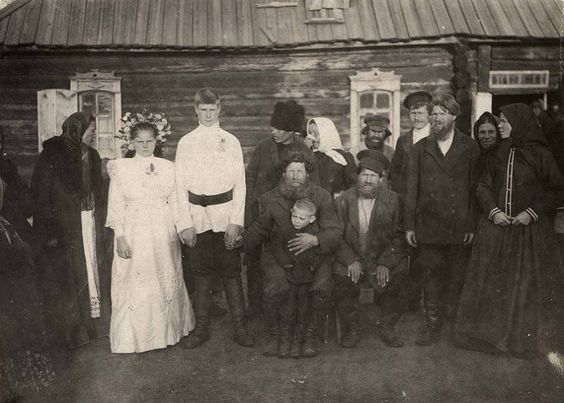
Как умыкали невест на Руси
Исследователи матримониальных отношений, говоря о способности женщины на Руси самостоятельно выбирать себе мужа, выделяют два исторических периода, когда на эту проблему смотрели по-разному.
Браки, совершавшиеся во времена многобожия и после принятия христианства, отличаются не только церемониалом, но и границами свободы волеизъявления представительниц прекрасного пола.
Умыкание невесты
У древних славян, поклонявшихся языческим богам, существовал обряд умыкания, то есть похищения невесты. Это деяние в те далёкие времена считалось весёлым действом, имевшим, по мнению Рамбо, символическое значение, поскольку совершалось исключительно по доброй воле девушки.
Это основополагающее условие свидетельствует о том, что в дохристианской Руси учитывались индивидуальные интересы и мнение женщины, которая была вовлечена в матримониальные дела.
Летописец Нестор в «Повести временных лет», описывая ритуал умыкания, повествует о том, что обычно он проводился с середины весны до середины лета, в период между двумя праздниками, посвящёнными богине любви Ладе и Ивану Купале.
Девица, заблаговременно давшая своё согласие на брак, якобы невзначай приходила к воде, где её «вероломно» похищал поджидавший суженный. Поскольку все вокруг знали о готовившемся умыкании, это действие расценивалось не как преступление, а как инсценировка, отсюда пошло выражение «играть свадьбу».
Историк Цитович, убеждён, что в церемонии умыкания невесты не было явного насильственного элемента, зато отчётливо прослеживается свободное волеизъявление девушки на вступление в брак: «При всех своих безобразиях, умычка всё-таки сослужила службу великого этического принципа семейной жизни — признанию свободы женщины при выборе своего суженого».
А Шпилевский замечает, если даже умыкание происходило без ведома невесты, за женщиной всё равно оставалось право самостоятельного выбора, вернуться в отчий дом и подвергнуть похитителя суду, или остаться с мужем.
В своей книге «Женщины Древней Руси» Пушкарёва отмечает, что традиция умыкания среди высших сословий сошла на нет с крещением Руси в Х веке, хотя в среде простого населения она просуществовала вплоть до XV века. Об этом факте свидетельствуют многочисленные песни, былины, а также церковные епитимии, стремившиеся искоренить этот языческий обычай.
Рогнеда
О том, что в дохристианской Руси свободная воля женщины учитывалась родителями при заключении брака, красноречиво доказывает трагическая судьба полоцкой княжны Рогнеды. Когда еще некрещёный князь Владимир решил жениться на ней, он послал к её отцу сватов, однако Рогволод, прежде чем дать ответ, обратился к дочери, чьё мнение было определяющим.
Рогнеда, будучи влюбленной в сводного брата Владимира, отказала князю, причём в весьма оскорбительной форме, заявив «…не хочу разути сына робичича (сына рабыни)». Хотя родители Рогнеды не пошли против её воли, что подтверждает право женщины на личный выбор мужа, однако она всё-таки стала женой Владимира.
Венчанный брак
С принятием христианства на Руси, то есть с 988 года, священнослужители начали активную борьбу с языческими традициями, в числе которых значилось умыкание невест.
На смену обычаю умыкания пришёл венчальный брак, который должен был быть оформлен с согласия родителей молодожёнов исключительно в стенах храма.
Таинство венчания предваряли помолвка и брачный сговор, которые, как отмечает Пушкарёва, практически в одинаковой степени не учитывали чаяний, как женщины, так и мужчины, поскольку в большей части представляли собой имущественную сделку.
Родители выбирали пару своим детям, исходя из своих интересов, не считаясь с их чувствами и желаниями, именно поэтому нельзя утверждать, что X-XV веках наблюдалось ущемление брачных прав исключительно девушек, поскольку юноши тоже не обладали своеволием.
Подобранные родственниками жених и невеста не могли встречаться наедине, обсуждать детали брачного дела или объявлять о помолвке, за них всё делали родные.
Хотя в 50-ой главе Кормчей книги – своде религиозных и светских канонов, которыми руководствовались при управлении церковью и в церковном суде, согласие молодых обоих полов на союз было обязательным условием заключения брака.
Устав Ярослава Мудрого
О возможности женщин принимать участие в собственной судьбе повествуют статьи, зафиксированные Ярославом Мудрым в сборнике законов «Русская Правда».
В 24-ой статье своего Устава, Ярослав Мудрый постановил наказывать родителей и рублем, и церковной епитимией, если вступивший по их принуждению в брак ребёнок вне зависимости от пола «что сотворит над собою», например, попытается покончить жизнь самоубийством или совершит его.
33-я статья того же юридического акта гласит о запрете принуждать девушку к неугодному браку, и если «…девка восхощет замуж, а отец и мати не дадять», наложить на них денежные пени. Но, несмотря на законы, многие браки по-прежнему заключались по принуждению родственников.
Не в первый раз
Исследуя матримониальные отношения, Пушкарёва выяснила, что женщины вступавшие в брак не в первый раз, могли самостоятельно выбирать себе супруга, без согласования его кандидатуры с родственниками.
Вообще повторные свадьбы на Руси не приветствовались, но если молодая становилась вдовой с малолетними детьми или не могла родить ребёнка в предыдущем браке, то повторный брак вполне был возможен.
Самовольный брак
Не желая мириться с выбором родителей, некоторые девицы убегали из дому и заключали самостоятельный брак с избранником сердца. Такой способ супружества назывался «самокруткой» и совершался церковью тайно, без соблюдения протокола и лишних церемоний.
Став законными супругами, молодожёны отправлялись к отцу с матерью за благословением, и если родители мужа быстро мирились с фактом ослушания, то родственники жены могли никогда не простить дочери этого проступка.
Примак
Наряду с традиционным браком, когда жена после свадьбы уходила жить в дом мужа, с древних времён существовал союз, когда зять переезжал в дом супруги.
При этом жених с невестой как бы менялись местами и обязанностями: девушка сама шла сватать парня, который готовил себе приданое и собирал накануне свадьбы не мальчишник, а девичник. Считалось, что этот молодец, которого в народе называли примаком, «выходит замуж» и имеет меньше прав, чем его жена.
Читайте наши статьи
на Дзен

Поляне – основатели Киева.
Поляне – племенное объединение восточных славян, во времена расселения последних поселившееся в среднем течении Днепра – главным образом, на его правом берегу, а также реках Рось и Ирпень.
Происхождение, название.
Согласно Повести временных лет (12в.) славяне, сначала поселившиеся на Дунае, позже разошлись по разным землям. После упоминания поселившихся севернее Дуная чехов и моравы, Нестор летописец пишет:
«А вот еще те же славяне: белые хорваты, и сербы, и хорутане. Когда волохи напали на славян дунайских, и поселились среди них, и притесняли их, то славяне эти пришли и сели на Висле и прозвались ляхами, а от тех ляхов пошли поляки, другие ляхи – лутичи, иные…», «Так же и эти славяне пришли и сели по Днепру и назвались полянами, а другие – древлянами, потому что сели в лесах, а другие сели между Припятью и Двиною и назвались дреговичами, иные сели по Двине и назвались полочанами, по речке, впадающей в Двину, именуемой Полота, от нее и назвались полочане»
и т.д.
Указывая происхождение полян и других восточнославянских племен от славян, покинувших долину Дуная, и объяснив наименования соседних полянам племен по местностям, где они проживали, Нестор никак не объясняет происхождение названия полян, а чуть ниже в летописи вообще говорит, что поляне жили «на горах», и Киев, по легенде основанный тремя братьями Кием, Щеком и Хоривом был окружен большим лесом, где они (поляне) ловили зверей. Вообще поляне жили подобно другим восточнославянским племенам не на открытых пространствах (хотя земли их и включали, по большей части, лесостепи), чем иногда объясняют название племен (от слова «поле» как естественного участка земли, незанятого лесом), а так же — в лесистой местности, так что это объяснение (поляне – живущие в полях) будет не лучшим. В исторических исследованиях же название объясняется чаще всего следующим образом: поляне отличались от живущих севернее племен (древлян, дреговичей, северян и пр.) тем, что у них было широко распространено скотоводство и земледелие (тогда как другие восточнославянские племена больше жили собирательством, охотой, рыболовством и др.) – и земледелие подсечно-огневое, при котором определенные участки леса – чаще всего на горах или под склонами их во избежание неконтролируемых лесных пожаров – специально выжигались и выкорчевывались для выращивания на освободившейся земле, кстати, хорошо удобренной пеплом, сельскохозяйственных культур. Если считать, что этимологически слово «поляна» или «поле» происходят от «палить» («полети», в славянских языках синонимичное «жечь»), то происхождение названия полян становится ясным.
История.
На данный момент точное происхождение полян остается неизвестным. Поселившиеся в VI в. в среднем Поднепровье поляне вели родовой образ жизни, т.е. жили отдельно, родами и вели особое хозяйство. Однако здесь они оказались в двояком положении: с одной стороны, они были окружены многими, не всегда дружелюбными, но при этом занимающими большие территории соседями (древляне на западе, северяне и дреговичи на севере, уличи и тиверцы – на юге), что ставило отнюдь не многочисленных полян в затруднительное положение – и заставило их изменить прежний образ жизни и сплочиться; с другой же – через земли полян проходил средневековый торговый путь «из Варяг в Греки», что вместе также поспособствовало развитию торговли и государственности у полян. В начале облагаемые хазарами данью, они пережили существенный подъем, в связи с чем положение их заметно улучшилось, и поляне вскоре захватили некоторые соседние земли (что, разумеется, происходило в союзе с некоторыми соседними племенами, вместе именуемыми лендзянами).
К IXв. у полян был общественный строй, разделенный на общинный и княжеский (дружинный) части (второй довлел над первым). Помимо Киева, сохранявшего статус центра земель полян, южнорусское княжество включало и другие крупные города – Белгород и Вышгород, Звенигород и др., распространившись к приходу Рюриковичей до верховий Днестра и Припяти на западе и земель, где позже располагались города Чернигов и Переяславль (верховья Стугны, Сулы, Десны) – на востоке. Здесь позже возникнут самостоятельные княжества. Поляне уже не платили дань хазарам, а князь имел титул кагана – правителя в Хазарском каганате, таким образом претендуя на равенство с ним. Руководство состояло в основном из ушедших от Рюрика скандинавов, но большого культурного влияния они не имели, т.к. быстро ассимилировались местным населением.
В 882г. земли полян были захвачены князем Олегом, а Киев, которым правили дружинники Рюрика, Аскольд и Дир, после похода в Византию принявшие христианство и убитые «вещим» Олегом, — Киев объявлен новым центром земель, объединенных под властью Рюриковичей. Союз полян и соседних лендзянских племен распался, началась ассимиляция. Последний раз имя полян в летописях упомянуто под 944г. (поход кн. Игоря на Константинополь), позже они называются уже киянами или, вместе с ближними восточнославянскими племенами, русью (росью).
Культура.
Нестор летописец пишет, что поляне сильно отличались от северных племен как по обычаям быта, так и по нравам:
“Поляне имеют обычай отцов своих кроткий и тихий, стыдливы перед снохами своими и сестрами, матерями и родителями; перед свекровями и деверями великую стыдливость имеют; имеют и брачный обычай: не идет зять за невестой, но приводит ее накануне, а на следующий день приносят за нее — что дают…”,
древляне, радимичи и вятичи же жили в лесах, «как звери», и браков у них учреждено не было.
Такие резкие отличия, описываемые летописцем, могут показаться странными, но нельзя считать их полным вымыслом – объяснение же такому описанию может быть в том, что во времена написания «Повести…» земли, где жили поляне, с центром в Киеве были уже крещены, тогда как остальные русские земли во многом оставались еще языческими, и это обостряло различия между югом – и Киевом – и остальной Русью, что заставило монаха Нестора создать несколько пристрастное представление об этих племенах во время его бесценного труда.
Источниками пропитания полян были – рыбная ловля, земледелие (пашенное), охота, скотоводство, бортничество и собирательство. Были высоко развиты ремесла – гончарное и ювелирное искусство, обработка дерева. Как уже было сказано, поляне жили на Днепре, по которому проходил путь «Из Варяг в Греки», так что важным элементом жизни была и торговля – как внутренняя, так и международная. Поселения располагались на речных берегах, состояли из полуземлянок, с развитием племен возникали укрепленные городища. Погребальные обряды – как и у большинства восточных славян до распространения христиан, сожжение с захоронением обычно в кургане. Существовало разделение усопших на «чистых» (умерших естественной смертью) и нечистых (умерших смертью насильственной, колдунов. Для обрядов у язычников были специальные святилища.
Поляне сыграли важную роль в становлении русской государственности, так как еще до прихода Рюриковичей в среднее Поднепровье создали относительно сильное государство с центром в Киеве, ставшим центром владений скандинавских князей.
Следует вспомнить здесь еще западнославянское племя, так же именовавшееся полянами, пришедшее с юга (с Дуная) и поселившееся на р. Варте. В будущем оно составило основу народа поляков (и дало ему имя), а династия Пястов, правившая Польским королевством в дальнейшем, произошла из этого племени. Центр созданного ими государства находился в г. Гнезно. Западные поляне имеют, разумеется, общее происхождение с жившими на Днепре, но не стоит отождествлять их с полянами восточными – западные поляне (polanie) сформировались самостоятельно на своей земле и получили свое имя там же.