
Как правильно пишется словосочетание «органная музыка»
- Как правильно пишется слово «органный»
- Как правильно пишется слово «музыка»
Делаем Карту слов лучше вместе

Привет! Меня зовут Лампобот, я компьютерная программа, которая помогает делать
Карту слов. Я отлично
умею считать, но пока плохо понимаю, как устроен ваш мир. Помоги мне разобраться!
Спасибо! Я стал чуточку лучше понимать мир эмоций.
Вопрос: резус-фактор — это что-то нейтральное, положительное или отрицательное?
Ассоциации к словосочетанию «органная музыка»
Синонимы к словосочетанию «органная музыка»
Предложения со словосочетанием «органная музыка»
- – Да. Здесь когда-то звучала органная музыка, – вполголоса ответил невидимый собеседник.
- Время от времени вступал хор, придавая органной музыке ещё большую глубину, но каменные стены заглушали и преломляли музыку, так что она смутно напоминала шум морской волны.
- Потом, девушка, которая «подогнала» туфельки, ещё и сводила нас бесплатно на концерт органной музыки.
- (все предложения)
Значение словосочетания «органная музыка»
-
Орга́нная му́зыка (англ. Organ repertoire, фр. Musique d’orgue, нем. Orgelmusik) — музыка, предназначенная для исполнения на органе соло или в сопровождении каких-либо других музыкальных инструментов. (Википедия)
Все значения словосочетания ОРГАННАЯ МУЗЫКА
Отправить комментарий
Дополнительно
Смотрите также
Орга́нная му́зыка (англ. Organ repertoire, фр. Musique d’orgue, нем. Orgelmusik) — музыка, предназначенная для исполнения на органе соло или в сопровождении каких-либо других музыкальных инструментов.
Все значения словосочетания «органная музыка»
-
– Да. Здесь когда-то звучала органная музыка, – вполголоса ответил невидимый собеседник.
-
Время от времени вступал хор, придавая органной музыке ещё большую глубину, но каменные стены заглушали и преломляли музыку, так что она смутно напоминала шум морской волны.
-
Потом, девушка, которая «подогнала» туфельки, ещё и сводила нас бесплатно на концерт органной музыки.
- (все предложения)
- духовная музыка
- классическая музыка
- церковная музыка
- камерная музыка
- симфоническая музыка
- (ещё синонимы…)
- орган
- (ещё ассоциации…)
- органная музыка
- органные трубы
- концерт органной музыки
- (полная таблица сочетаемости…)
- классическая музыка
- музыка сфер
- звуки музыки
- музыка смолкла
- слушать музыку
- (полная таблица сочетаемости…)
- Разбор по составу слова «органный»
- Разбор по составу слова «музыка»
- Как правильно пишется слово «органный»
- Как правильно пишется слово «музыка»
Толковый словарь русского языка. Поиск по слову, типу, синониму, антониму и описанию. Словарь ударений.
Найдено определений: 13
органный
ТОЛКОВЫЙ СЛОВАРЬ
I прил.
1. соотн. с сущ. орган I, связанный с ним
2. Связанный с пересадкой о́рганов [орган I].
II прил.
1. соотн. с сущ. орган, связанный с ним
2. Свойственный орга́ну, характерный для него.
3. Принадлежащий орга́ну.
4. Предназначенный для игры на орга́не.
5. Издаваемый орга́ном.
6. Звучанием, силой и мощью напоминающий звуки орга́на.
ТОЛКОВЫЙ СЛОВАРЬ УШАКОВА
ОРГА́ННЫЙ, органная, органное (муз.). прил. к орган. Органные мехи. Органный концерт. Органный мастер.
ТОЛКОВЫЙ СЛОВАРЬ ОЖЕГОВА
ОРГА́Н, -а, м. Клавишный духовой музыкальный инструмент, состоящий из труб, в к-рые нагнетается воздух. Играть на органе.
ЭНЦИКЛОПЕДИЧЕСКИЙ СЛОВАРЬ
АКАДЕМИЧЕСКИЙ СЛОВАРЬ
-ая, -ое.
прил. к орган.
Органные мехи. Органная труба. Органная педаль.
||
Предназначенный для исполнения на органе.
Органный хорал. Органная музыка.
ОРФОГРАФИЧЕСКИЙ СЛОВАРЬ
СЛОВАРЬ УДАРЕНИЙ
ФОРМЫ СЛОВ
орга́нный, орга́нная, орга́нное, орга́нные, орга́нного, орга́нной, орга́нных, орга́нному, орга́нным, орга́нную, орга́нною, орга́нными, орга́нном, орга́нен, орга́нна, орга́нно, орга́нны, орга́ннее, поорга́ннее, орга́нней, поорга́нней
СИНОНИМЫ
прил., кол-во синонимов: 1
МОРФЕМНО-ОРФОГРАФИЧЕСКИЙ СЛОВАРЬ
орга́н/н/ый (от орга́н/).
ГРАММАТИЧЕСКИЙ СЛОВАРЬ
ПОЛЕЗНЫЕ СЕРВИСЫ
органный пункт
ЭНЦИКЛОПЕДИЧЕСКИЙ СЛОВАРЬ
Орга́нный пункт (муз.), долго выдерживаемый звук в басу, на фоне которого свободно движутся остальные голоса. Общее название выдержанных звуков в любом голосе — педаль.
* * *
ОРГАННЫЙ ПУНКТ — ОРГА́ННЫЙ ПУНКТ, в музыке — долго выдерживаемый звук в басу, на фоне которого свободно движутся остальные голоса. Общее название выдержанных звуков в любом голосе — педаль.
БОЛЬШОЙ ЭНЦИКЛОПЕДИЧЕСКИЙ СЛОВАРЬ
ОРГАННЫЙ ПУНКТ — в музыке — долго выдерживаемый звук в басу, на фоне которого свободно движутся остальные голоса. Общее название выдержанных звуков в любом голосе — педаль.
ПОЛЕЗНЫЕ СЕРВИСЫ


Главный орган фирмы Cavaillé-Coll в Парижской церкви Сен-Сюльпис (1863).
Орга́нная му́зыка (англ. Organ repertoire, фр. Musique d’orgue, нем. Orgelmusik) — музыка, предназначенная для исполнения на органе соло или в сопровождении каких-либо других музыкальных инструментов.
Содержание
- 1 Общие сведения
- 2 История органной музыки
- 3 Композиторы, сочинявшие органную музыку
- 4 Примечания
- 5 См. также
- 6 Литература
- 7 Ссылки
Общие сведения
Поскольку духовой орган, этот общепризнанный «король инструментов», является одним из древнейших музыкальных инструментов во всей истории мировой культуры [1], то количество произведений, написанных для него, превышает таковое для любого другого музыкального инструмента.
Репертуарное богатство органной музыки объясняется ещё и тем важным обстоятельством, что на протяжении многих столетий орган являлся основным (а часто и единственным) музыкальным инструментом, который весьма активно использовался в церковно-богослужебной практике почти всех стран Западной Европы и Северной Америки.
История органной музыки
Композиторы, сочинявшие органную музыку
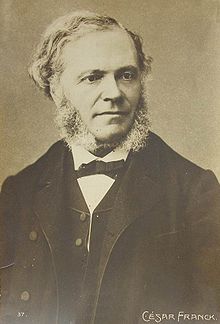
Сезар Франк (César Franck)
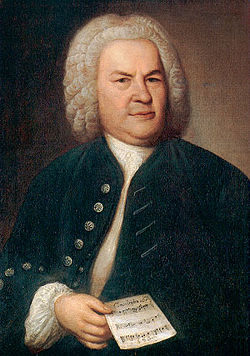
И. С. Бах
- Иоганн Себастьян Бах
- Боэльман
- Иоганнес Брамс
- Антон Брукнер
- Дитрих Букстехуде
- Матиас Векман
- Луи Вьерн
- Шарль Мари Видор
- Георг Фридрих Гендель
- Александр Гильман
- Зигфрид Карг-Элерт
- Иоганн Людвиг Кребс
- Жак Николя Лемменс
- Ференц Лист
- Винсент Любек
- Феликс Мендельсон-Бартольди
- Густав Адольф Меркель
- Оливье Мессиан
- Вольфганг Амадей Моцарт
- Сигизмунд фон Нейком
- Джованни Палестрина
- Иоганн Пахельбель
- Генри Пёрселл
- Макс Регер
- Иоганн Адам Рейнкен
- Камиль Сен-Санс
- Микаэл Таривердиев
- Габриэль Форе
- Сезар Франк
- Джироламо Фрескобальди
- Иоганн Якоб Фробергер
- Доменико Циполи
- Микалоюс Константинас Чюрлёнис
- Олег Янченко
Примечания
- ↑ Г. Риман считал, что родоначальником органа является древняя вавилонская волынка (XIX век до н. э.): «Мех надувался через трубку, а с противоположного конца находился корпус с дудками, имеющими, без сомнения, язычки и по несколько отверстий». — Риман Г. Катехизис истории музыки, ч. 1, М., 1896, с. 20).
См. также
- Орган
- Симфонический орган
- Театральный орган
- Органная симфония
Литература
- Klaus Beckmann: Repertorium Orgelmusik: Komponisten, Werke, Editionen; 1150—1998; 41 Länder; eine Auswahl = A bio-bibliographical index of organ music. Schott, Mainz 1999, 2., neu bearb. und erw. Aufl., ISBN 3-7957-0358-1
- Rudolf Faber, Philip Hartmann (Hrsg.): Handbuch Orgelmusik. Komponisten, Werke, Interpretation. Bärenreiter, Kassel 2002, ISBN 3-476-01877-6
- Victor Lukas: Reclams Orgelmusikführer. Reclam, Stuttgart 2002, ISBN 3-15-008880-1
- Daniela Philippi: Neue Orgelmusik. Werke und Kompositionstechniken von der Avantgarde bis zur pluralistischen Moderne. Bärenreiter, Kassel usw. 2002, ISBN 3-7618-1587-5
- Arnfried Edler, in Verbindung mit Siegfried Mauser: Geschichte der Klavier- und Orgelmusik, 3 Bde., Laaber 2007, ISBN 978-3-89007-674-4
- Gotthold Frotscher: Geschichte des Orgelspiels und der Orgelkompositionen, 2 Bände, Merseburger Verlag, Kassel 1966
- Antoine Bouchard, Quelques réflexions sur le jeu de l’orgue, Québec, Presses de l’Université Laval, 2003,130 p. ISBN : 2-7637-8018-0
- Gilles Cantagrel, Guide de la musique d’orgue, Paris, Fayard, coll. «Les Indispensables de la musique», 1998, 840 p.
- Gilles Cantagrel et Harry Halbreich, Le Livre d’or de l’orgue français, s. l., Calliope-Marval, 1976, 204 p.
- Henri Carol, L’Art de la registration, Nice, 1975
- Alexandre Cellier, La registration, Paris, 1958
- Jacques Chailley, Histoire musicale du Moyen Âge, Paris, 1947
- Norbert Dufourcq, La musique d’orgue française, Paris, 1941
- Norbert Dufourcq, L’orgue, Paris. P. U. F., coll. «Que sais-je?» no 276, 1964, 127 p.
- Friedrich Jakob, L’orgue, Lausanne, Payot, 1970, 96 p.
- André Pirro, L’art des organistes, dans Lavignac, II
- Félix Raugel, Les organistes, Paris (sans date)
- Yvonne Rokseth, La musique d’orgue au XV, Paris, 1930
- B. Weigl, Handbuch der Orgelliteratur, 1931
Ссылки
- Органная музыка на сервисе Яндекс.Музыка.
- Organ Music of the Day — A site devoted to the organ and its repertoire.
- Free recordings of organ music
- Orgelmusik (mp3)
- Ressource documentaire, base discographique mondiale de la musique d’orgue
- Organlive Diffusion en continu de musique d’orgue sur le web.
- Orgues et organistes Site consacré à l’orgue et aux organistes au Québec, au Canada et dans le monde.
- Musique d’orgue — mp3
Синонимы слова «ОРГАННЫЙ»:
ЭЛЕКТРООРГАННЫЙ
Смотреть что такое ОРГАННЫЙ в других словарях:
ОРГАННЫЙ
органный прил. 1) Соотносящийся по знач. с сущ.: орган, связанный с ним. 2) Свойственный органу, характерный для него. 3) Принадлежащий органу. 4) Предназначенный для игры на органе. 5) Звучанием, силой и мощью напоминающий звуки органа.<br><br><br>… смотреть
ОРГАННЫЙ
органный
прил., кол-во синонимов: 1
• электроорганный (1)
Словарь синонимов ASIS.В.Н. Тришин.2013.
.
Синонимы:
электроорганный
ОРГАННЫЙ
1) Орфографическая запись слова: органный2) Ударение в слове: орг`анный3) Деление слова на слоги (перенос слова): органный4) Фонетическая транскрипция … смотреть
ОРГАННЫЙ
орга́нный,
орга́нная,
орга́нное,
орга́нные,
орга́нного,
орга́нной,
орга́нного,
орга́нных,
орга́нному,
орга́нной,
орга́нному,
орга́нным,
орга́нный,
орга́нную,
орга́нное,
орга́нные,
орга́нного,
орга́нную,
орга́нное,
орга́нных,
орга́нным,
орга́нной,
орга́нною,
орга́нным,
орга́нными,
орга́нном,
орга́нной,
орга́нном,
орга́нных,
орга́нен,
орга́нна,
орга́нно,
орга́нны,
орга́ннее,
поорга́ннее,
орга́нней,
поорга́нней
(Источник: «Полная акцентуированная парадигма по А. А. Зализняку»)
.
Синонимы:
электроорганный… смотреть
ОРГАННЫЙ
-ая, -ое.
прил. к орган.Органные мехи. Органная труба. Органная педаль.||Предназначенный для исполнения на органе.Органный хорал. Органная музыка.Сино… смотреть
ОРГАННЫЙ
орга’нный, орга’нная, орга’нное, орга’нные, орга’нного, орга’нной, орга’нного, орга’нных, орга’нному, орга’нной, орга’нному, орга’нным, орга’нный, орга’нную, орга’нное, орга’нные, орга’нного, орга’нную, орга’нное, орга’нных, орга’нным, орга’нной, орга’нною, орга’нным, орга’нными, орга’нном, орга’нной, орга’нном, орга’нных, орга’нен, орга’нна, орга’нно, орга’нны, орга’ннее, поорга’ннее, орга’нней, поорга’нней… смотреть
ОРГАННЫЙ
корень — ОРГАН; суффикс — Н; окончание — ЫЙ; Основа слова: ОРГАННВычисленный способ образования слова: Суффиксальный∩ — ОРГАН; ∧ — Н; ⏰ — ЫЙ; Слово Орг… смотреть
ОРГАННЫЙ
Орг Онагр Ный Норный Нора Нона Ной Нога Нарый Нары Най Нагорный Нагон Нагой Йог Гран Грай Горный Орган Органный Горн Гной Ранг Рано Гарный Гай Арон Арно Аргонный Арго Аон Анон Агро Агор Агный Рон Аргон Рой Рог Рао Ранный Гон Район Гонный Гор Орн… смотреть
ОРГАННЫЙ
Przymiotnik органный narządowy Muzyczny organowy
ОРГАННЫЙ
прил. муз.de órganoорганный мастер — organero m
ОРГАННЫЙ
ОРГАННЫЙ прилагательное 1) см. орган, связанный с ним. 2) Свойственный органу, характерный для него. 3) Принадлежащий органу. 4) Предназначенный для игры на органе. 5) Звучанием, силой и мощью напоминающий звуки органа…. смотреть
ОРГАННЫЙ
прилаг.мед., муз., с.-х.органний
ОРГАННЫЙ
органныйשֶל עוּגָב / אוֹרגָן* * *איברעוגבСинонимы: электроорганный
ОРГАННЫЙ
прлde órgão- органная музыкаСинонимы: электроорганный
ОРГАННЫЙ
орга́нный (к орга́н)Синонимы: электроорганный
ОРГАННЫЙ
Начальная форма — Органный, винительный падеж, единственное число, качественное прилагательное, мужской род, неодушевленное
ОРГАННЫЙ
муз.d’orgueСинонимы: электроорганный
ОРГАННЫЙ
орг’анныйСинонимы: электроорганный
ОРГАННЫЙ
ОРГАННЫЙ органная, органное (муз.). Прил. к орган. Органные мехи. Органный концерт. Органный мастер.
ОРГАННЫЙ
〔形〕管风琴的. ~ые мехи 管风琴的风箱. Синонимы: электроорганный
ОРГАННЫЙ
cutting-offСинонимы: электроорганный
ОРГАННЫЙ
Orgel- органная музыка — Orgelmusik f концерт органной музыки — Orgelkonzert n.
ОРГАННЫЙ
органный, ая, -ое
орган-га т.;
органная музыка орган музыкасы.
ОРГАННЫЙ
-ая,ое муз. орган, органдық;- органная музыка органдық музыка
ОРГАННЫЙ
Прил. orqan -i(-ı); органная музыка orqan musiqisi.
ОРГАННЫЙ
органний. -ные меха — міх органний.
ОРГАННЫЙ НЕВРОЗ
organ neurosis) Термин, используемый в КЛАССИЧЕСКОЙ ТЕОРИИ для обозначения того, что в наши дни чаще называют ПСИХОСОМАТИЧЕСКИМ заболеванием.
ОРГАННЫЙ НЕВРОЗ
(орган невроз) – в психоанализе невроз, проявляющийся преимущественно дисфункцией определённого органа или физиологической системы. Ныне чаще употребляют термин психосоматическое расстройство…. смотреть
ОРГАННЫЙ ПУНКТ
ОРГАННЫЙ ПУНКТ, педаль, долго
выдерживаемый звук в басу, на фоне к-рого верхние голоса движутся свободно,
часто уходя в далёкие тональности. Гармонич… смотреть
ОРГАННЫЙ ПУНКТ
— в музыке — долго выдерживаемый звук в басу, на фонекоторого свободно движутся остальные голоса. Общее название выдержанныхзвуков в любом голосе — педаль…. смотреть
ОРГАННЫЙ ПУНКТ
педаль (нем. Orgelpunkt, франц. pйdale infйrieure, итал. pйdale d’armonia, англ. pedal point),- выдержанный звук в басу, на фоне которого други… смотреть
ОРГАННЫЙ ПУНКТ
ОРГАННЫЙ ПУНКТ — в музыке — долго выдерживаемый звук в басу, на фоне которого свободно движутся остальные голоса. Общее название выдержанных звуков в любом голосе — педаль.<br>… смотреть
ОРГАННЫЙ ПУНКТ
ОРГАННЫЙ ПУНКТ, в музыке — долго выдерживаемый звук в басу, на фоне которого свободно движутся остальные голоса. Общее название выдержанных звуков в любом голосе — педаль…. смотреть
ОРГАННЫЙ ПУНКТ
Органный пункт (point d‘orgue). — Звук большой длительности, в продолжение которого применяются разные гармонии, назыв. выдерживаемым тоном. Он применяется в нижнем, среднем или верхнем голосах. В нижнем, будучи доминантой или тоникой тональности, он называется О. пунктом или педалью и считается высшей степенью каденции. Выбор аккордов над О. пунктом находится в связи с составом распространенной каденции (см.). Кроме этих аккордов применяются и другие, входящие в состав тональности О. пункта. Над ним можно модулировать; преимущественно модулируют в те тональности, который находятся в ближайшем сродстве с тональностью О. пункта. Цель О. пункта заключается в приготовлении к известной тональности или укреплении в ней. О. пункт на доминанте служит для приготовления тональности. В музыкальном сочинении он ставится там, где, после отдаленных модуляций, требуется возвращение к тональности О. пункта. Преимущественно в конце пьесы ставится О. пункт на тонике, для закрепления в тональности О. пункта. Соединение О. пункта на тонике и доминанте называется двойным О. пунктом или двойной педалью, причем тоника ставится ниже доминанты. О. пункт получил свое название от органа, на педали которого (см. Орган) впервые стали применять О. пункты. <i> Н. С. </i><br><br><br>… смотреть
ОРГАННЫЙ ПУНКТ
педаль, долго выдерживаемый звук в басу, на фоне которого верхние голоса движутся свободно, часто уходя в далекие тональности. Гармоническая со… смотреть
ОРГАННЫЙ ПУНКТ
(point d’orgue). — Звук большой длительности, в продолжение которого применяются разные гармонии, назыв. выдерживаемым тоном. Он применяется в нижнем, … смотреть
ОРГАННЫЙ ПУНКТ
ОРГАННЫЙ ПУНКТ , в музыке — долго выдерживаемый звук в басу, на фоне которого свободно движутся остальные голоса. Общее название выдержанных звуков в любом голосе — педаль…. смотреть
ОРГАННЫЙ ПУНКТ
ОРГАННЫЙ ПУНКТ, в музыке — долго выдерживаемый звук в басу, на фоне которого свободно движутся остальные голоса. Общее название выдержанных звуков в любом голосе — педаль.<br><br><br>… смотреть
ОРГАННЫЙ ТОН
ХОРТОН или ОРГАННЫЙ ТОНТон для настройки органов и духовых инструментов, полутоном выше камертона.Словарь иностранных слов, вошедших в состав русского … смотреть
The organ repertoire is considered to be the largest and oldest repertory of all musical instruments.[1] Because of the organ’s (or pipe organ’s) prominence in worship in Western Europe from the Middle Ages on, a significant portion of organ repertoire is sacred in nature. The organ’s suitability for improvisation by a single performer is well adapted to this liturgical role and has allowed many blind organists to achieve fame; it also accounts for the relatively late emergence of written compositions for the instrument in the Renaissance. Although instruments are still disallowed in most Eastern churches, organs have found their way into a few synagogues as well as secular venues where organ recitals take place.
Renaissance[edit]
The earliest surviving keyboard compositions (keyboard music was not instrument-specific until the sixteenth century) are from England (Robertsbridge Codex c. 1365) and Italy (Faenza Codex, 15th century). The organ is specified in Marco Antonio Cavazzoni’s Recerchari, motetti, canzoni […] libro primo, printed in Venice in 1523.
The English virginal style was a manner of composition and performance prevalent in the sixteenth and early seventeenth centuries; some manuscripts are preserved in the Fitzwilliam Virginal Book. Sweelinck was strongly influenced by this style. Organ music was almost exclusively based on learned contrapuntal, exemplified by the Fantasia («Fancy»), as well as works based on contrapuntal treatment of chant. Composers well known for their choral works wrote organ music, for example Tallis, Byrd and Gibbons.
Baroque[edit]
France[edit]
In France, baroque organ music (referred to as French classical music, despite being from the Baroque period) was almost exclusively liturgical in nature and composed and performed in a very systemized manner. In addition, the organs were built along standardized lines. The compositions were smaller scale compared with those in other countries. Some of the forms (the Plein jeu, the Récit de Cromorne, and the Tierce en Taille, for example) utilized almost no counterpoint, while others (the Duo, the Trio, and the Fugue) were contrapuntal in nature (though the counterpoint was not generally as complex as in Germany).[citation needed]
England[edit]
Handel contributed significantly to the organ repertoire through his numerous organ concertos.
Germany[edit]
In Germany and Austria, baroque organ music utilized increasing amounts of counterpoint. Organ music in the baroque can be divided into works based on Lutheran chorales (e.g. chorale preludes and chorale fantasias) and those not (e.g. toccatas, fantasias and free preludes). There are marked stylistic differences between the composers of North, South and Central Germany such that further generalisation is inaccurate. The North German Praeludium (an important form consisting of alternating sections of free material written in the largely misunderstood stylus phantasticus and fugal material) reached its zenith in Dieterich Buxtehude, informed by Matthias Weckmann and Heinrich Scheidemann (influenced most strongly by Jan Peeterszoon Sweelinck and by the Italian school transported to North Germany by Heinrich Schütz and Samuel Scheidt). Georg Böhm remained firmly representative of the South German School, though Johann Pachelbel’s influence as a teacher extended across North, South and Central Germany. Baroque organ music arguably reached its height in the works of Johann Sebastian Bach. Many of Bach’s earlier free works are heavily influenced by Buxtehude’s style, but much more importantly, Bach developed a style essentially separate from the predominant styles of North, South and Central Germany. The majority of his free works consisted of two parts: a prelude, toccata or fantasia, and a fugue. Bach also wrote a large number of chorale preludes.
Classical era[edit]
The great composers of the classical era wrote sparingly if at all for the organ: Haydn wrote for clockwork organs, and wrote several concerti for organ and orchestra. Beethoven and Mozart wrote only a handful of works. Brixli and Wagenseil also wrote organ concerti. All works are restricted to a single manual.
English composers John Stanley and William Boyce wrote a number of important works at this time but should be considered composers of the baroque, not classical era.
Romantic era[edit]
France[edit]
During the Romantic era, technological advances allowed new features to be added to the organ, increasing its potential for expression. The work of the French organ builder Aristide Cavaillé-Coll in particular represented a great leap in organ building. Cavaillé-Coll refined the English swell box by devising a spring-loaded (later balanced) pedal with which the organist could operate the swell shutters. He invented an ingenious pneumatic combination action system for his five-manual organ at Saint-Sulpice. He adjusted pipemaking and voicing (final regulation of the pitch and tone) techniques, thus creating a whole family of stops imitating orchestral instruments such as the bassoon, the oboe, and the flute. He introduced divided windchests which were controlled by ventils, allowing for the use of higher wind pressures. For a mechanical tracker action to operate under these higher wind pressures, pneumatic assistance provided by the Barker lever was required, which Cavaillé-Coll included in his larger instruments. This pneumatic assist made it possible to couple all the manuals together and play on the full organ without expending a great deal of effort. All these innovations allowed the organist to execute a seamless crescendo from pianissimo all the way to fortissimo: something that had never before been possible by the organ. Composers were now able to write music for the organ which mirrored that played by the symphony orchestra. For this reason, both the organs and the literature of this time period are considered symphonic.
César Franck, Charles-Marie Widor, and Félix-Alexandre Guilmant were important organist-composers who were inspired by the sounds made possible through Cavaillé-Coll’s advances in organ building. They wrote extensively for the organ, and their works have endured. A particularly important form of organ composition in the Romantic era was the organ symphony, first seen in César Franck’s Grand pièce symphonique and refined in the ten symphonies of Widor and the six of Louis Vierne. The organ symphony, comprising several movements, paralleled symphonies written for the orchestra. Guilmant wrote several compositions similar to organ symphonies; however, preferring to remain in the classical mold, he called them sonatas. In addition to organ symphonies, composers of the day wrote in other forms: Franck wrote eleven other major organ works, including the Prélude, Fugue et Variation and the Trois Chorals; Widor wrote a Suite Latine on various plainsong tunes; Vierne composed 24 pièces de fantaisie, of which the Carillon de Westminster is perhaps the best-known. The influence of these composers has persisted through generations of composers for the organ through history, all the way to the modern-day composers like Olivier Messiaen and Naji Hakim, and modern-day improvisers like Pierre Cochereau and Pierre Pincemaille.
Germany[edit]
In Germany, a revival of interest in organ music began with Felix Mendelssohn who wrote six Sonatas, three Preludes and Fugues, and several smaller works for the organ. Josef Rheinberger wrote 20 sonatas for the organ and numerous smaller works, all of which blend the romantic style with the contrapuntal complexity of the old German masters. Johannes Brahms and Robert Schumann did not leave any large-scale works for the organ, but both left behind some smaller works which have attracted considerable attention. During the mid-19th century, composers such as Franz Liszt and Julius Reubke wrote works for the organ of immense scale. Organs being built during this time were larger and had greater dynamic range than organs of the Baroque period, and Romantic composers were determined to exploit the capabilities of these instruments. One of Liszt’s most famous organ works is his Fantasy and Fugue on the chorale Ad nos ad salutarem undam. The entire 30-minute work is based on a single theme by Giacomo Meyerbeer and it shows the influence of Liszt’s Sonata in B minor for piano. Liszt’s student, Reubke, wrote a programmatic Sonata in C minor based on selected verses from Psalm 94. The work, while original in its own right, is heavily influenced by the work of Liszt. These two works are the most monumental compositions for the organ from the mid-19th century.
Organ music in Germany at the end of the 19th century is dominated by the towering figure of Max Reger. Reger’s works represent extreme Romanticism; extremely dense harmonies, sudden dynamic contrasts, and extensive forms are all present in Reger’s organ works.
In the 20th-century, German organ music was strongly influenced by the neo-Baroque movement. A revival of interest in Baroque forms and performance practices led to a rejection of the complexity and Romanticism of Liszt and Reger. Important composers of this period are Hugo Distler and Paul Hindemith. Hindemith is widely known for his three organ sonatas. Distler’s organ music is not as well-known, and Distler is remembered primarily as a choral composer. His most popular work is the Partita on «Nun komm, der Heiden Heiland», a work which treats the old Lutheran chorale in a clearly modern idiom.
United States[edit]
In the United States, Dudley Buck was a prominent composer, although his work has remained largely unknown outside of the U.S.
During this time, transcriptions of other music (usually orchestral music or piano solos) for organ became popular. Often the transcriptions would utilize only an excerpt of the original piece. The most famous transcriber for the organ is Edwin Lemare. He transcribed hundreds of works for the organ, the most memorable being his transcriptions of Wagner works.
20th century[edit]
During the 20th century, there were a number of independent trends in organ repertoire:
- Composers making a major contribution to the organ repertoire include Marcel Dupré, Maurice Duruflé, Herbert Howells, Jean Langlais, Jean-Pierre Leguay, György Ligeti, Olivier Messiaen, Miguel del Aguila, Kaikhosru Sorabji and Leo Sowerby.
- The theater organ achieved a brief period of prominence from about 1900–1935, and had its own repertoire.
- The Hammond organ was used in jazz, popular music and rock, especially from about 1950–1975.
- There was an evangelical organ style derived in part from the southern gospel movement, with composers including Fred Bock, Lani Smith, and Harold De Cou.
- Transcriptions of previous works, and improvisations based on hymn tunes, continued to be written in a fairly traditional style by organist-composers such as Searle Wright, Dale Wood, E. Power Biggs and Pierre Pincemaille.
Timeline of composers for the organ[edit]

See also[edit]
- List of organ composers
- List of compositions for organ
References[edit]
- ^ Owens, Barbara, Peter Williams and Stephen Bicknell (18 February 2020). «Organ». Oxford Music Online, Grove Music Online.
External links[edit]
- Organ Music of the Day – A site devoted to the organ and its repertoire.
- Free recordings of organ music
The organ repertoire is considered to be the largest and oldest repertory of all musical instruments.[1] Because of the organ’s (or pipe organ’s) prominence in worship in Western Europe from the Middle Ages on, a significant portion of organ repertoire is sacred in nature. The organ’s suitability for improvisation by a single performer is well adapted to this liturgical role and has allowed many blind organists to achieve fame; it also accounts for the relatively late emergence of written compositions for the instrument in the Renaissance. Although instruments are still disallowed in most Eastern churches, organs have found their way into a few synagogues as well as secular venues where organ recitals take place.
Renaissance[edit]
The earliest surviving keyboard compositions (keyboard music was not instrument-specific until the sixteenth century) are from England (Robertsbridge Codex c. 1365) and Italy (Faenza Codex, 15th century). The organ is specified in Marco Antonio Cavazzoni’s Recerchari, motetti, canzoni […] libro primo, printed in Venice in 1523.
The English virginal style was a manner of composition and performance prevalent in the sixteenth and early seventeenth centuries; some manuscripts are preserved in the Fitzwilliam Virginal Book. Sweelinck was strongly influenced by this style. Organ music was almost exclusively based on learned contrapuntal, exemplified by the Fantasia («Fancy»), as well as works based on contrapuntal treatment of chant. Composers well known for their choral works wrote organ music, for example Tallis, Byrd and Gibbons.
Baroque[edit]
France[edit]
In France, baroque organ music (referred to as French classical music, despite being from the Baroque period) was almost exclusively liturgical in nature and composed and performed in a very systemized manner. In addition, the organs were built along standardized lines. The compositions were smaller scale compared with those in other countries. Some of the forms (the Plein jeu, the Récit de Cromorne, and the Tierce en Taille, for example) utilized almost no counterpoint, while others (the Duo, the Trio, and the Fugue) were contrapuntal in nature (though the counterpoint was not generally as complex as in Germany).[citation needed]
England[edit]
Handel contributed significantly to the organ repertoire through his numerous organ concertos.
Germany[edit]
In Germany and Austria, baroque organ music utilized increasing amounts of counterpoint. Organ music in the baroque can be divided into works based on Lutheran chorales (e.g. chorale preludes and chorale fantasias) and those not (e.g. toccatas, fantasias and free preludes). There are marked stylistic differences between the composers of North, South and Central Germany such that further generalisation is inaccurate. The North German Praeludium (an important form consisting of alternating sections of free material written in the largely misunderstood stylus phantasticus and fugal material) reached its zenith in Dieterich Buxtehude, informed by Matthias Weckmann and Heinrich Scheidemann (influenced most strongly by Jan Peeterszoon Sweelinck and by the Italian school transported to North Germany by Heinrich Schütz and Samuel Scheidt). Georg Böhm remained firmly representative of the South German School, though Johann Pachelbel’s influence as a teacher extended across North, South and Central Germany. Baroque organ music arguably reached its height in the works of Johann Sebastian Bach. Many of Bach’s earlier free works are heavily influenced by Buxtehude’s style, but much more importantly, Bach developed a style essentially separate from the predominant styles of North, South and Central Germany. The majority of his free works consisted of two parts: a prelude, toccata or fantasia, and a fugue. Bach also wrote a large number of chorale preludes.
Classical era[edit]
The great composers of the classical era wrote sparingly if at all for the organ: Haydn wrote for clockwork organs, and wrote several concerti for organ and orchestra. Beethoven and Mozart wrote only a handful of works. Brixli and Wagenseil also wrote organ concerti. All works are restricted to a single manual.
English composers John Stanley and William Boyce wrote a number of important works at this time but should be considered composers of the baroque, not classical era.
Romantic era[edit]
France[edit]
During the Romantic era, technological advances allowed new features to be added to the organ, increasing its potential for expression. The work of the French organ builder Aristide Cavaillé-Coll in particular represented a great leap in organ building. Cavaillé-Coll refined the English swell box by devising a spring-loaded (later balanced) pedal with which the organist could operate the swell shutters. He invented an ingenious pneumatic combination action system for his five-manual organ at Saint-Sulpice. He adjusted pipemaking and voicing (final regulation of the pitch and tone) techniques, thus creating a whole family of stops imitating orchestral instruments such as the bassoon, the oboe, and the flute. He introduced divided windchests which were controlled by ventils, allowing for the use of higher wind pressures. For a mechanical tracker action to operate under these higher wind pressures, pneumatic assistance provided by the Barker lever was required, which Cavaillé-Coll included in his larger instruments. This pneumatic assist made it possible to couple all the manuals together and play on the full organ without expending a great deal of effort. All these innovations allowed the organist to execute a seamless crescendo from pianissimo all the way to fortissimo: something that had never before been possible by the organ. Composers were now able to write music for the organ which mirrored that played by the symphony orchestra. For this reason, both the organs and the literature of this time period are considered symphonic.
César Franck, Charles-Marie Widor, and Félix-Alexandre Guilmant were important organist-composers who were inspired by the sounds made possible through Cavaillé-Coll’s advances in organ building. They wrote extensively for the organ, and their works have endured. A particularly important form of organ composition in the Romantic era was the organ symphony, first seen in César Franck’s Grand pièce symphonique and refined in the ten symphonies of Widor and the six of Louis Vierne. The organ symphony, comprising several movements, paralleled symphonies written for the orchestra. Guilmant wrote several compositions similar to organ symphonies; however, preferring to remain in the classical mold, he called them sonatas. In addition to organ symphonies, composers of the day wrote in other forms: Franck wrote eleven other major organ works, including the Prélude, Fugue et Variation and the Trois Chorals; Widor wrote a Suite Latine on various plainsong tunes; Vierne composed 24 pièces de fantaisie, of which the Carillon de Westminster is perhaps the best-known. The influence of these composers has persisted through generations of composers for the organ through history, all the way to the modern-day composers like Olivier Messiaen and Naji Hakim, and modern-day improvisers like Pierre Cochereau and Pierre Pincemaille.
Germany[edit]
In Germany, a revival of interest in organ music began with Felix Mendelssohn who wrote six Sonatas, three Preludes and Fugues, and several smaller works for the organ. Josef Rheinberger wrote 20 sonatas for the organ and numerous smaller works, all of which blend the romantic style with the contrapuntal complexity of the old German masters. Johannes Brahms and Robert Schumann did not leave any large-scale works for the organ, but both left behind some smaller works which have attracted considerable attention. During the mid-19th century, composers such as Franz Liszt and Julius Reubke wrote works for the organ of immense scale. Organs being built during this time were larger and had greater dynamic range than organs of the Baroque period, and Romantic composers were determined to exploit the capabilities of these instruments. One of Liszt’s most famous organ works is his Fantasy and Fugue on the chorale Ad nos ad salutarem undam. The entire 30-minute work is based on a single theme by Giacomo Meyerbeer and it shows the influence of Liszt’s Sonata in B minor for piano. Liszt’s student, Reubke, wrote a programmatic Sonata in C minor based on selected verses from Psalm 94. The work, while original in its own right, is heavily influenced by the work of Liszt. These two works are the most monumental compositions for the organ from the mid-19th century.
Organ music in Germany at the end of the 19th century is dominated by the towering figure of Max Reger. Reger’s works represent extreme Romanticism; extremely dense harmonies, sudden dynamic contrasts, and extensive forms are all present in Reger’s organ works.
In the 20th-century, German organ music was strongly influenced by the neo-Baroque movement. A revival of interest in Baroque forms and performance practices led to a rejection of the complexity and Romanticism of Liszt and Reger. Important composers of this period are Hugo Distler and Paul Hindemith. Hindemith is widely known for his three organ sonatas. Distler’s organ music is not as well-known, and Distler is remembered primarily as a choral composer. His most popular work is the Partita on «Nun komm, der Heiden Heiland», a work which treats the old Lutheran chorale in a clearly modern idiom.
United States[edit]
In the United States, Dudley Buck was a prominent composer, although his work has remained largely unknown outside of the U.S.
During this time, transcriptions of other music (usually orchestral music or piano solos) for organ became popular. Often the transcriptions would utilize only an excerpt of the original piece. The most famous transcriber for the organ is Edwin Lemare. He transcribed hundreds of works for the organ, the most memorable being his transcriptions of Wagner works.
20th century[edit]
During the 20th century, there were a number of independent trends in organ repertoire:
- Composers making a major contribution to the organ repertoire include Marcel Dupré, Maurice Duruflé, Herbert Howells, Jean Langlais, Jean-Pierre Leguay, György Ligeti, Olivier Messiaen, Miguel del Aguila, Kaikhosru Sorabji and Leo Sowerby.
- The theater organ achieved a brief period of prominence from about 1900–1935, and had its own repertoire.
- The Hammond organ was used in jazz, popular music and rock, especially from about 1950–1975.
- There was an evangelical organ style derived in part from the southern gospel movement, with composers including Fred Bock, Lani Smith, and Harold De Cou.
- Transcriptions of previous works, and improvisations based on hymn tunes, continued to be written in a fairly traditional style by organist-composers such as Searle Wright, Dale Wood, E. Power Biggs and Pierre Pincemaille.
Timeline of composers for the organ[edit]
See also[edit]
- List of organ composers
- List of compositions for organ
References[edit]
- ^ Owens, Barbara, Peter Williams and Stephen Bicknell (18 February 2020). «Organ». Oxford Music Online, Grove Music Online.
External links[edit]
- Organ Music of the Day – A site devoted to the organ and its repertoire.
- Free recordings of organ music
Орган — музыкальный инструмент, который называют «королём музыки». Грандиозность его звучания выражается в эмоциональном воздействии на слушателя, не имеющем равных. Кроме того, самый большой в мире музыкальный инструмент – орган, и у него самая совершенная система управления. Выразительный ресурс органа позволяет создавать для него музыку широчайшего объёма содержания: от размышлений о Боге и космосе до тонких интимных отражений человеческой души. При слове орган хочется сыпать превосходными степенями и эпитетами вроде «величественный», «неземной», «божественный». И много десятилетий и даже столетий именно это обусловливало развитие инструмента.

Человек, исполняющий музыкальные произведения на органе, называется органистом.
Орган – музыкальный инструмент с уникальной по своей продолжительности историей. Его возраст – около 28 веков.
Орган (лат. organum) — самый большой клавишный духовой музыкальный инструмент, который звучит при помощи труб (металлических, деревянных, без язычков и с язычками) различных тембров, в которые с помощью мехов нагнетается воздух.
Игра на органе осуществляется при помощи нескольких клавиатур для рук (мануалов) и педальной клавиатуры.
Зародыш органа можно видеть во флейте Пана, а также в волынке. Считается, что орган изобрёл грек Ктезибий, живший в Александрии Египетской в 296 — 228 гг. до н. э. Изображение похожего инструмента имеется на одной монете или жетоне времён Нерона.
Органы больших размеров появились в IV веке, более или менее усовершенствованные органы — в VII и VIII веках. Папа Виталиан (666 год) ввёл орган в католическую церковь. В VIII веке Византия славилась своими органами.
Искусство строить органы развилось и в Италии, откуда в IX веке они выписывались во Францию. Позднее это искусство развилось в Германии. Наибольшее и повсеместное распространение орган начинает получать в XIV веке. В XIV веке в органе появилась педаль, то есть клавиатура для ног.
Средневековые органы, в сравнении с более поздними, были грубой работы; ручная клавиатура, например, состояла из клавиш шириной от 5 до 7 см, расстояние между клавишами достигало полутора см. Ударяли по клавишам не пальцами, как теперь, а кулаками.
В XV веке были уменьшены клавиши и увеличено число трубок.
Усовершенствованные органы достигли огромного числа труб и трубок; например, орган в Париже в церкви St. Sulpice имеет 7 тысяч труб и трубок.

Орган используется в богослужениях католиков и протестантов как аккомпанирующий и (реже) сольный инструмент. Нередко католическая или протестантская церковь используется в некотором смысле как декорированный концертный зал; в таких «залах» устраиваются концерты небогослужебной церковной музыки (например, в московском соборе Непорочного Зачатия), где наряду с другими инструментами (вплоть до симфонического оркестра) используется и орган. Органы устанавливаются в светских концертных залах, как правило, напротив партера, вдоль стены, ограничивающей эстраду (например, в Большом зале Московской консерватории). Нередко он используется не только как сольный, но и как ансамблевый и аккомпанирующий инструмент, в сочетании с другими инструментами камерного ансамбля, оркестром, вокалистами и хором, используется в различных кантатно-ораториальных музыкальных жанрах, редко — в опере. Кроме того, инструмент широко используется для исполнения партии basso continuo в музыке эпохи барокко. Для органа писали многие композиторы.

Органная музыка в Германии ко времени Баха уже обладала давними традициями, сложившимися благодаря предшественникам Баха — Пахельбелю, Бёму, Букстехуде и другим композиторам. При жизни Бах был больше всего известен как первоклассный органист, преподаватель и сочинитель органной музыки. Он работал как в традиционных для того времени «свободных» жанрах, таких как прелюдия, фантазия, токката, пассакалья, так и в более строгих формах — хоральной прелюдии и фуги. Всю жизнь Бах не только сочинял музыку для органа, но и занимался консультированием при постройке инструментов, проводил экспертизу новых органов и хорошо ориентировался в особенностях их настройки.
Бах. Пассакалья и фуга.
Гендель. Сарабанда.
Гендель. Пассакалья для органа и оркестра.
Еще совсем недавно среди нас жил прекрасный и тонкий композитор Микаэл Таривердиев. Большинству людей он известен прежде всего как мелодист, песенник, кино-композитор. Его музыка к культовым «Семнадцать мгновений весны» и «С легким паром» известны каждому. И культовые они во многом благодаря музыке Таривердиева.
А о том, что композитор был к тому же прекрасным органистом и писал произведения для органа лично я узнал уже после смерти Мастера.
К сожалению, органных произведений у Таривердиева не так уж много. Но того, что есть достаточно, чтобы говорить об открытии композитором новой грани этого инструмента.
Таривердиев. Хоральная прелюдия.
Гендель. Пассакалья для органа.
Лист. Фантазия и фуга.
Устройство, принципы звукообразования и другие характеристики того или иного органа напрямую зависят от его типа и вида. В акустических органах (духовых, гидравлических, механических и т. д.) звук образуется благодаря вибрации воздуха в специальных органных трубах — металлических, деревянных, бамбуковых, тростниковых и т. д., которые могут быть с язычками, либо без язычков. При этом воздух может нагнетаться в трубы органа различными способами — в частности, с помощью специальных мехов. На протяжении нескольких столетий для исполнения почти всей церковной музыки, как и музыкальных произведений, написанных в других жанрах, использовались исключительно духовые органы. Однако известно о церковном и светском применении не духового, а струнного клавишного инструмента с органными свойствами. Электрический орган изначально был создан для электронной имитации звучания духовых органов, но затем электроорганы по их функциональному назначению стали разделять на несколько видов: Церковные электроорганы, возможности которых максимально адаптированы для исполнения духовной музыки в культовых храмах. Электроорганы для концертного исполнения популярной музыки, в том числе джаза и рока. Электроорганы для любительского домашнего музицирования.
Текст составлен из разных источников.